
 Updated: September 8, 2026
 3 min read
B2B (business-to-business) means you talk to people who buy on behalf of their company.
Example: a SaaS vendor persuading an HR manager to upgrade payroll software.
B2C (business-to-consumer) means you talk to people for personal needs.
Example: a university inviting school leavers to an open day.
LinkedIn was built for professionals, so B2B content feels native. Still, with over 1 billion members and precise demographic filters, LinkedIn can support niche B2C pushes as well. Both strategies work here, but they require different playbooks.
Why B2B vs B2C Matters
- Recruiters decide whether to engage hiring managers (B2B) or jobseekers (B2C).
- Marketers align nurture length with deal size: a cloud-security firm may need seven touchpoints, while an MBA program needs a fast brochure download.
- Leaders protect budget. LinkedIn data shows prospects who clicked a LinkedIn ad had a 58% higher start rate (B2C), while brand-focused B2B campaigns consistently deliver strong pipeline ROI when balanced with demand generation.
Knowing where your audience sits on the B2B vs. B2C spectrum helps you pick the right message cadence, creative format, and success metric. Understanding how the LinkedIn algorithm works also matters for both B2B and B2C outreach.
How Does B2B vs B2C Work?
B2B workflow
- Post thought-leadership articles or white papers to warm the feed.
- Map buying committees with Sales Navigator lists.
- Retarget engagers through Sponsored Content + Lead Gen Forms.
B2C workflow
- Share alumni videos or quick product demos.
- Use demographic filters such as age, field of study, or interests.
- Capture intent with one-click forms or event sign-ups.
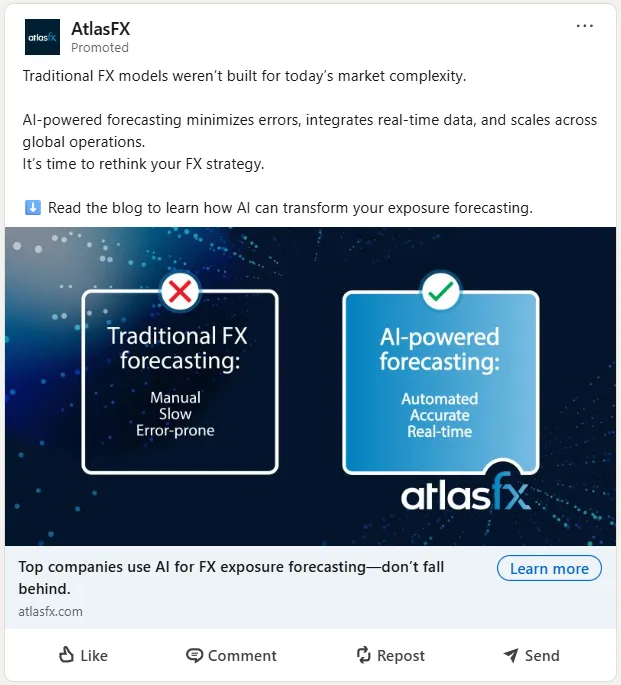

For more on lead capture, see LinkedIn Lead Gen Forms: Best Practices and Examples.
Best Practices
B2B
- Go deep: long-form posts, webinars, case studies.
- Plan for latency; most buyers are not in-market 95% of the time.
- Let executives speak. C-suite posts boost trust.
B2C
- Lead with emotion. Short videos work; LinkedIn video views grew 36% YoY.
- Test Dynamic Ads for personalized course or product tips.
- Show social proof: student quotes, consumer reviews, influencer mentions.
Both
- Frontload key messages in the first 140-210 characters (varies by device) before the "See more" cutoff.
- Add visuals; posts with larger images (1200×627px) can achieve up to 38% higher click-through rates in Sponsored Content.
- Track everything in Campaign Manager and iterate fast.
Bonus Tips
- For B2B, aim for a 50/50 split between brand building and demand generation (LinkedIn B2B Institute); B2C can lean 60/40 toward brand.
- Try LinkedIn Live; live sessions generate 7× more reactions and 24× more comments than native videos from the same broadcasters.
- Use Sales Navigator's Lead Finder to build targeted lists and Account IQ to qualify accounts with AI-powered insights.
The main takeaway: B2B and B2C can both work on LinkedIn, but they need different approaches. B2B favors long nurtures and executive voices; B2C favors quick emotional hooks and social proof.
To get started, set up a Lead Gen Form in Campaign Manager. It auto-populates with member profile data (name, email, company, etc.), so you get usable contact information from the first interaction.