From a personal script to
Linked Helper 1
A personal outreach script became a Chrome extension others could use — and soon a product shaped by early user feedback.
2016
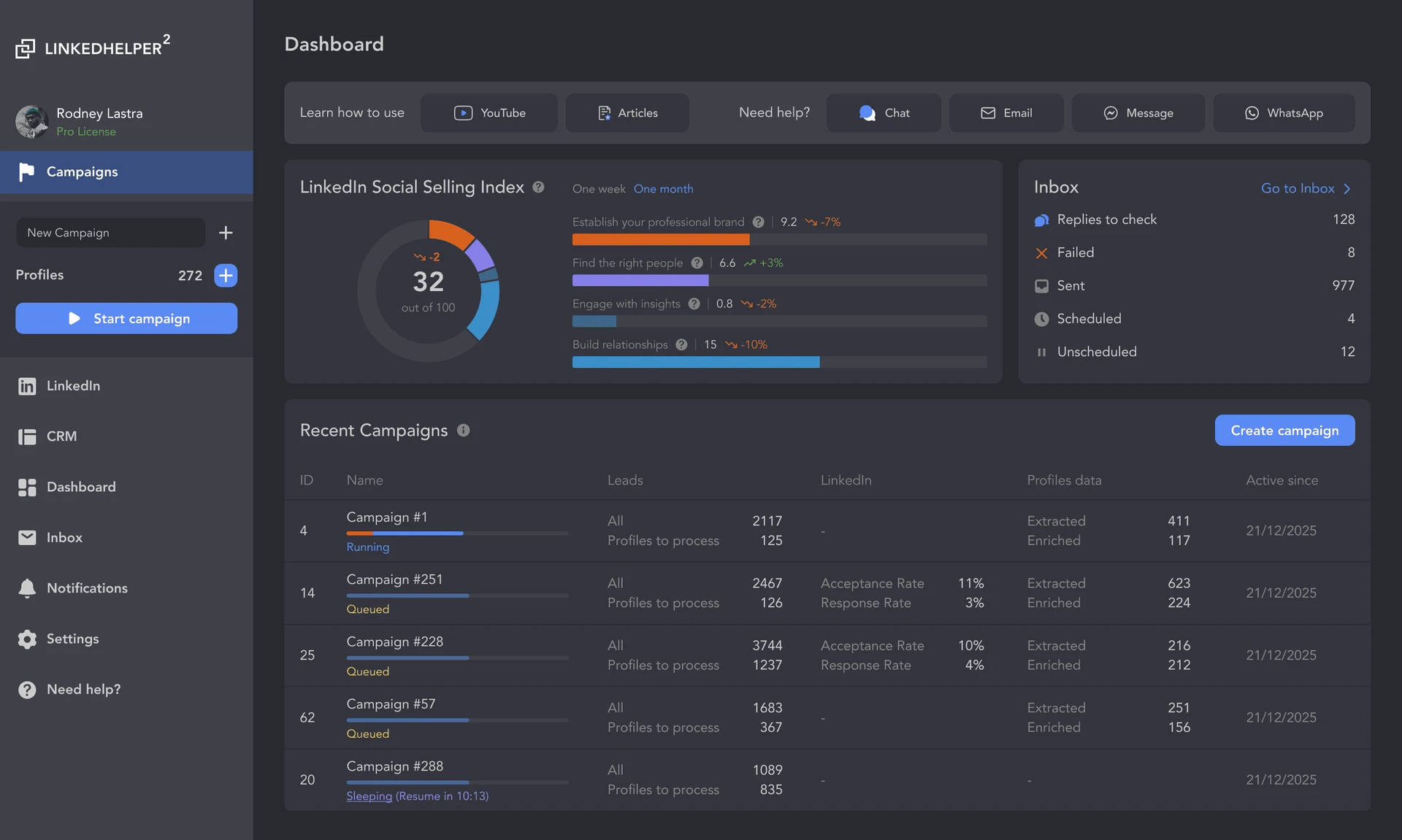
Linked Helper — a technically advanced LinkedIn automation platform built around real workflows.
It gives independent professionals, growing teams, and outreach agencies the flexibility and control to build the process that works for them.
2016
Since
300k+
Users
10k+
Businesses
60+
Team members worldwide

While looking for developers for another startup, Alexander Erin kept sending LinkedIn messages in which only a few details changed. As a developer, he saw that the repetitive work could be automated and built a simple script for himself. There was no interface or product roadmap—just a practical solution to a task he knew firsthand.
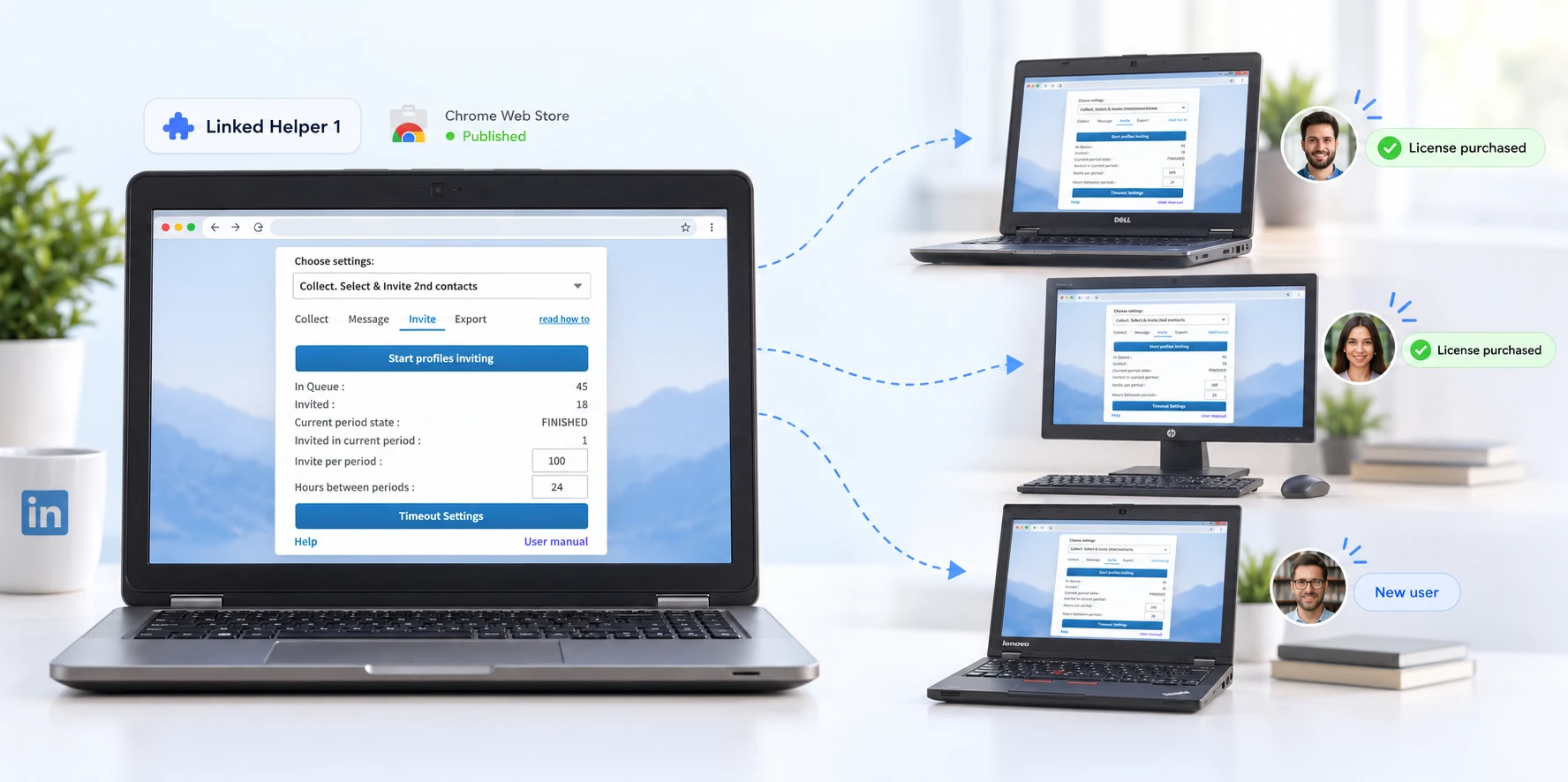
When friends asked for a version they could use, Alexander added an interface and published it in the Chrome Web Store. That became Linked Helper 1. Within about two months, people were already using and paying for it. What began as a personal tool had become a real product.
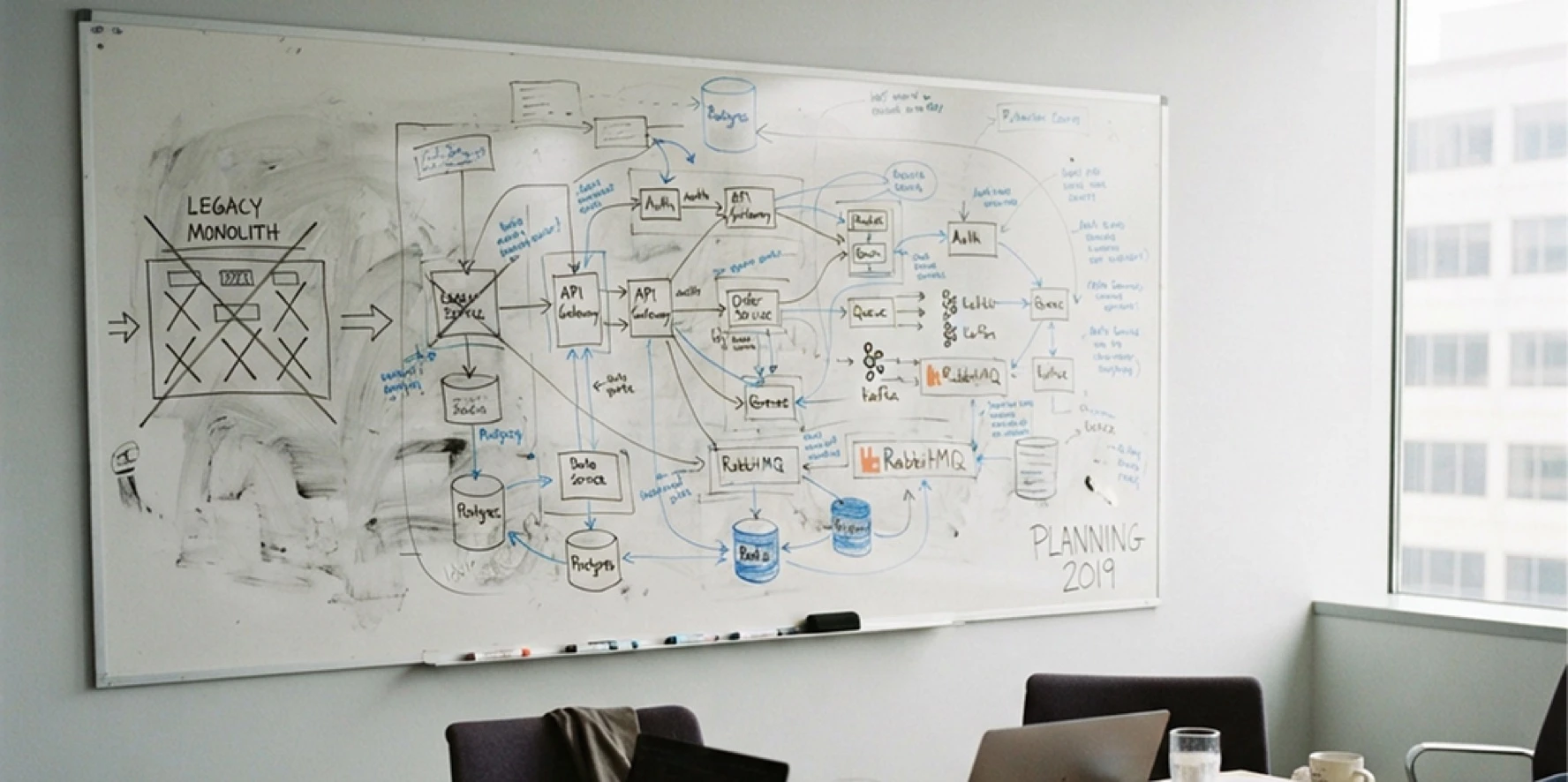
As workflows became more complex, the browser extension reached its limits. In 2019, the team began rebuilding Linked Helper from the ground up. Linked Helper 2 became a standalone desktop application designed for deeper automation, greater flexibility, and more user control. Today, more than 30 developers continue to evolve the platform, with Alexander still closely involved in its architecture and code.
From a personal script to a platform for complex outreach workflows
— explore the key milestones that shaped Linked Helper.
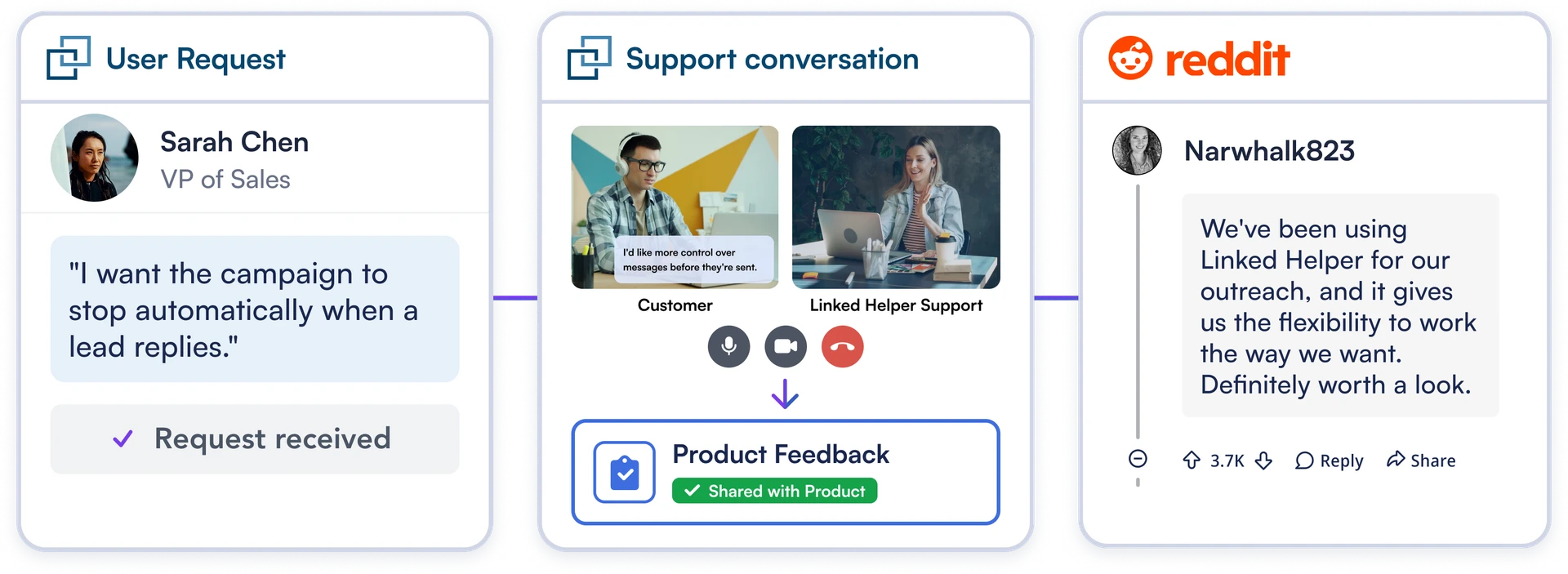
Linked Helper evolves through dialogue with its users: they share real challenges, support identifies recurring needs, and our product team turns them into useful capabilities. We focus on flexibility, control, and integration—not the longest feature list. When users see real value, they recommend Linked Helper to others, making word of mouth our strongest growth channel.

From hiring faster and reaching more candidates to generating webinar registrations and scaling B2B outreach, users apply Linked Helper to a wide range of real business goals. Explore their stories and the workflows behind the results.

“We consider not only the feature a user asks for, but also the business task behind it — because understanding the real need is what should guide what we build next.”
Years of building Linked Helper have shaped three principles that continue to guide the platform.
Linked Helper runs as a standalone desktop application, giving the platform a strong foundation for complex workflows, granular settings, and deeper automation. As users’ needs evolve, the product has room to evolve with them instead of forcing every process into the same rigid structure.
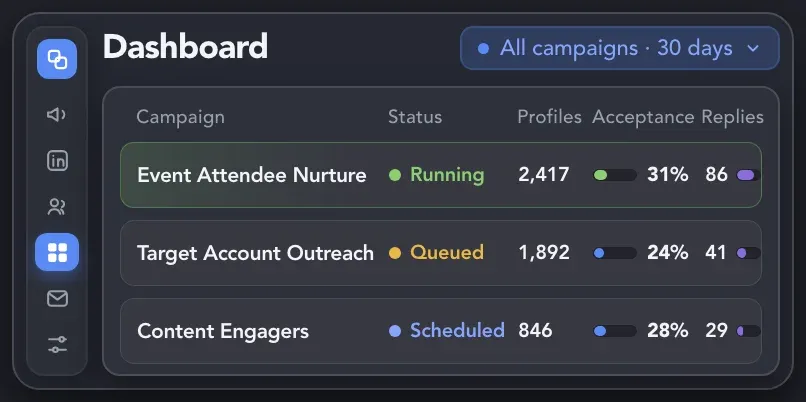
Smart daily limits, working hours, randomized timing, and activity warnings help reduce account risk. Based on years of product data, these safeguards support gradual, human-like automation and give users control over how each LinkedIn account operates.
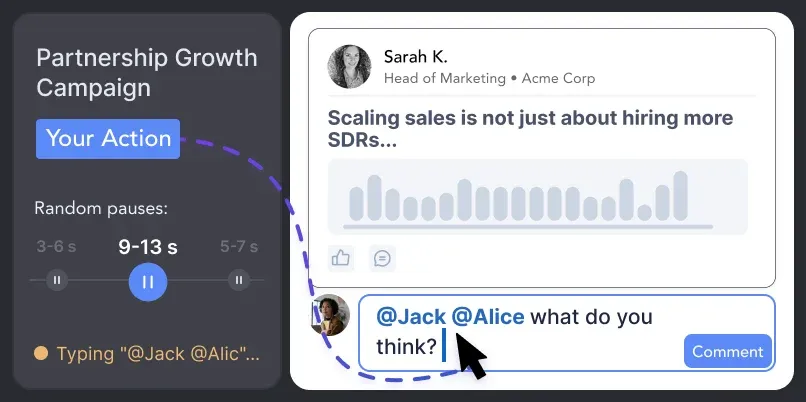
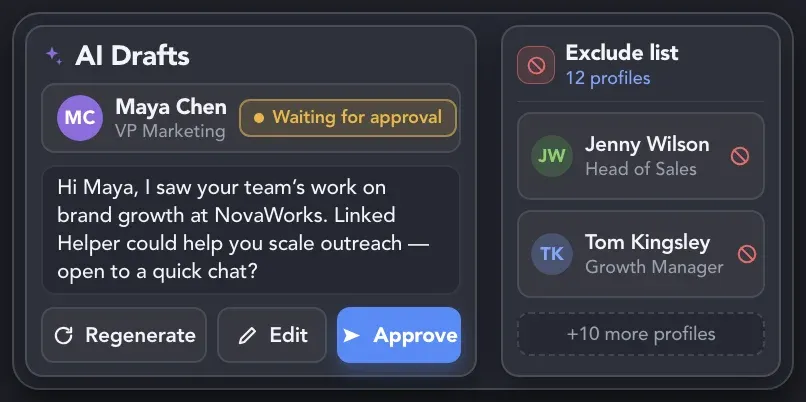
Users decide how workflows branch, which contacts to exclude, when messages need approval, and how much to delegate to AI. The same principle applies to scaling: validate the process first, automate it in small volumes, and expand only what works.
From user trust to industry recognition, these achievements reflect the work and product decisions
behind Linked Helper.


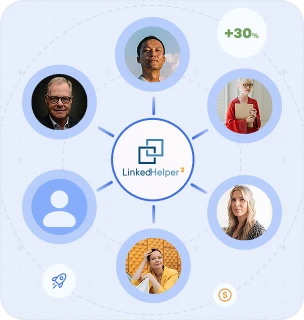
Join our Affiliate Program and introduce Linked Helper to more people. Once approved, you’ll earn 30% on each referred customer’s initial payment and renewals for up to three years.
Linked Helper has been featured in Forbes, Talk Business, and DigitalMarketer, bringing our story and approach to LinkedIn automation to a wider audience.


From setting up your first campaign to building advanced workflows, our learning library brings together practical articles, video tutorials, webinars, and product walkthroughs. Choose the format that works for you, find answers quickly, and get more from every Linked Helper feature.
Build a LinkedIn workflow around your process, your rules and the level of control your team needs.