
Lead generation can be compared to gardening. If you do it right, your business will bloom all year round. You’ll enjoy a healthy sales pipeline that keeps growing and delivering results over time.
But what happens if things go off track?
If you start with the wrong leads, be prepared for wasted budget and dead-end deals. A successful lead generation strategy requires the right set of tools to identify and prospect high-quality leads, run effective outreach campaigns, nurture prospects, and, finally, build lasting customer relationships through ongoing engagement.
Lead identification & prospecting
Leads are what keep sales teams alive. Finding the right ones? That’s the part everyone wishes they could skip. Thankfully, there are hundreds of lead identification and prospecting tools on the market to make the job easier, though not every one of them will be the right fit for your business.
The good news is that almost all lead prospecting tools can provide lead information with just one click. The bad news is that their data sources, database quality, filtering options, and additional features vary significantly.
We looked at the most popular lead prospecting tools on the market today and covered the most important features they get right, as well as the ones they miss.
Apify
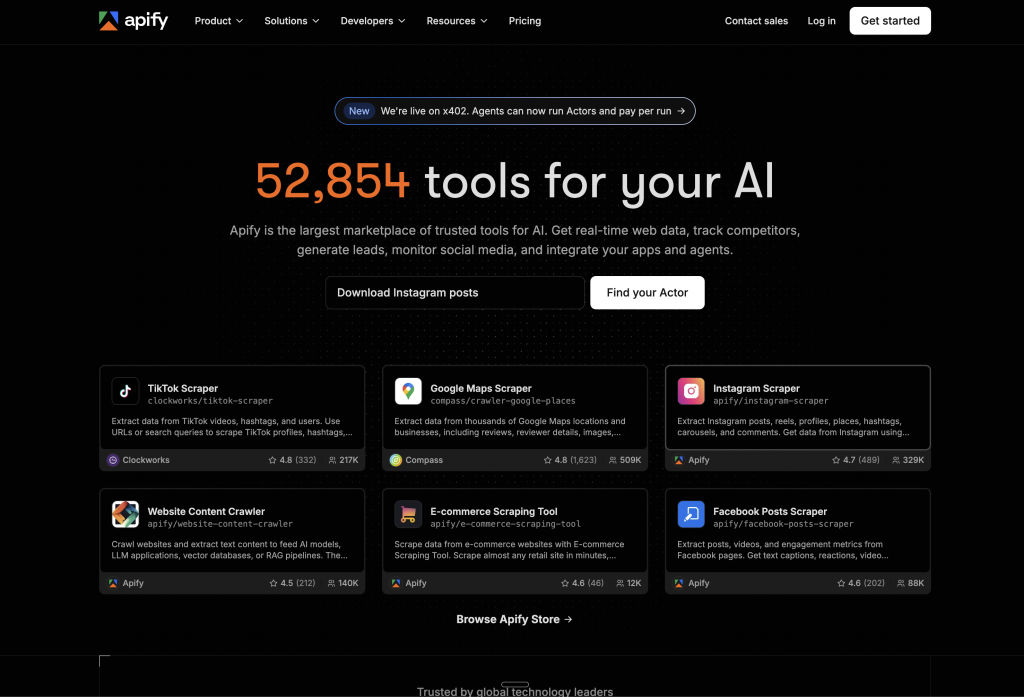
Apify is the largest marketplace of tools for AI. This isn’t exactly a lead prospecting tool, but it’s widely used for lead generation. It lets you extract data from almost any website, making it a powerful tool for building custom lead lists.
Pros:
- You get access to 50,000 pre-built Actors for platforms like LinkedIn, X, Google Maps, Crunchbase, and many more.
- You can customize the type of data you’d like to extract from each platform.
- Includes built-in proxies, anti-blocking, and storage, so there’s no separate infrastructure to piece together.
Cons:
- It’s not a plug-and-play solution. It requires some technical setup and may not be suitable for all users.
- Apify doesn’t provide its own contact database. Instead, it helps you pull publicly available data from websites and online directories.
6sense
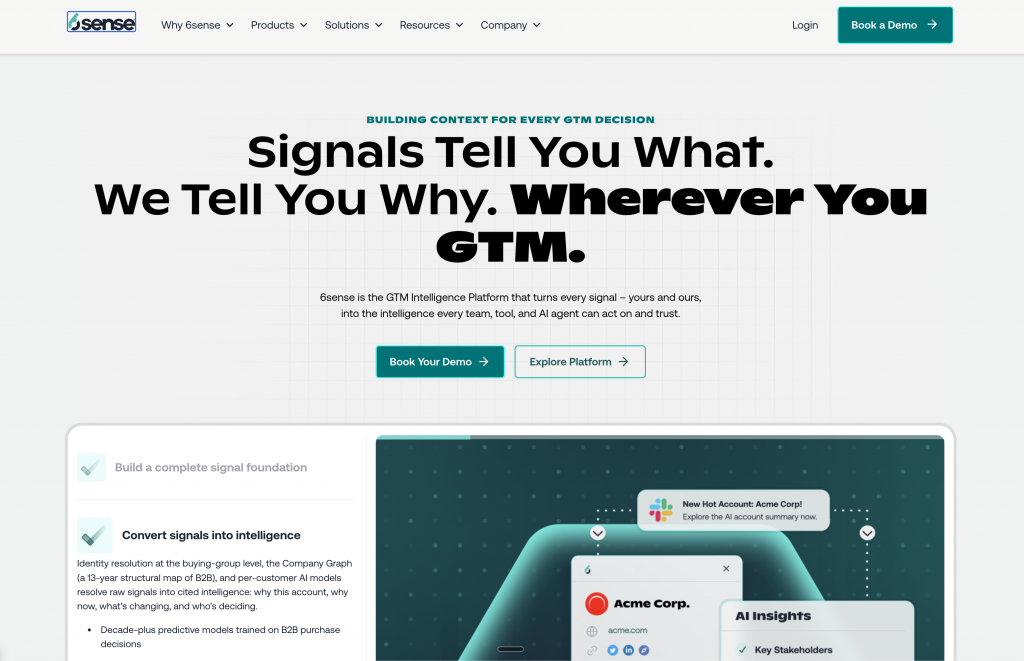
6sense helps sales teams identify potential buyers who are actively researching solutions like yours and are ready to take action, often before they visit your website or become leads.
It also uses AI and buying intent data to analyze your existing lead database and predict which accounts are most likely to convert into customers.
Pros:
- Identifies high-intent prospects who may not yet be in your network.
- AI-powered lead scoring helps prioritize your pipeline, ensuring your sales team focuses on the accounts most likely to convert.
Cons:
- Primarily designed for B2B organizations, making it less suitable for B2C or other markets.
- Positioned as an enterprise solution, with pricing and contract terms that may not be ideal for smaller businesses.
Lusha
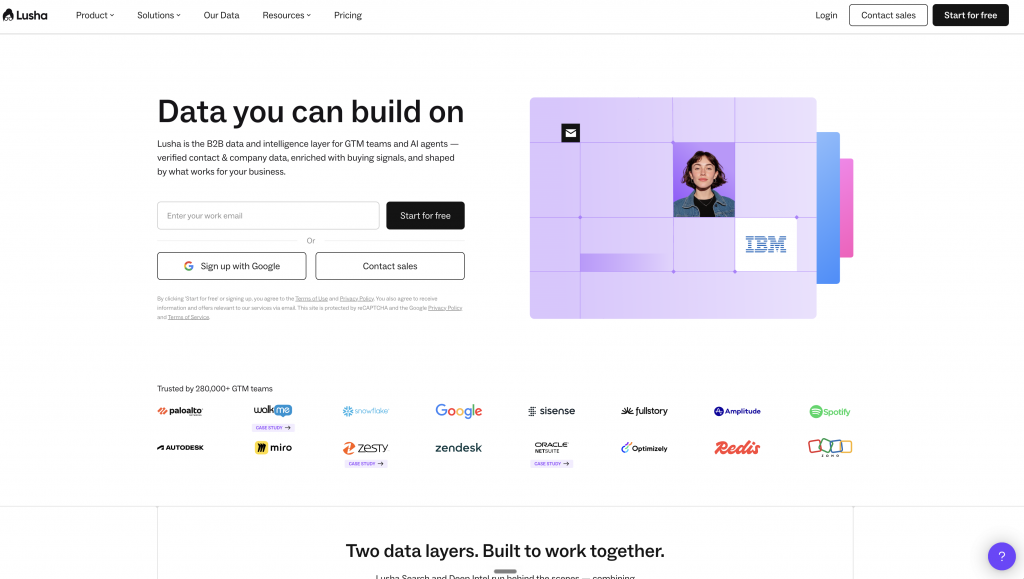
Lusha is like an upgraded version of the Yellow Pages for B2B sales, helping you quickly find contact details for decision-makers. The platform is widely used by sales, marketing, and recruiting teams.
Pros:
- Known for its high-quality database, providing up-to-date email addresses and phone numbers for business contacts.
- Supports multi-threaded outreach, making it easier to engage multiple stakeholders within the same target account and increase your chances of closing a deal.
- Offers affordable pricing, including a free plan for individuals and small teams.
Cons:
- Provides little to no buying intent data. While you get access to a large contact database, you won’t know which prospects are actively looking for a solution like yours.
- Primarily designed for B2B organizations, making it less suitable for direct-to-consumer businesses.
GTM.ai
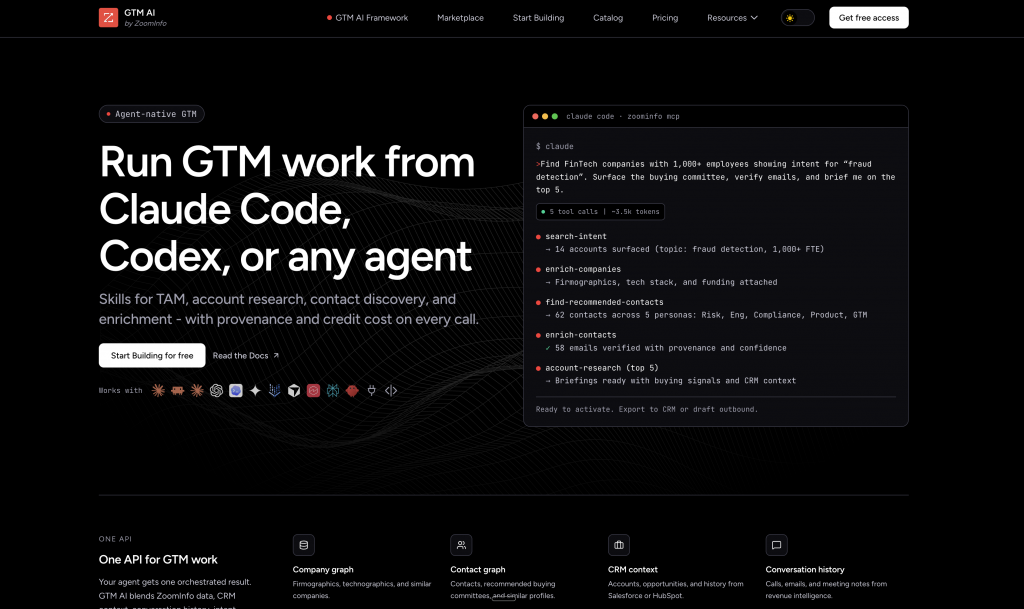
GTM.ai is an AI-powered go-to-market (GTM) platform that helps sales teams plan and execute GTM activities using AI.
Pros:
- Instead of a standard interface with filters and a never-ending list of leads, you get access to an AI agent where you can describe the leads you’re looking for and receive a list within seconds.
- A huge, unified AI-powered B2B lead database that includes virtually every data point you can think of.
Cons:
- It’s not a traditional lead prospecting tool where you can simply filter leads.
- Without predefined GTM processes, it can be almost impossible to use the tool effectively.
Leadfeeder
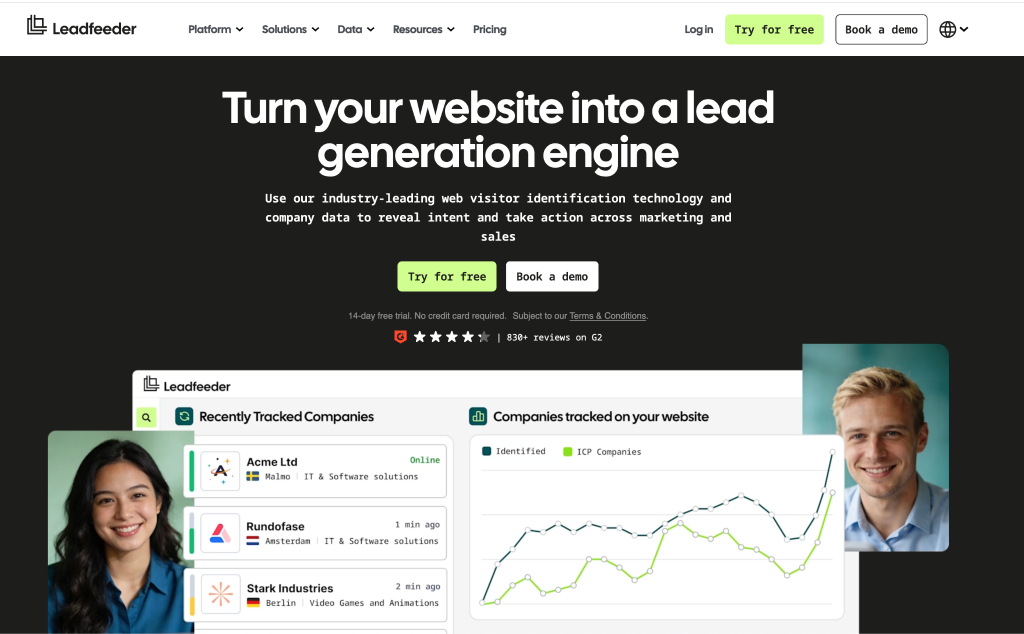
Leadfeeder is another well-known lead generation tool for B2B businesses looking to generate more leads. It identifies companies that visit your website and turns them into sales prospects.
Pros:
- Provides a great set of integrations with popular CRM and sales tools
- Helps prioritize outreach based on real buying signals instead of cold prospecting.
Cons:
- Identifies companies rather than individual visitors, so you’ll still need to determine which leads are the best fit for your business.
- May not be the best solution for smaller businesses, as its value depends heavily on the amount of B2B website traffic you receive.
Skrapp.io
Skrapp.io is an email finder and verification tool that has over 200M contacts in their database. You can search any lead via name, company name or even straight from LinkedIn Sales Navigator.
Pros:
- The tool has a free version, while paid plans start at just $29 per month.
- It includes a LinkedIn extension that allows you to collect leads directly from the platform.
Cons:
- The database isn’t as extensive as Apollo’s or ZoomInfo’s.
- The tool only serves the purpose of finding leads. For outreach, you’ll need a separate solution.
ZoomInfo
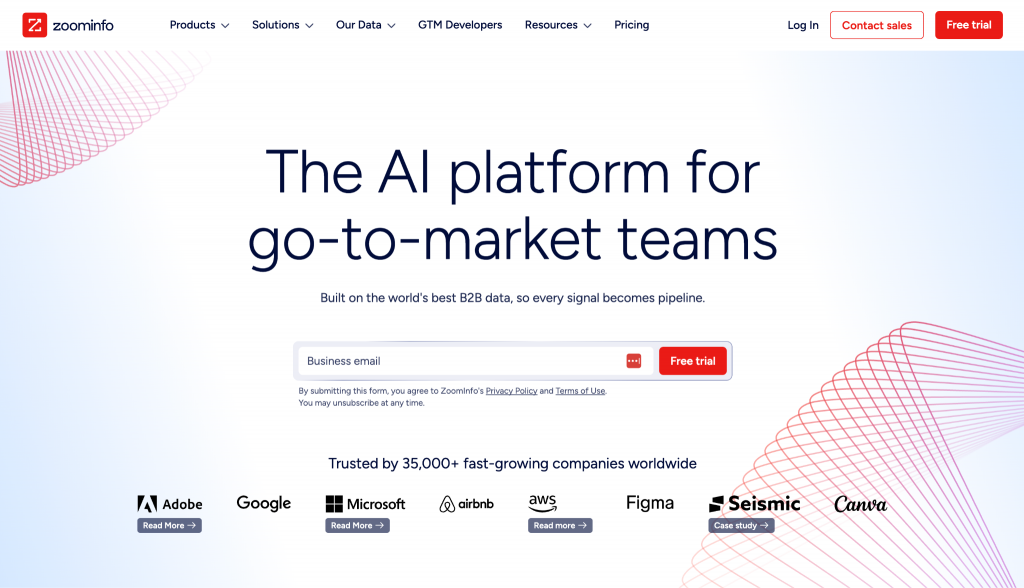
ZoomInfo definitely shines in the B2B lead prospecting market. It’s known for offering one of the most comprehensive yet easy-to-use platforms, combining a wealth of valuable data, including detailed company intelligence, AI-powered buying signals, CRM enrichment, workflow automation, and much more.
Pros:
- One of the largest B2B databases, providing contact information for millions of companies and professionals.
- AI-powered buying intelligence makes lead scoring faster and more effective.
Cons:
- An enterprise-level solution that can be expensive and is known for having long-term contracts and a challenging cancellation process.
- The extensive feature set can be overwhelming for new users and may result in a steeper learning curve.
Leadinfo
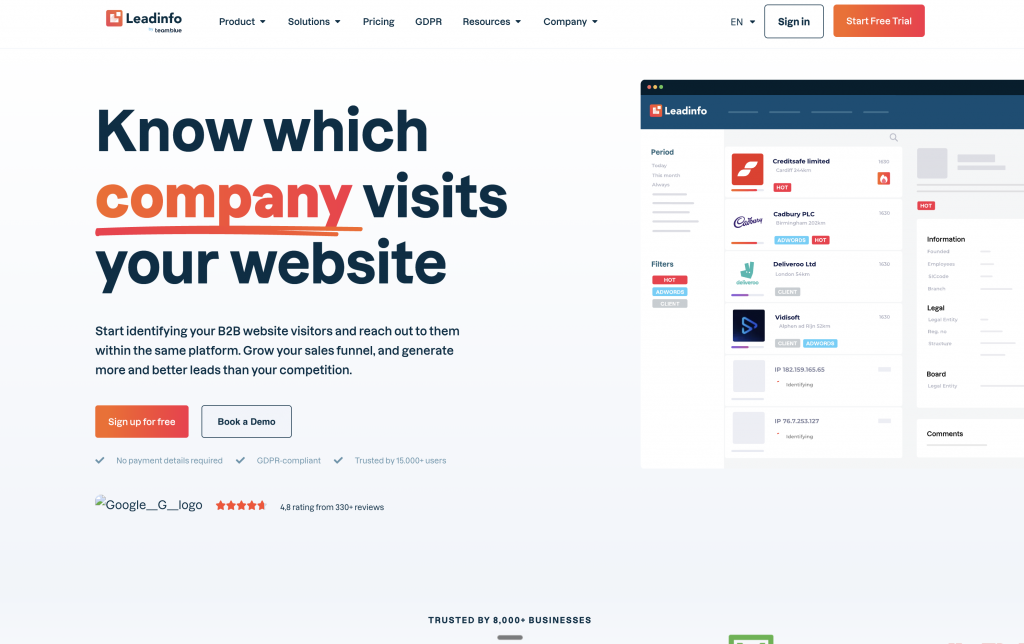
Leadinfo turns your anonymous website visitors into identifiable sales opportunities. With pricing starting at just $73 per month, it’s an affordable option for businesses looking to uncover hidden demand.
One of its biggest advantages is that it goes beyond identifying visiting companies. Thanks to its database of more than 300 million decision-makers, you can also access contact details for the right people and start outreach without switching to another tool.
Pros:
- Tons of built-in integrations, including HubSpot, Google Ads, LinkedIn Ads, and many more.
- GDPR-compliant, making it a strong choice for businesses operating in the EU.
- A great solution for account-based sales and account-based marketing (ABM).
Cons:
- The tool works best for B2B businesses and may provide only limited value for companies operating in direct-to-consumer markets.
- Its outreach capabilities are limited, as it doesn’t support email outreach or advanced sales engagement campaigns.
Apollo
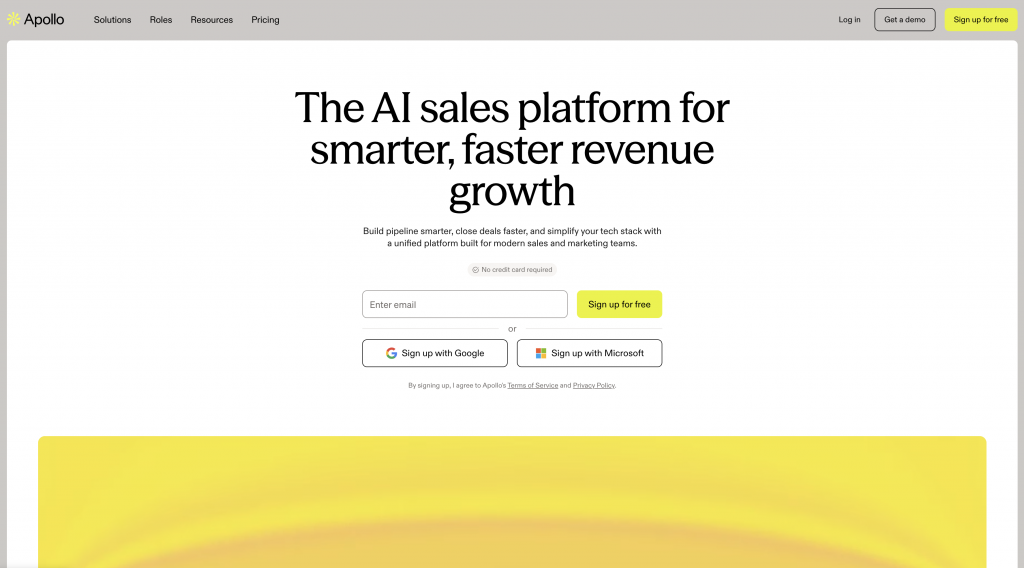
Apollo combines inbound and outbound lead generation into a single platform. On one hand, it allows you to identify website visitors and turn them into leads. On the other, you can use Apollo to discover new prospects from its extensive database of verified business contacts.
Pros:
- Unlike many other tools, Apollo offers a free plan.
- Includes built-in outreach features, allowing you to create and automate email sequences.
- Supports a wide range of integrations with popular CRM and sales tools.
Cons:
- The quality of the data can vary, and some contact information may be outdated or inaccurate.
- Apollo’s email deliverability has been a common concern among some users.
Revnos.AI (Clodura.AI)
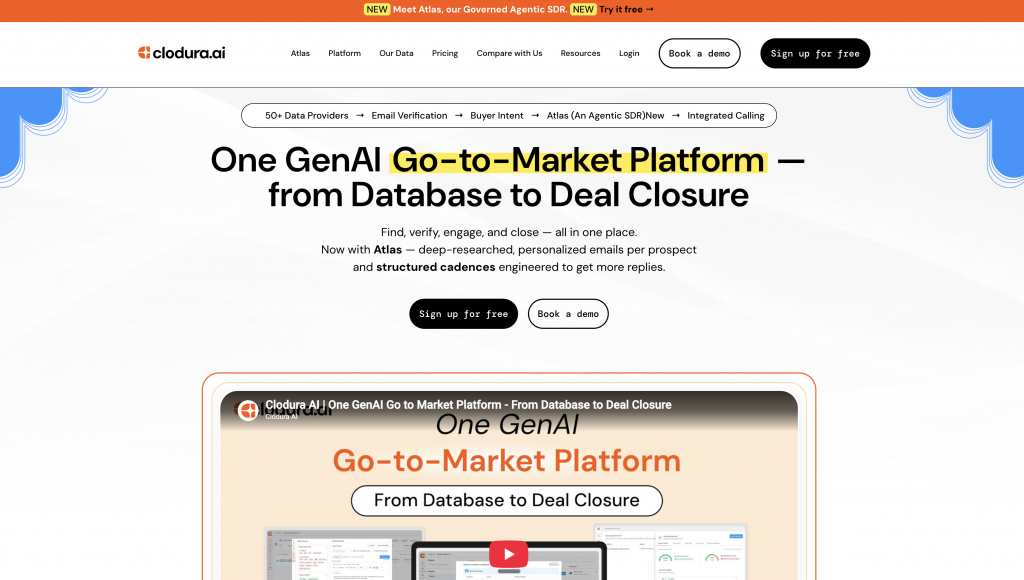
Revnos.AI combines sales prospecting and engagement capabilities in a single platform. It offers an extensive lead database enriched with data from multiple sources, along with a built-in outreach automation suite. What could be more satisfying than managing your entire sales funnel, from prospecting to outreach, in one place?
Pros:
- The tool is very affordable.
- Offers an extensive lead database enriched with email addresses and phone numbers from multiple data sources, increasing the likelihood of accurate and up-to-date contact information.
Cons:
- Not as well established in the market as some of its competitors.
- The wide range of features and tools can feel overwhelming for new users.
Evaboot
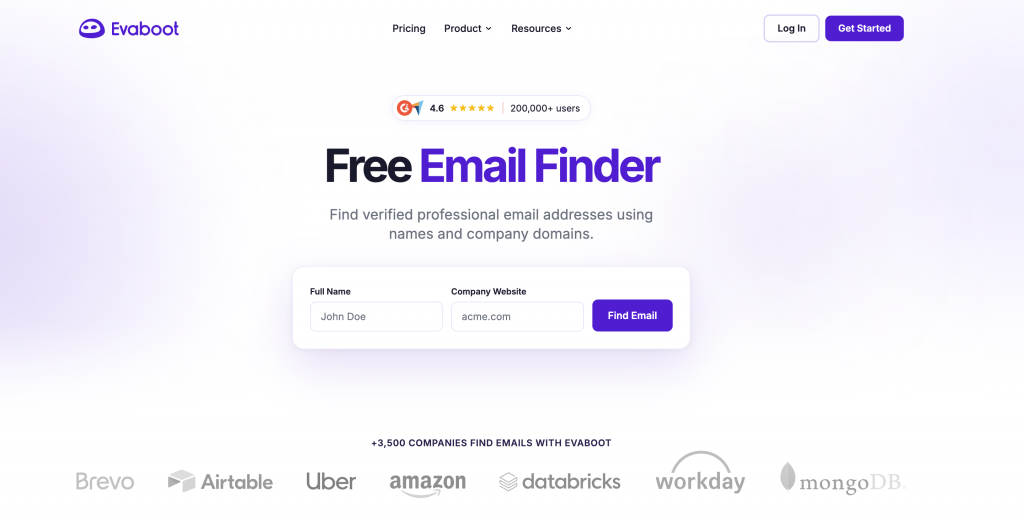
Evaboot makes LinkedIn prospecting and scraping 10x easier. If your target audience is active on LinkedIn, Evaboot makes extracting leads from the platform almost effortless.
Pros:
- Evaboot’s email finder and verifier provide you with a ready-to-use list of leads for outreach.
- The tool integrates with a wide range of platforms, including Zapier, Clay, Pipedrive, and many more.
Cons:
- Evaboot doesn’t support outreach automation or lead management.
- You’ll need a LinkedIn Sales Navigator subscription to build lead lists on LinkedIn that you can then scrape with Evaboot.
Lead Outreach via email, LinkedIn, and phone
Your lead list is ready, and you can’t wait to move on to the outreach stage. If your leads are the car, then outreach is the engine. If your engine can’t accelerate when it matters most, your campaign is unlikely to reach its destination.
That’s where outreach tools come in. They can make or break your entire sales campaign. Features like strong email deliverability, multichannel outreach, sophisticated automation workflows, and AI-powered personalization are essential for running successful outreach campaigns.
Linked Helper
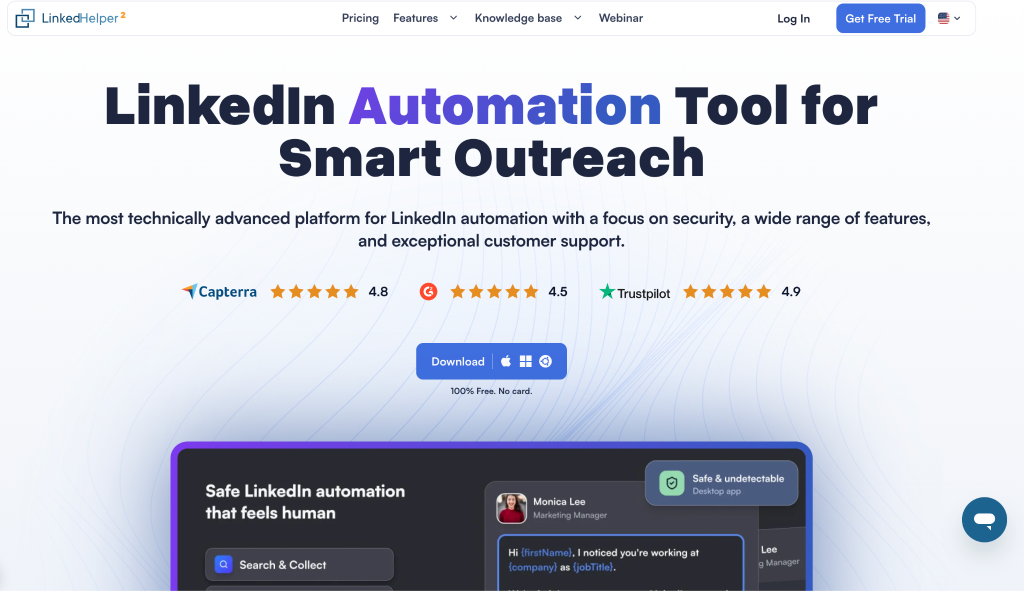
Linked Helper is one of the best LinkedIn automation tools on the market. Trusted by more than 500,000 users, it has become the go-to solution for professionals who rely on LinkedIn outreach to generate leads and build relationships. Linked Helper is also known for being one of the safest and most reliable LinkedIn automation tools, as reflected in its 4.59 out of 5 customer rating on G2.
Pros:
- Built on a safety-first architecture, with smart limits, micro-step pause controls, human-like click and mouse movement emulation, and advanced campaign controls to help reduce the risk of LinkedIn account restrictions.
- AI-powered ICP scoring automatically identifies prospects that match your ideal customer profile, helping you make the most of LinkedIn’s limited weekly invitation quota.
- AI generates highly personalized connection requests, follow-ups, replies, and even context-aware comments based on each prospect’s LinkedIn profile and activity, allowing outreach to scale without feeling automated.
- Includes advanced LinkedIn automation features unavailable in most competitors, including selective skill endorsements, company-page follow invites, boost-post auto-mentions, and more.
- Smart Inbox, campaign dashboard, and native CRM integrations make it easy to manage conversations, monitor campaign performance, and keep LinkedIn activity synchronized with your sales workflow.
Cons:
- Cloud deployment requires your own VPS or remote server. In return, you get full browser-based access to your Linked Helper instance, making it easy to monitor campaigns and manage outreach from any device.
Lemlist
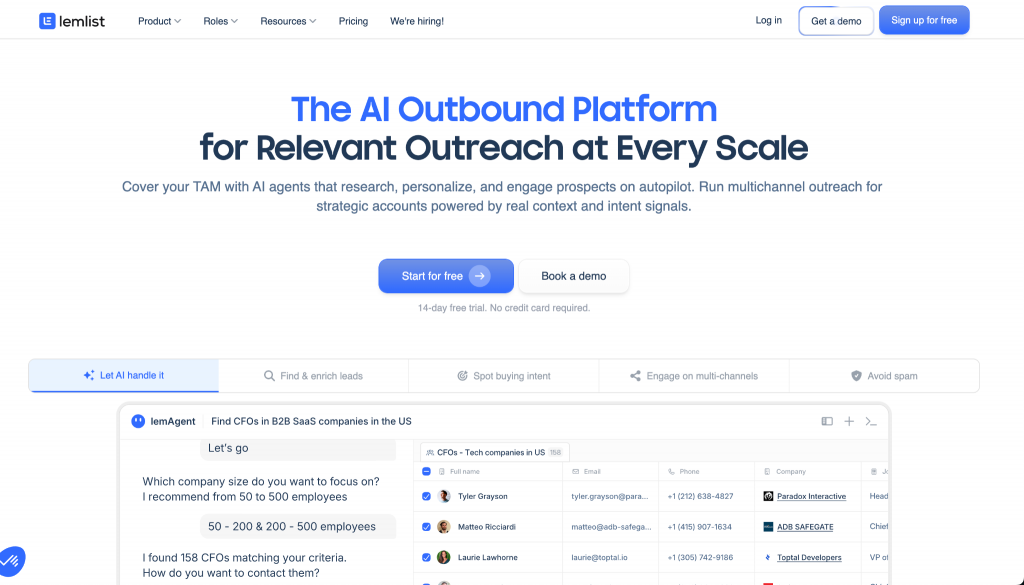
Lemlist is among the friendliest email outreach tools on the market. Their UX and overall campaign setup won’t feel users overwhelmed or lost, things are very straightforward and easy to follow.
Pros:
- Includes email warm-up features to improve your email deliverability.
- Supports multichannel outreach across email and LinkedIn.
Cons:
- Advanced features can significantly increase your monthly subscription cost.
- The contact database isn’t as extensive or in-depth as those offered by some other lead prospecting tools.
Snov.io
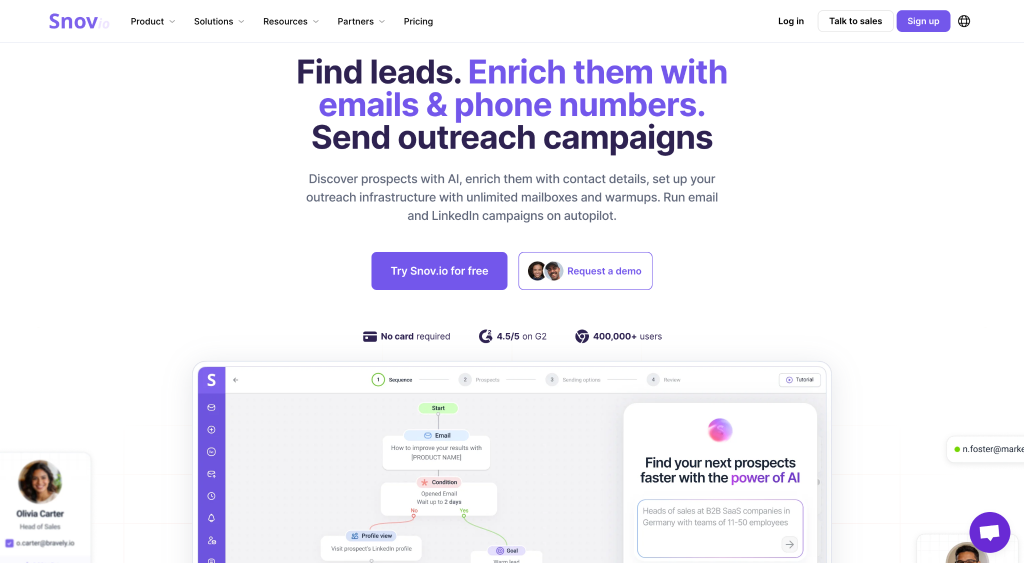
Snov.io has a lot to offer, as it combines both lead prospecting and outreach features. Many users say that Snov.io offers functionality similar to Apollo but has a much stronger engine for both prospecting and outreach automation.
Pros:
- Snov.io has highly accurate email verification that helps your emails land instead of bounce.
- It offers a wide range of integrations, including almost all popular CRMs and sales tools.
Cons:
- The tool doesn’t support multichannel outreach.
- Email deliverability isn’t always superb.
Dialpad – Dialpad Sell
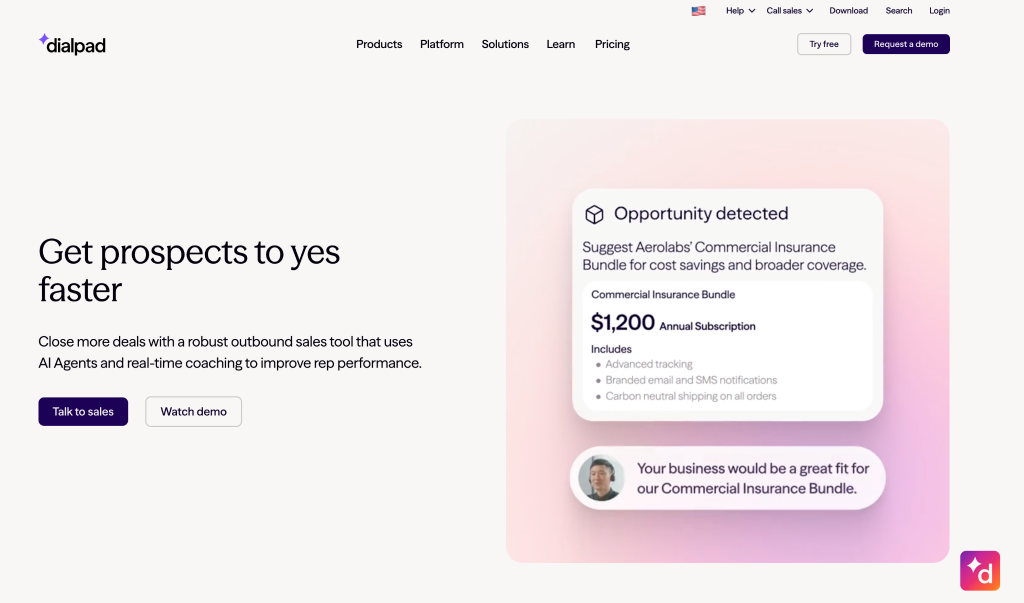
Dialpad Sell is an AI-powered sales outreach and business calling platform built for outbound sales teams.
Pros:
- AI-powered call coaching that provides real-time suggestions, objection handling, and coaching during sales calls.
- The tool offers a robust set of integrations with almost every CRM on the market.
Cons:
- The tool can be pricey, as its AI-powered capabilities and advanced sales features come at a higher cost than basic VoIP systems.
- Some features are primarily useful for larger sales teams.
Reply.io
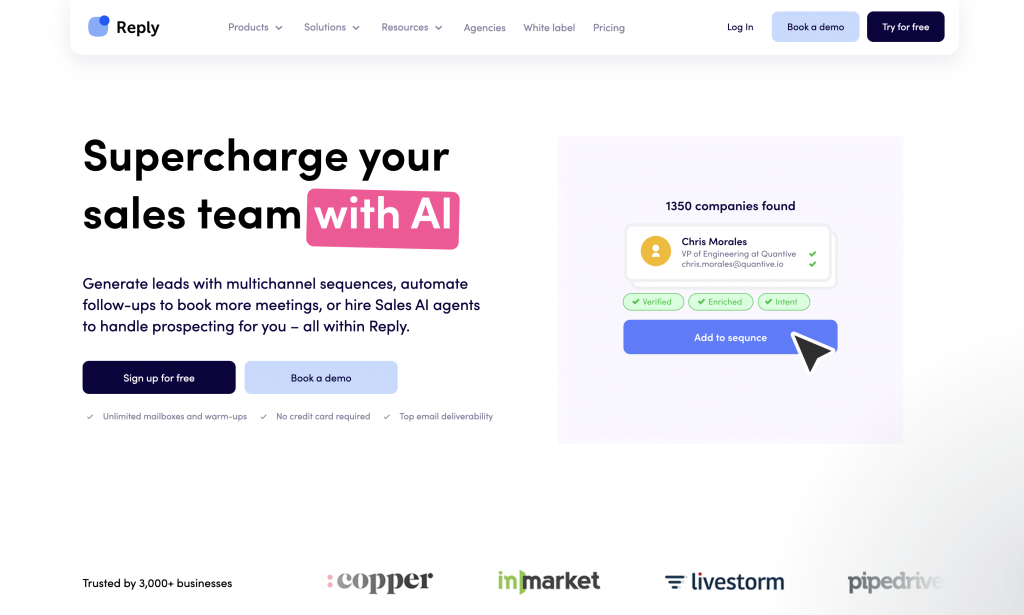
Reply.io is a sales outreach platform that incorporates all the essential features, including lead discovery and multichannel outreach.
Pros:
- Reply.io has very affordable pricing.
- It offers a variety of AI-powered automation features for lead discovery and personalization.
Cons:
- Some advanced features require upgrading to a higher-tier plan.
- The quality of the database varies depending on the niche and region.
KrispCall
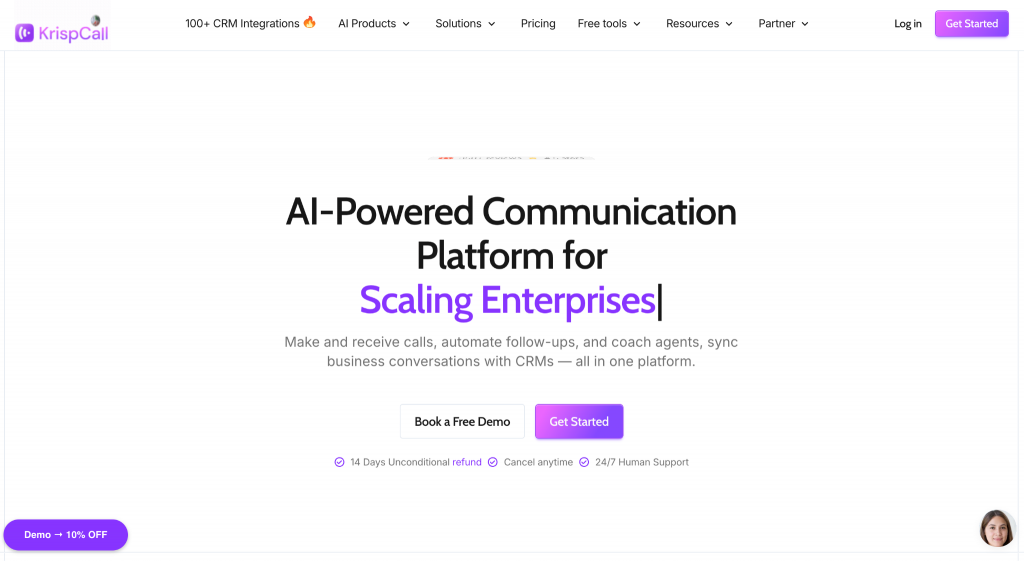
KrispCall is an AI-powered communication platform built for growing businesses that need enterprise-grade calling capabilities without the overhead of legacy phone infrastructure. KrispCall allows you to set up your own AI-powered virtual cloud phone system that supports both phone calls and sms messaging.
Pros:
- Virtual phone numbers that can be managed collaboratively.
- Various CRM integrations that allow you to log and sync call data.
Cons:
- Lead outreach functionality is limited to phone calls.
- Advanced features require higher-tier plans.
VitaMail
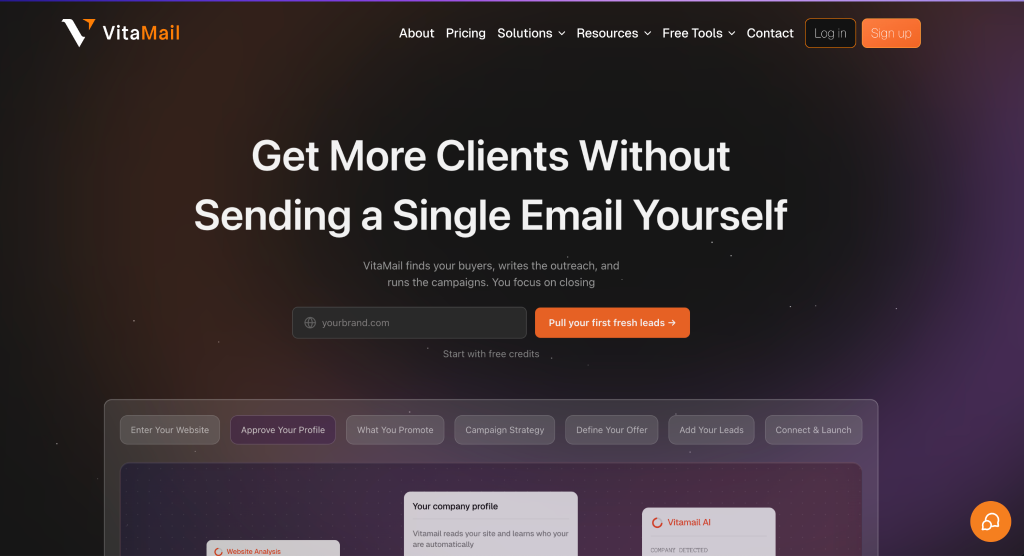
VitaMail is an AI cold email and campaign platform that helps businesses move from lead discovery to outreach in one place. Users can work with their own contact lists or find relevant leads based on their campaign goals, then create personalized campaigns, verify email addresses, monitor domain health, connect inboxes, and manage sending from a single platform.
Pros:
- Combines lead targeting, campaign creation, email verification, and outreach in a single platform.
- Includes Domain Health monitoring, inbox warm-up, and sending controls to help improve email performance.
- Supports Gmail and Outlook inboxes, AI-assisted email creation, and flexible pay-per-use or subscription pricing.
Cons:
- Focuses on email outreach rather than multichannel outreach across LinkedIn, phone, or SMS.
- Advanced campaign and automation features are available on paid plans.
CloudTalk
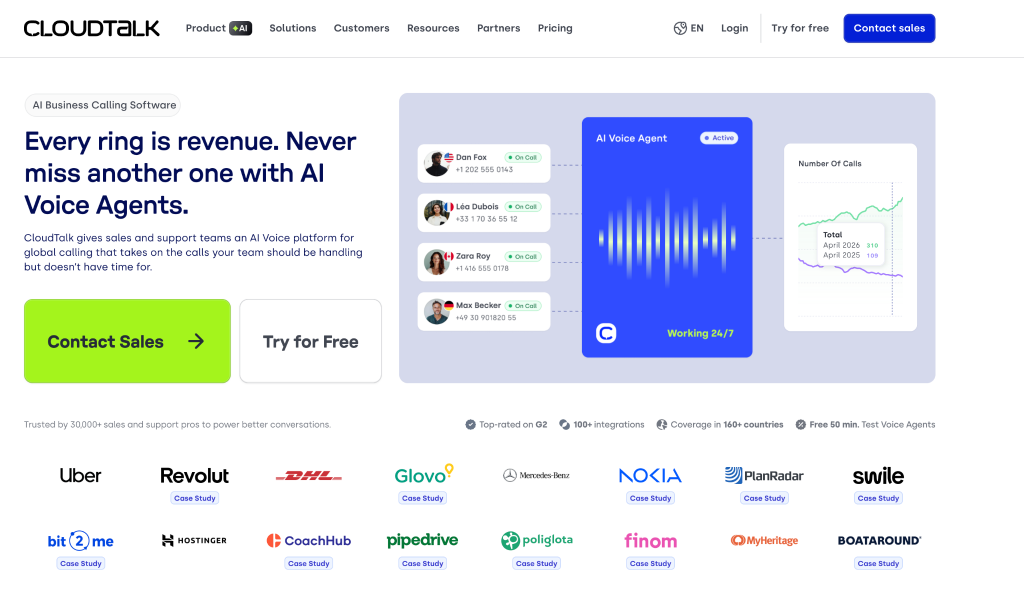
CloudTalk is an AI-powered cloud phone system and AI voice agent platform for SMB sales and customer support teams. The platform provides extensive AI-powered features, including conversational AI, virtual receptionists, and seamless CRM integrations.
Pros:
- CloudTalk has very affordable pricing, starting at $25 per user per month.
- Provides an in-depth analytics for sales and support teams performance reviews
Cons:
- Pricing can be expensive for larger teams.
- Setup may take some time, as the platform includes a wide range of features.
CTM (CallTrackingMetrics)
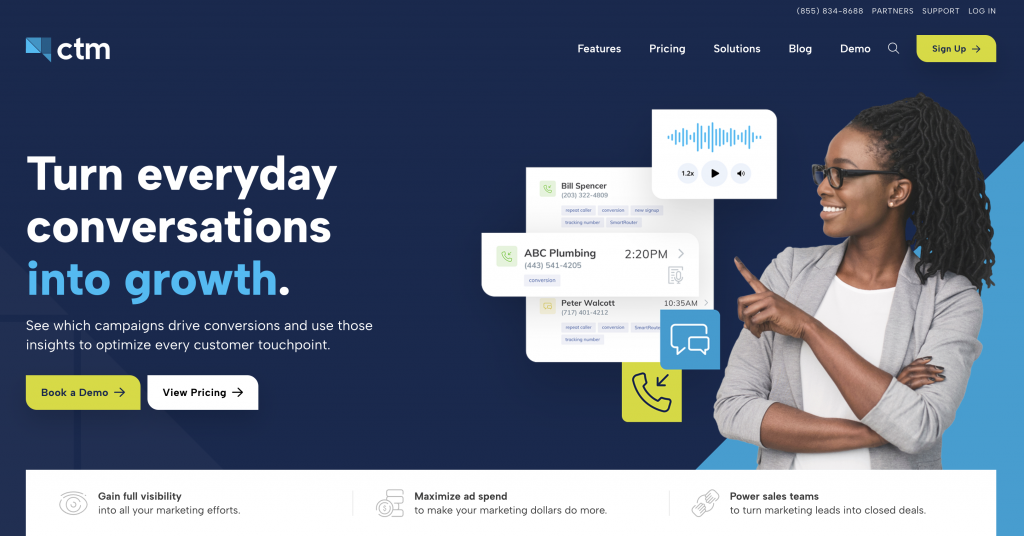
CTM, formerly CallTrackingMetrics, isn’t exactly an outreach tool, but it does a lot to improve your overall cold-calling performance. The platform offers call tracking and conversation intelligence features that help businesses measure and optimize the effectiveness of their cold-calling efforts.
Pros:
- Analyze team conversations in seconds with AI-powered call transcription, summaries, sentiment analysis, and keyword detection.
- Advanced call routing based on customizable filters and automation workflows.
Cons:
- The tool works best for call-centric businesses.
- Advanced features are only available on higher-tier plans.
Lead nurturing and relationship management
Outreach feels similar to ads. It interrupts your workflow, puts a brand you’ve never seen before in front of you, and asks you to take immediate action before any trust or relationship has been established. Many companies try to avoid outreach because, besides generating sales, it can damage their reputation and create a negative brand perception.
Instead of reaching out to leads immediately, many companies choose a more long-term strategy in which leads are gradually warmed up before entering the sales funnel.
Reteno
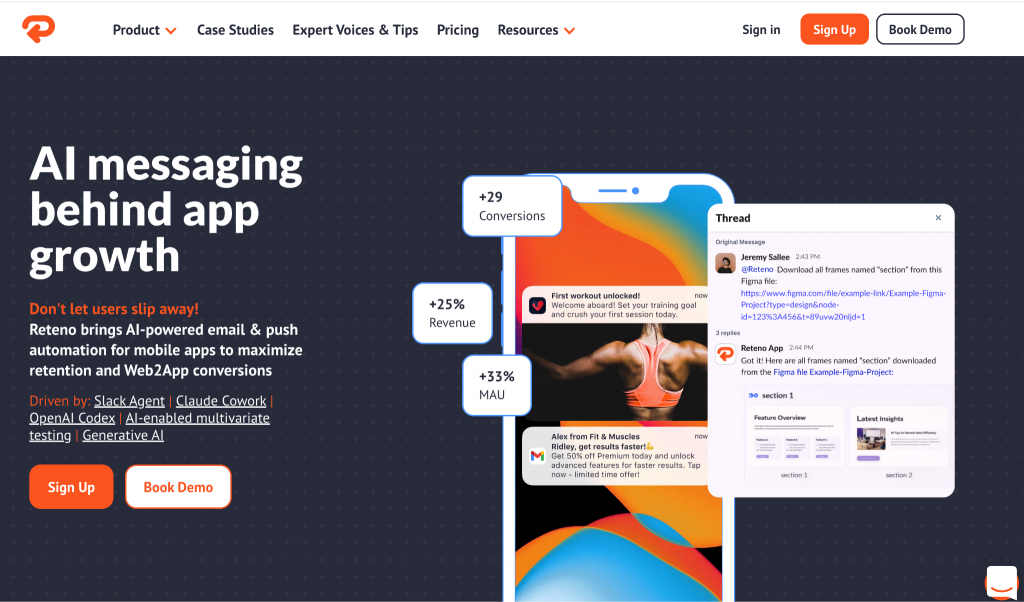
Reteno helps subscription apps improve retention and conversion through automated, personalized communication. It supports omnichannel messaging across email, push notifications, SMS, in-app messages, mobile and web push notifications.
Pros:
- The tool offers powerful personalization and segmentation features.
- Its automation workflows can satisfy even the most sophisticated marketers.
Cons:
- Most of Reteno’s features are designed for e-commerce and app businesses.
- The tool doesn’t include any sales prospecting features.
Zenvia
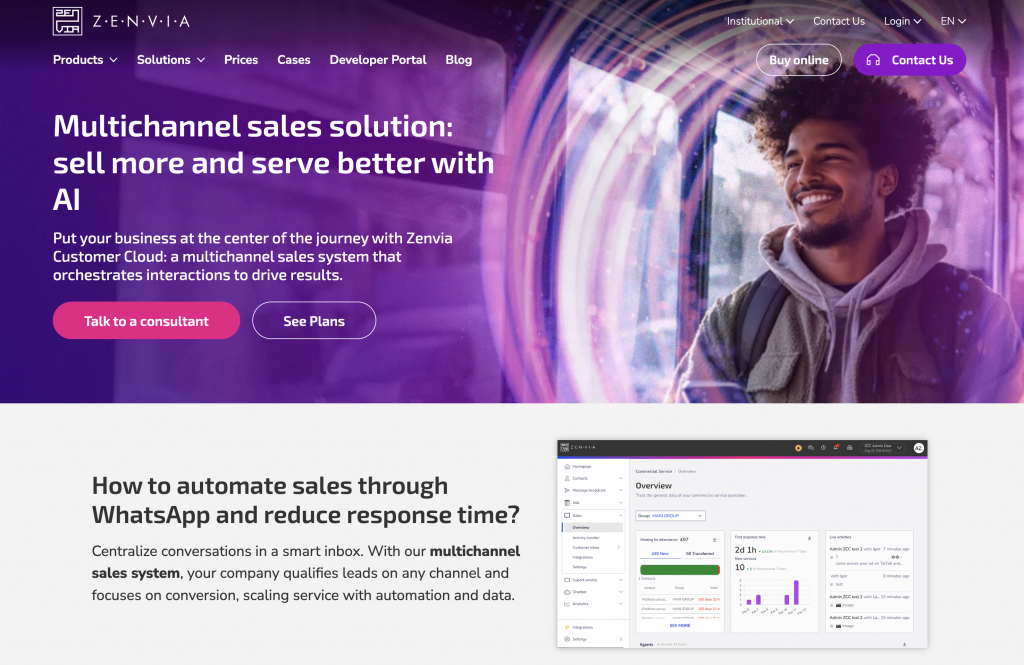
Zenvia is an AI-powered platform designed to help businesses boost sales and engage leads and customers through highly personalized communication funnels.
Pros:
- Marketing automation features help re-engage leads and guide them into more meaningful communication funnels.
- Zenvia supports chatbots that can help you capture more leads, resolve customer issues faster, and serve as an effective lead-warming channel for your website visitors..
Cons:
- Some advanced features are better suited for businesses with more complex customer engagement needs.
- Depending on your use case, some integrations may require technical assistance during implementation.
Privyr
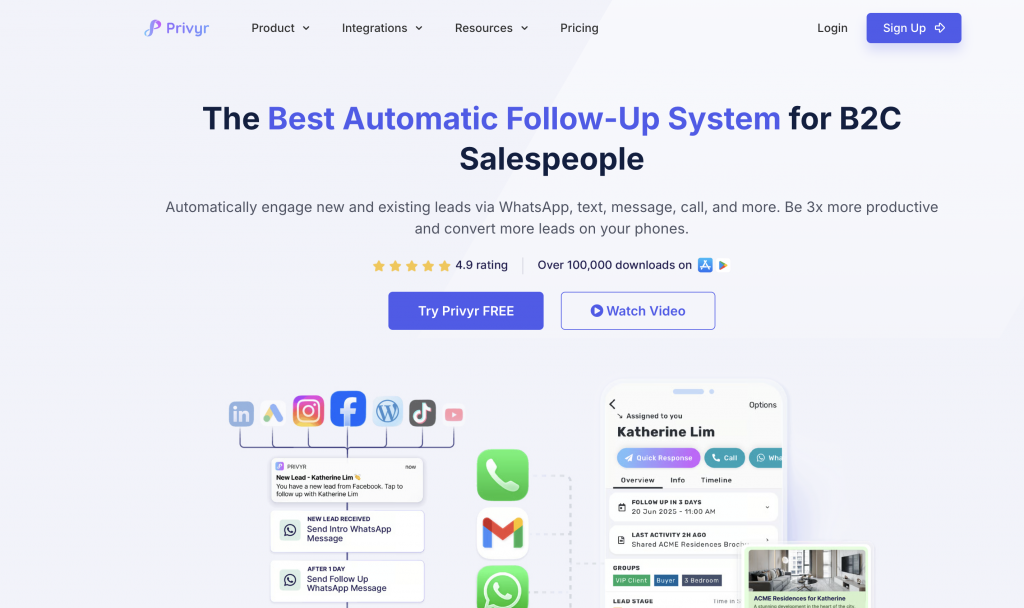
Privyr is a mobile-first lead engagement platform for businesses that generate leads online and communicate with prospects through WhatsApp, phone calls, SMS, and email. It works across mobile, desktop, and other devices, helping sales teams capture leads, respond faster, organize follow-ups, and manage the sales process from anywhere.
Pros:
- Works across all devices, with a mobile-first experience for sales teams on the go.
- Automatically captures and distributes leads from major sources such as Facebook, TikTok, Google, LinkedIn, and websites.
- Enables users to automatically respond to, follow up with, and manage leads through WhatsApp and other messaging apps.
- Simple to set up and more user-friendly than many traditional CRM platforms.
Cons:
- May not suit large enterprises that require highly customized workflows, advanced forecasting, or complex reporting.
- Automation focuses on lead response, follow-up, and distribution rather than complex enterprise-level workflows..
To sum this up
Lead generation can be approached in many different ways. You can focus on sending cold emails or choose a longer funnel where you genuinely connect with prospects and educate them about your product. Regardless of which path you choose, you need the right tools to find leads, enrich them with accurate information, and engage with them across multiple channels.
If you decide to build a longer lead generation cycle, that’s where lead nurturing and customer relationship management tools come into play.
An effective lead generation strategy prioritizes quality over quantity, and with the right tools, you can become the next lead generation Picasso.
