 Updated: September 7, 2026
 22 min read
Key takeaways
- Lemlist's $69 Email tier includes four native CRMs, Zapier, Make, n8n, Clay, its public API, and MCP access, yet conditional branching is reserved for Multichannel or Enterprise—so teams can connect the base plan broadly before they can build its more advanced decision logic.
- Separate client teams isolate campaigns, leads, and billing, but duplicate detection and unsubscribe lists do not cross those boundaries—agencies working the same market need an external suppression process to avoid contacting the same person twice.
- The AI model menu is broader than its documented bring-your-own-key credit bypass: Claude, Perplexity, and Google are available, but only OpenAI is confirmed to bypass credits—buyers should verify credit billing before choosing a provider.
- A large contact database and an 11-provider enrichment waterfall do not make Lemlist a broad LinkedIn collector: direct imports stop at People Search and Sales Navigator, while Lead Scoring measures engagement rather than customizable ICP fit—teams needing community-source prospecting and fit qualification need an additional workflow.
- The 4.45★ blended average combines very different cohorts: most Capterra reviews come from a 2018 launch window, while 90.4% of Trustpilot ratings sit at 1★ or 5★ and the latest wave skews heavily five-star—current buyers should examine dates and complaint themes, not the mean alone.
This review is published by Linked Helper and written by Milosh Potikj, who works there. I've made every effort to represent Lemlist accurately using verified data — our own first-hand testing, Lemlist's own documentation, and independently sourced reviews.
Lemlist is a cloud sales-engagement platform for email-first SMB teams that also want LinkedIn and call steps in one sequence. Founded in 2018 and headquartered in France, it operates under an EU legal and data-residency framework.
The advertised entry plan starts at $69 per month, but it is email-only; LinkedIn automation starts on the $109-per-seat Multichannel plan. The product combines warm-up, enrichment, personalization, and campaign delivery, with a permanent view-only Freemium state after a trial or cancellation. Our safety verdict is conditional: a first-hand source-code review found that the extension uploaded the LinkedIn session to Lemlist’s servers, while no live account-level IP test verified the resulting network route.
Verdict
Lemlist combines warm-up, enrichment, dynamic personalization, and occasional LinkedIn or call steps for an email-first team. The $69 entry price does not include the LinkedIn channel: that requires the $109-per-seat tier, credits represent actions with very different costs, and every LinkedIn account needs its own paid seat. The extension adds a separate concern because it copies the authenticated session to Lemlist’s servers and is already identifiable by LinkedIn’s extension scanner.
These constraints matter more for LinkedIn-first agencies and buyers who require local session custody.
Pros
- Multichannel sequencing: Email, LinkedIn, and call steps can share one campaign on the $109 plan.
- Personalization controls: Dynamic images, video thumbnails, Liquid Syntax, spintax, and AI variables vary the message at several layers.
- Early integration access: Four native CRM connections, automation-platform links, the public API, and the MCP server are available on the Email tier.
- Enrichment coverage: A waterfall searches roughly 11 data providers instead of relying on one email source.
- Documented compliance: The public DPA names subprocessors and safeguards, while a public trust center confirms SOC 2 Type 2.
- Specific support stories: Reviewers describe fast replies, video explanations, and proactive warnings about SMTP settings.
- A real free state: Freemium preserves campaign and lead visibility after trial expiry or cancellation, although it cannot send.
Cons
- The entry tier omits LinkedIn: The $69 Email plan becomes $109 per seat when LinkedIn and calls are required.
- Credits are not uniform: One AI request, a verified email, a phone number, and a Signal Agent can consume 1, 5, 20, or up to 100 credits.
- Session custody leaves the browser: The extension copies the LinkedIn cookie jar to Lemlist’s servers and keeps it synchronized.
- Agency economics stay per seat: One LinkedIn account requires one paid seat, with no bulk discount or white-label option found.
- Cross-team deduplication has a gap: Isolated client teams do not share duplicate-detection or unsubscribe lists.
- Complexity and reliability recur: Workflow setup was the largest structural complaint theme, while bugs were the largest reliability theme.
- Billing exits draw complaints: Reviewers report cancellation ambiguity, continued charges, refund disputes, and VAT or currency surprises across multiple years.
Lemlist Pricing: Plans, Traps, and Hidden Costs
The $69 headline is a starting point, not the LinkedIn price. Lemlist’s Email plan uses a five-step volume ladder, while Multichannel is a flat per-seat price. That distinction matters because a buyer evaluating LinkedIn outreach needs the $109 monthly plan, 58% above the default Email card.
| Plan | Price | What's included | What's NOT included |
|---|---|---|---|
| Freemium | $0 after trial expiry or cancellation | View saved data and campaigns; buy credit top-ups | Sending and campaign launches |
| Monthly: $69 / $89 / $159 / $359 / $659 by 50k / 100k / 200k / 500k / 1M email volume; annual equivalents: $55 / $80 / $127 / $287 / $527 | Email sequences, warm-up, unlimited users, four native CRM connections, API and automation integrations | LinkedIn and call steps; new accounts receive 0 included credits | |
| Multichannel | $109 monthly, $99 quarterly, or $87 monthly equivalent billed annually, per seat | Email, LinkedIn and call steps; 400 credits per user each month | More than one LinkedIn account per seat; bulk discount |
| Enterprise | Custom; 5-seat minimum and annual contract | Negotiated deployment and billing | A month-to-month contract; no white-label capability was found |
Lemlist pricing tiers (July 2026)
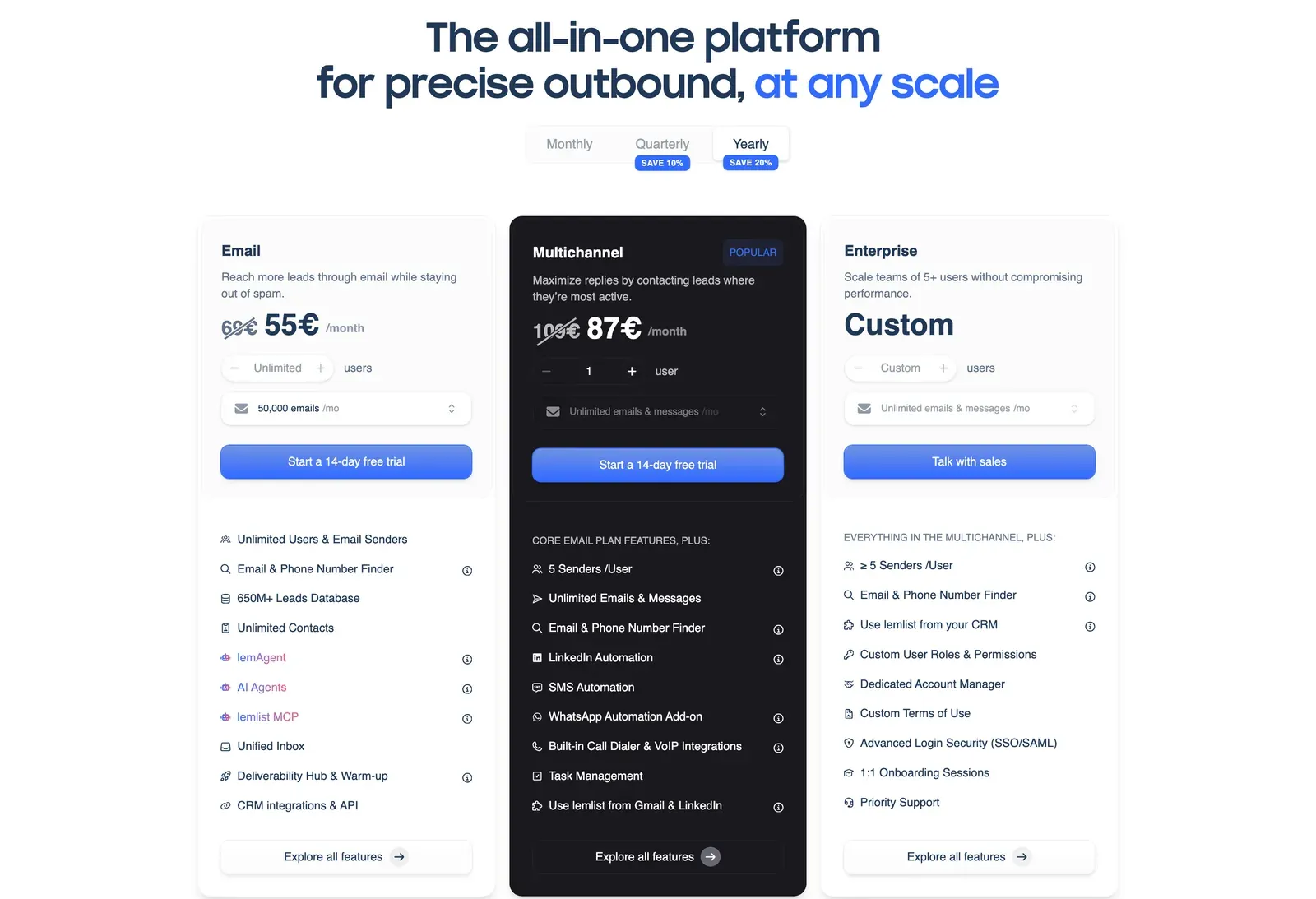
Lemlist's Email and Multichannel pricing cards - July 2026
The credit trap is denomination. The same 400-credit allowance buys 400 successful AI-personalization requests, about 80 verified email finds, 20 phone finds, or as few as four 100-credit Signal Agent actions. The number therefore does not describe a stable amount of usable prospect data.
The agency trap is linear seat cost. Each LinkedIn account needs a full Multichannel seat. Twenty seats cost $20,880 per year at the $87 annual equivalent, and no volume discount was found, which means adding client accounts does not reduce the per-account license price. A prospective buyer independently raised the same one-account-per-license limit in a Reddit thread about switching to Lemlist.
The trial is time- and credit-limited. It lasts 14 days without a credit card and exposes Multichannel, but its one-time 200-credit pool can run out before day 14. The permanent Freemium state is real, yet it becomes view-only for campaigns. We found one verified current post-rebrand price series, so we do not infer a repricing trend from older, differently named plans. See Lemlist’s live pricing page for the current checkout figures.
Pricing trap: LinkedIn access starts at $109 per seat, not the $69 headline, and each LinkedIn account consumes a separate full-price seat.
Lemlist's Automation & Campaign Engine
Lemlist’s confirmed campaign channels form a closed list:
- Email: Sending and warm-up run server-side.
- LinkedIn: Profile visits, connection invitations, messages, custom-note invitations, single-skill endorsements, and AI-assisted post comments depend on the browser extension.
- Calls: Calls appear as steps in the multichannel sequence.
There is no native WhatsApp channel in this campaign model.
Like most tools in this space, Lemlist supports multi-step sequences, auto-stop on reply, A/B testing, CSV import/export, and a 14-day trial. Those are category-standard controls rather than tool-specific differentiators. The more specific mechanic is Advanced Conditions: 12 documented condition types can split a sequence into Yes/No paths and apply “Wait Until” or “Wait Within” timing. Branching is available only on Multichannel and Enterprise, so the Email plan cannot use the same logic.
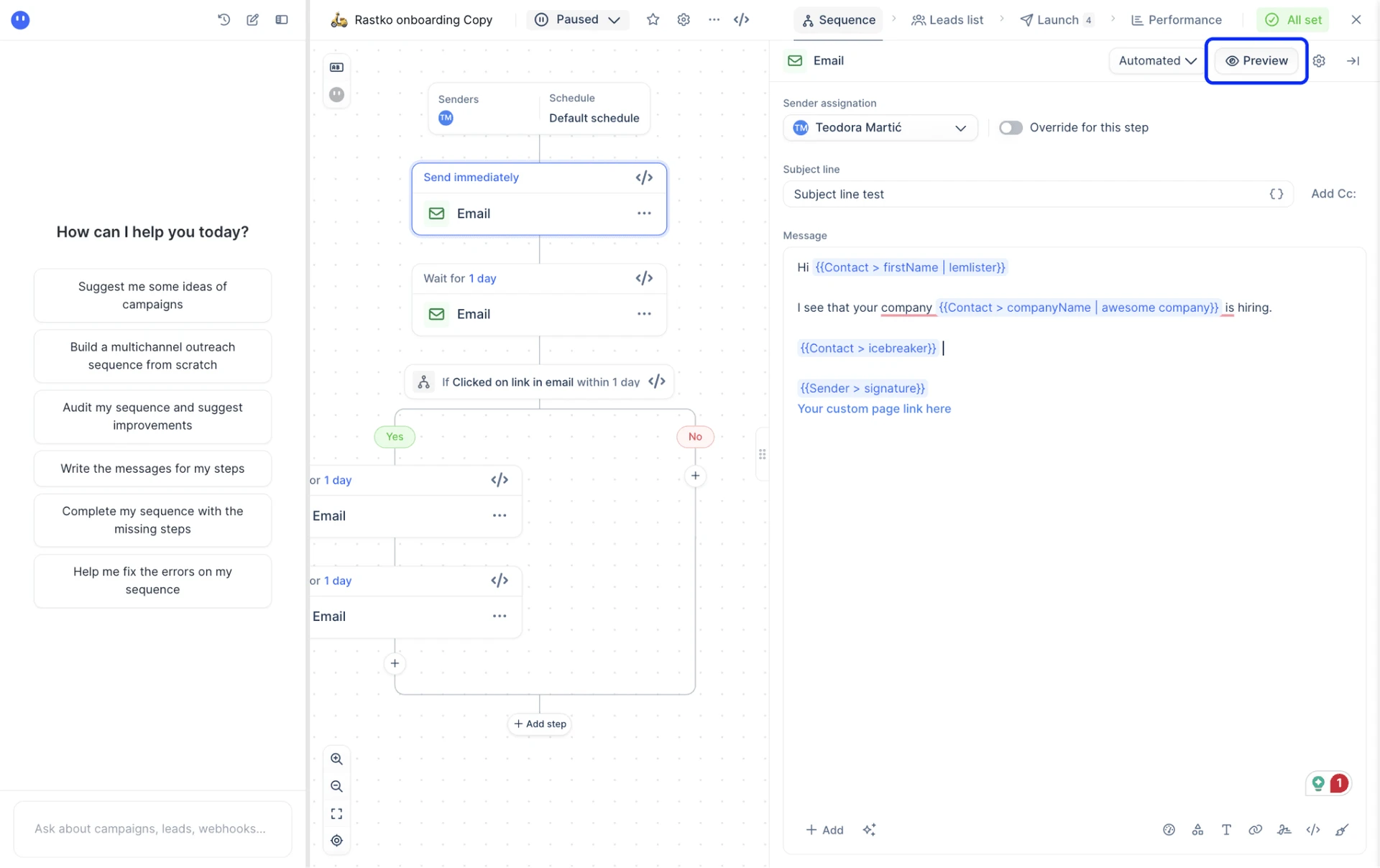
Message and action handling are separate. Liquid Syntax and spintax change what a prospect receives, while campaign conditions decide which path the prospect follows. AI-generated LinkedIn comments create a manual-review task instead of publishing automatically, leaving the operator responsible for approval.
Template support has a boundary. Users can save and share their own custom templates across seats, but no built-in template library was confirmed. A team can standardize what it creates, but it still has to build or import the starting material.
Duplicate prevention stops at the team wall. Client “teams” isolate campaigns, leads, and billing, but duplicate-detection and unsubscribe lists do not cross those workspaces. For an agency running the same market for two clients, that means the same prospect can enter both systems unless the operator adds an external suppression process.
LinkedIn pacing is configurable at the campaign layer. The default ramp starts around two invitations per 24 hours and increases by a user-set daily increment toward a user-set ceiling; Lemlist recommends keeping the combined visit, invitation, and message budget at or below 100 per day.
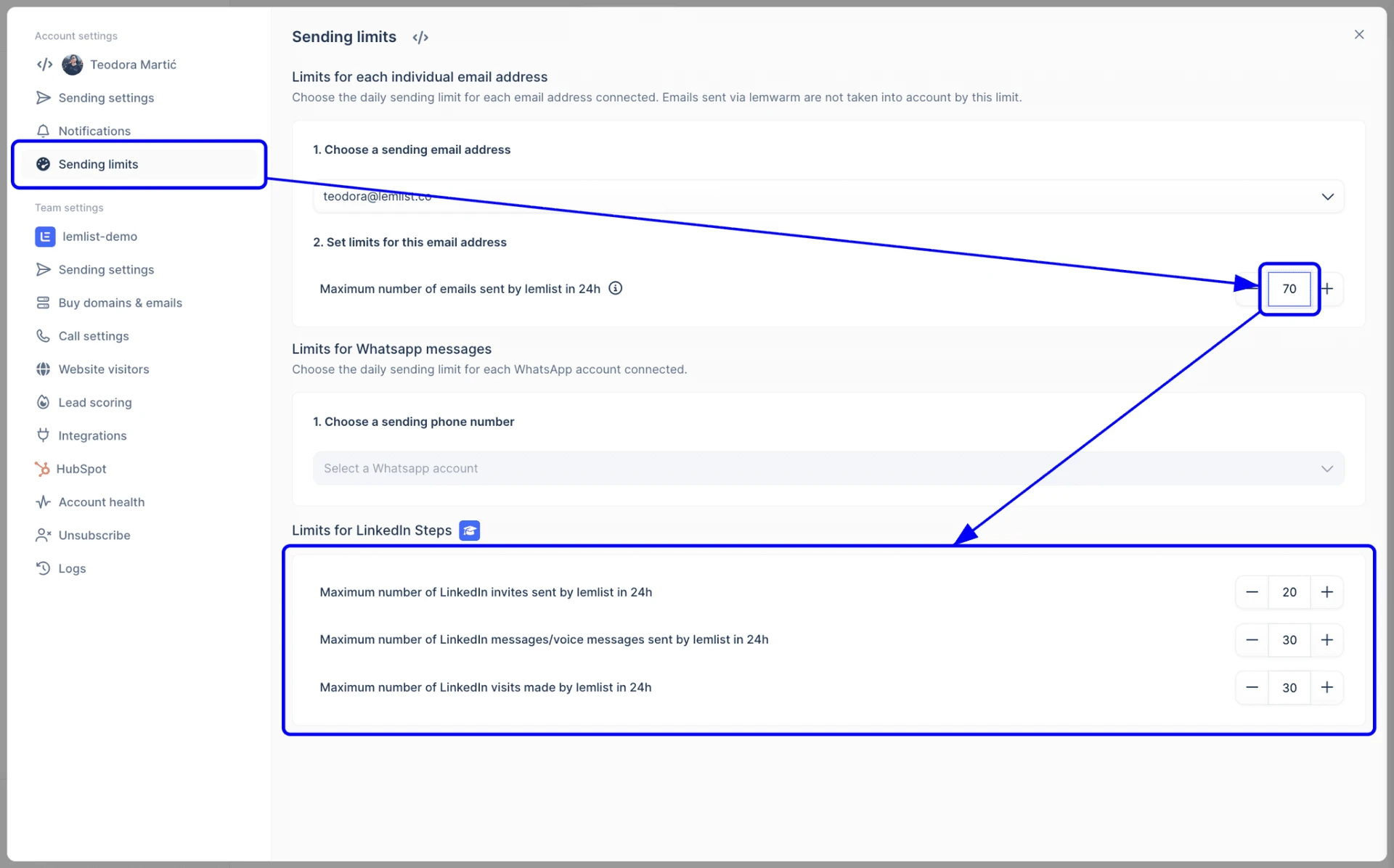
These controls matter because LinkedIn evaluates cadence and volume across actions; this explainer on how LinkedIn measures activity gives the platform-level context. The extension package itself did not expose a working-hours scheduler or randomized jitter, so the server-side enforcement could not be independently inspected.
Campaign boundary: Conditional branches require Multichannel or Enterprise, and suppression lists do not carry across isolated client teams.
AI & Agentic Capabilities
As of July 2026, Lemlist’s AI layer is a set of specialized surfaces, not one autonomous system.
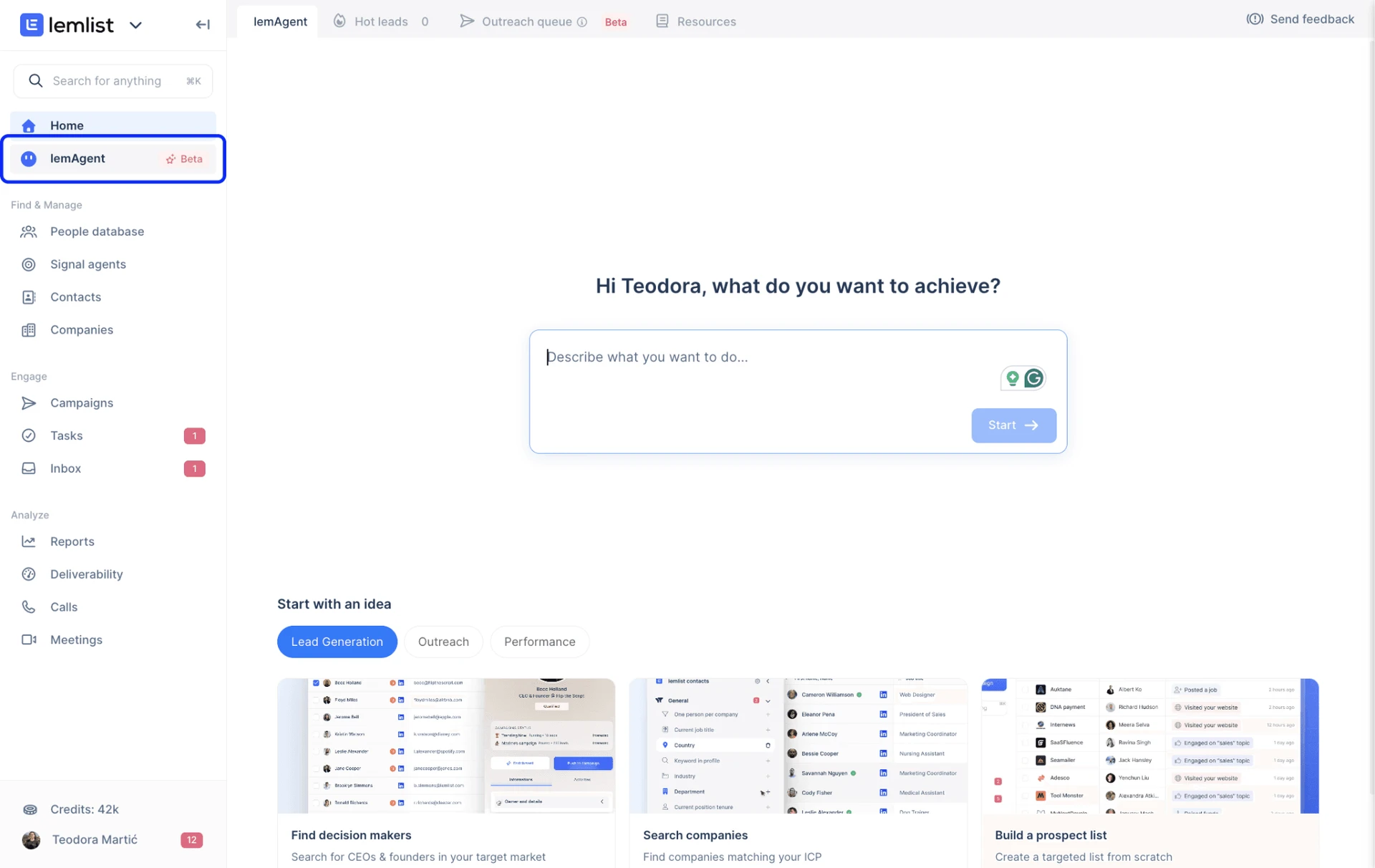
- lemAgent drafts emails and sequences from business information, audience, value proposition, and tone.
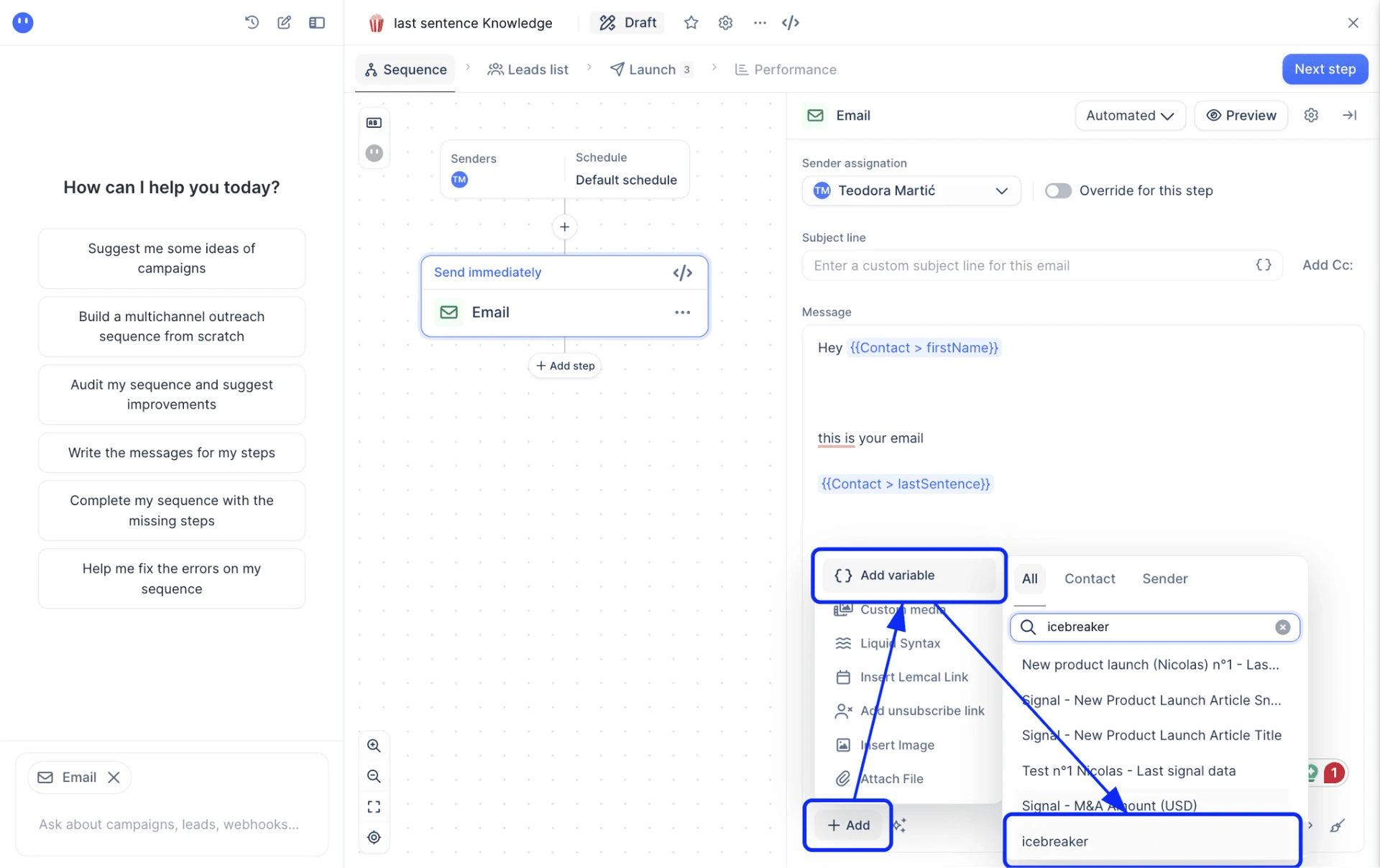
- AI Variables generate or clean personalization data through OpenAI, Claude, Perplexity, or Google models and charge one credit per successful request.
- Signal Agents evaluate external signals and can consume up to 100 credits for one action.
- LinkedIn post-comment generation reads the post and proposes a comment, but creates a manual-review task instead of publishing it.
- Lead Scoring weights engagement signals.
The own-key credit bypass is documented only for OpenAI. Claude, Perplexity, and Google are available choices, but the evidence does not show that bringing those provider keys avoids Lemlist credits. Model choice is broader than the documented credit-bypass policy.
The confirmed feature gap is ICP scoring. Lemlist does not provide native, customizable Ideal Customer Profile scoring that reads a collected profile and decides whether it matches a sales definition. Lead Scoring answers how much engagement a lead has shown, not whether a collected profile matches a sales definition, so buyers should not treat the two labels as interchangeable.
AI boundary: AI-generated LinkedIn comments require manual approval, and the documented bring-your-own-key credit bypass applies only to OpenAI.
Personalization & Message Uniqueness
Lemlist personalizes:
- text,
- custom images,
- video thumbnails,
- landing-page elements.
Liquid Syntax selects conditional text when a field is present. Spintax rotates wording, while AI Variables can generate icebreakers or clean inputs. Together, those controls reduce identical copy across a list and give a team deterministic and generated ways to vary a message.
Dynamic assets are the more visible layer: the prospect’s name, company, or other fields can appear inside an image or thumbnail, not only in the subject line. Personalization can therefore change the creative itself, although the underlying variable still needs reliable source data.
AI-generated comments extend that approach to LinkedIn post engagement, but the product stops at a review task rather than auto-publishing. This preserves an operator checkpoint and also limits hands-off execution. The broader safety implications of extension-driven LinkedIn actions are covered separately below.
Personalization control: Use deterministic Liquid Syntax for required fallbacks; generated variables still consume credits and depend on source-data quality.
Lead Targeting, List-Building & ICP
List discovery is broad at the contact-data level but narrower across LinkedIn sources and fit scoring. Lemlist combines a prospect database with direct LinkedIn imports and waterfall enrichment. Publicly cited database sizes vary: the lower confirmed claim is 450 million-plus contacts and 63 million-plus companies, while other snapshots cite 600–650 million contacts. Because those denominators differ, the range is more defensible than averaging them into one invented number.
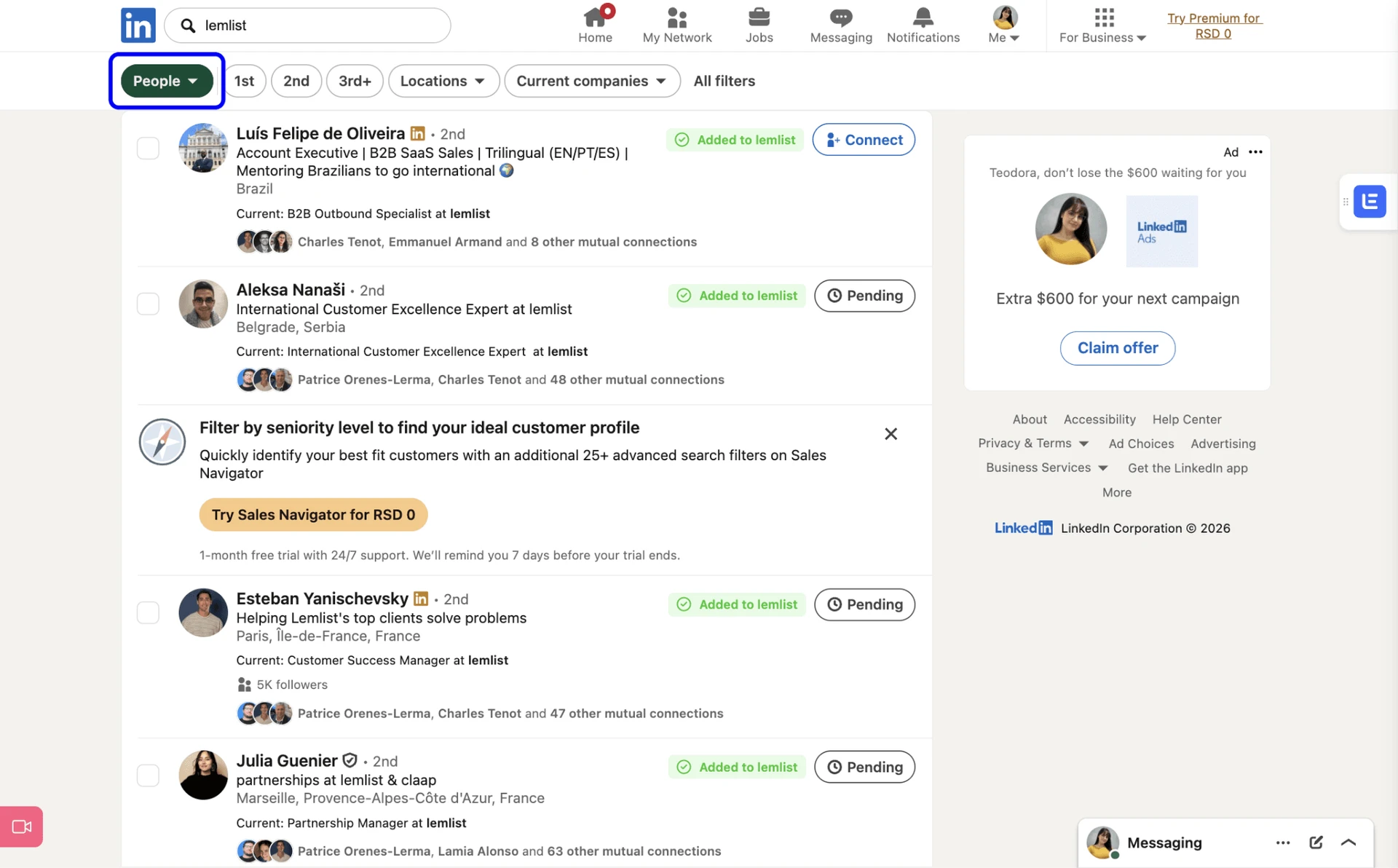
The direct LinkedIn-source list is exhaustive: People Search, capped at 999 leads per import, and Sales Navigator, capped at 2,500. LinkedIn Recruiter is not supported, and no native Groups, Events, or post-reactor scraping was found. For a reader building lists from community engagement or recruiter searches, that means another collection method is required before the leads enter Lemlist.
The email finder runs a waterfall across roughly 11 providers, including Prospeo, Dropcontact, RocketReach, Cognism, and ContactOut. Lemlist reports about an 80% find rate, and each verified address costs five credits, so a 400-credit Multichannel allowance yields roughly 80 successful finds if spent only on that action.
Company filters include size, name, type, year founded, and location. Intent-signal filters and engagement-based Lead Scoring can narrow the pool, but there is no confirmed native fixed-formula or customizable ICP scoring layer.
Targeting gap: Direct LinkedIn collection is limited to People Search and Sales Navigator; Recruiter, Groups, Events, and post-reactor sources are not supported natively.
Integrations & Ecosystem
Lemlist has four native CRM integrations: HubSpot, Salesforce, Pipedrive, and Attio. The count is stated plainly because four connectors describe the verified CRM surface; it should not be inflated with email-provider connections. Zoho, for example, was confirmed as an SMTP/IMAP sending connection rather than a CRM integration, while Close.io was not independently confirmed in the current product.
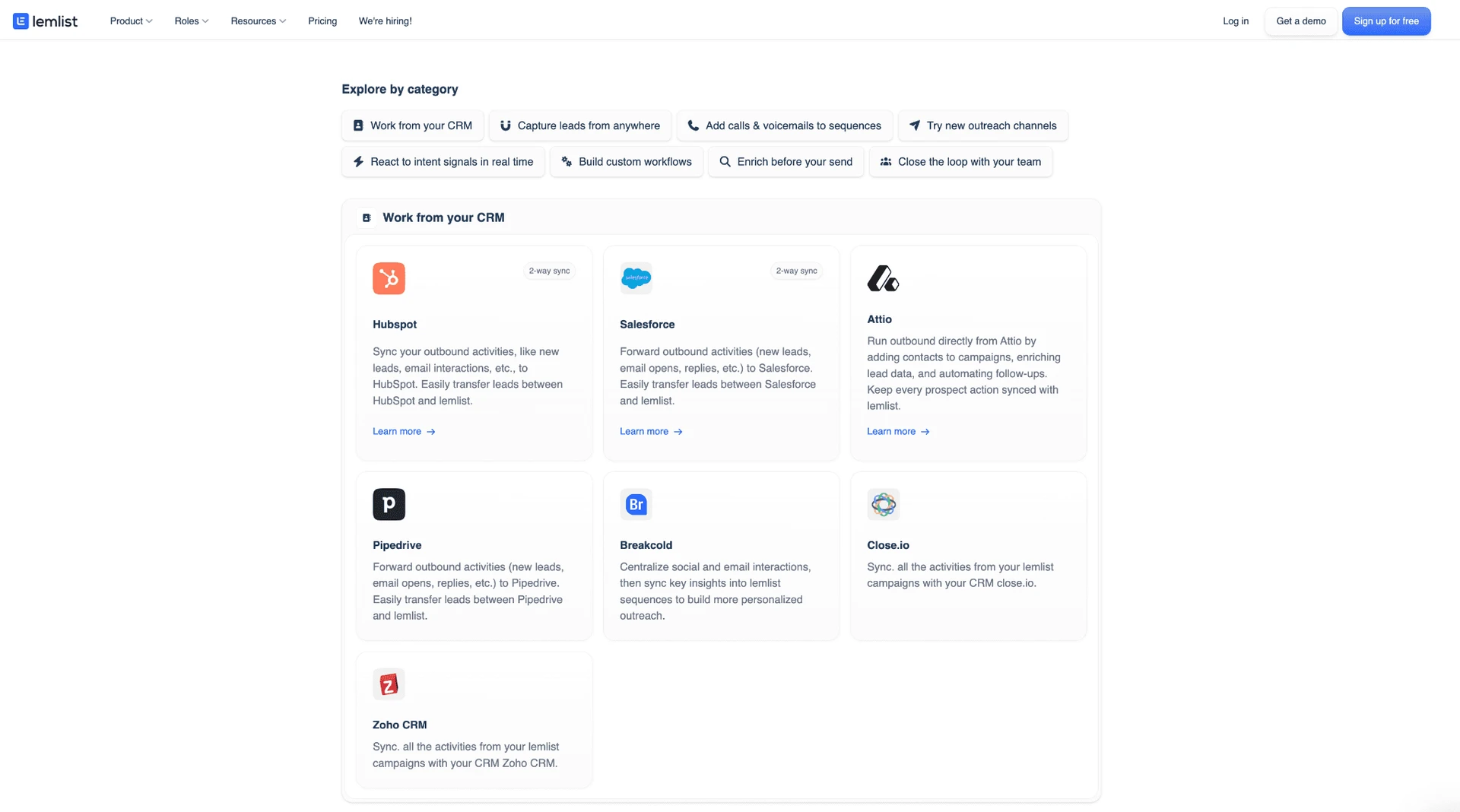
Beyond CRM, the confirmed platform connections are Zapier, Make, n8n, and Clay. Lemlist also exposes a public REST API, a developer portal, and an official MCP server that lets compatible AI clients call supported product functions. All of these surfaces are available on the $69 Email tier. API and automation access do not require an Enterprise contract.
The ecosystem does not erase product boundaries. CRM and automation links move data or trigger work, while email sending still uses configured mailboxes and LinkedIn actions still depend on the extension. For buyers, that means an integration can coordinate the workflow without changing where each channel executes.
No native integration changes the one-LinkedIn-account-per-seat rule.
Integration scope: The verified native CRM count is four; Zoho is an email-provider connection, and Close.io was not confirmed in the current product.
Team, Agency & White-label Tools
Client workspaces stay isolated, but duplicate detection and unsubscribe lists do not sync across them. Lemlist uses separate “teams” for each client’s campaigns, leads, and billing. Custom-saved templates can be shared across seats, which provides a reusable internal starting point, but no built-in template library was found.
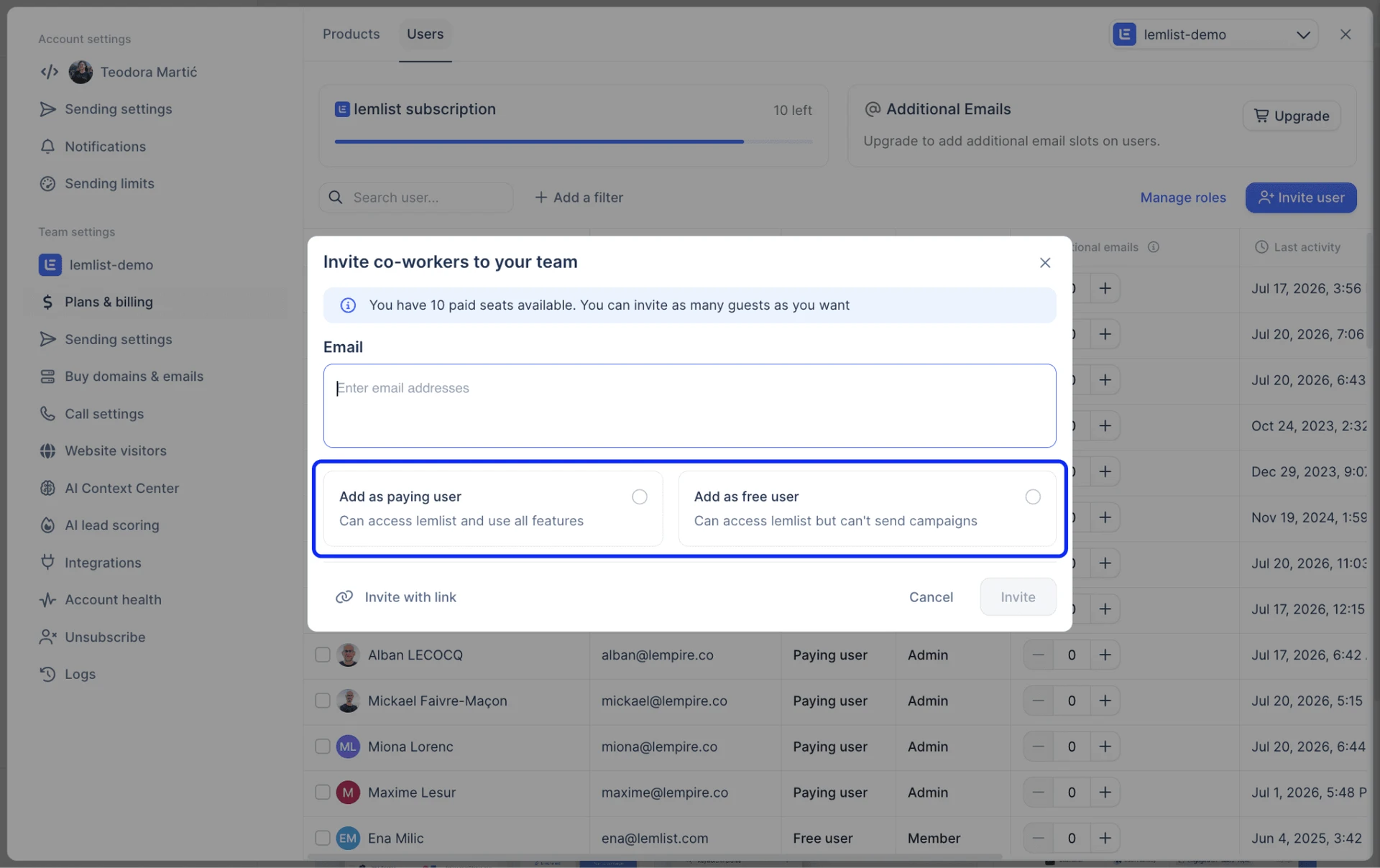
If two client workspaces target the same market, the same person can be contacted twice unless the agency maintains a separate suppression list.
Seat economics create the other boundary. Each LinkedIn account requires one Multichannel seat, no bulk discount was found, and no white-label or branded client portal was found on any tier. Enterprise starts at five seats and requires an annual contract even when billing is monthly or quarterly. “Flexible billing” changes payment cadence, not contract duration.
Agency constraint: Client workspaces are isolated, but cross-workspace deduplication is absent and each LinkedIn account still requires a separate full-price seat.
Analytics & Reporting
CSV export is available, but review evidence describes Lemlist’s native reporting as basic.
Lemlist exports leads and campaign results to CSV without a confirmed tariff gate or numeric cap. Lead Scoring adds a weighted engagement indicator, but the vendor explicitly says it is not a customizable formula that can be summed like a spreadsheet.
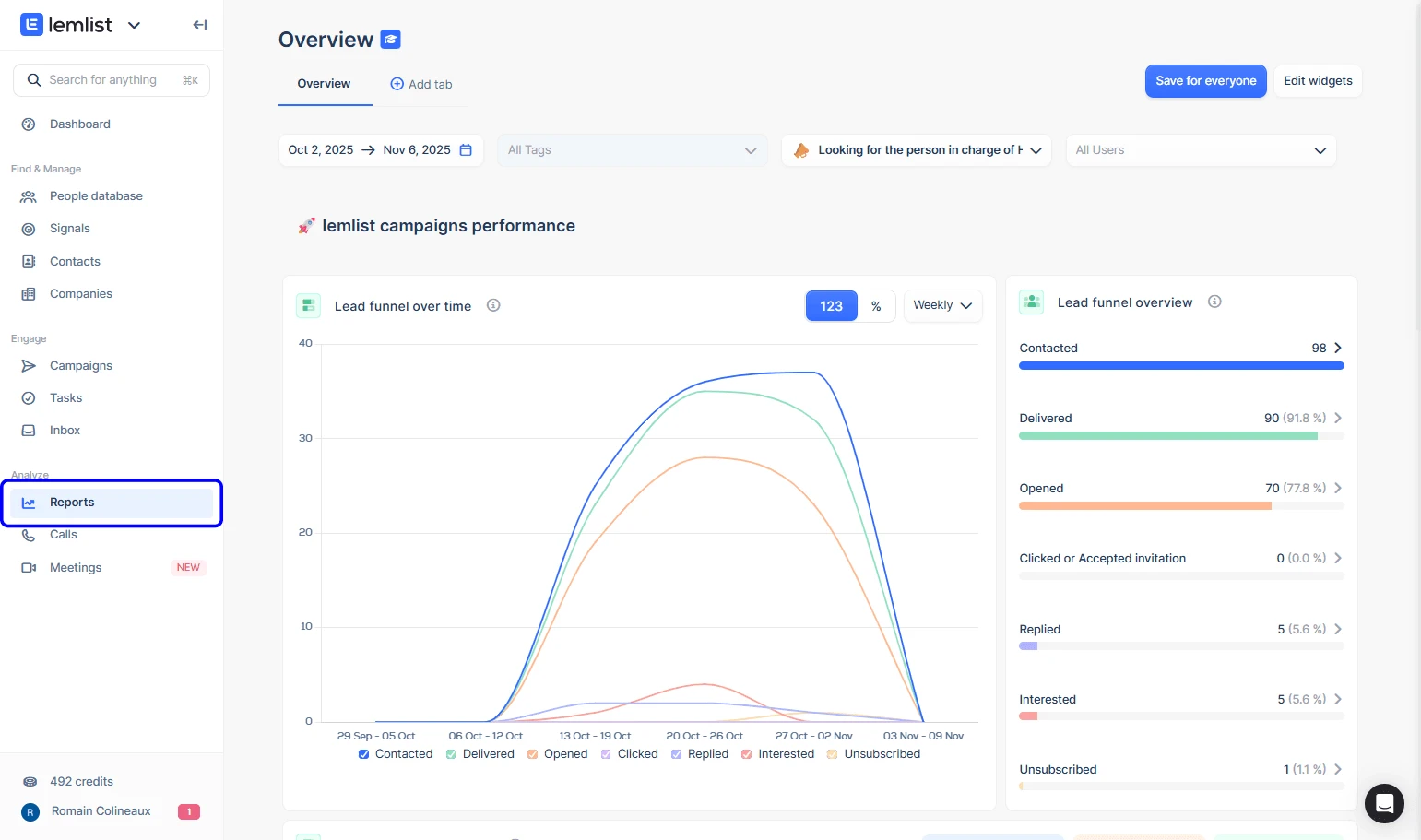
Teams needing custom attribution or management reporting may have to move the exported data into another system. The available evidence does not establish whether per-message history and metadata are included in that export, so we do not assume they are.
Reporting limit: CSV export is available, but custom ICP scoring and per-message metadata export were not confirmed.
Is the Lemlist Extension Safe?
Lemlist documents pacing controls, but they do not change the session-upload architecture found in our June 2026 source-code review. Invitation ramp-up starts around two per day; users set the daily increment and ceiling; and the help center recommends 100 or fewer combined LinkedIn actions per day. Lemlist’s restriction guide warns that automation can look unnatural and raise restriction risk. These controls reduce behavioral exposure without changing session custody.
What I verified first-hand
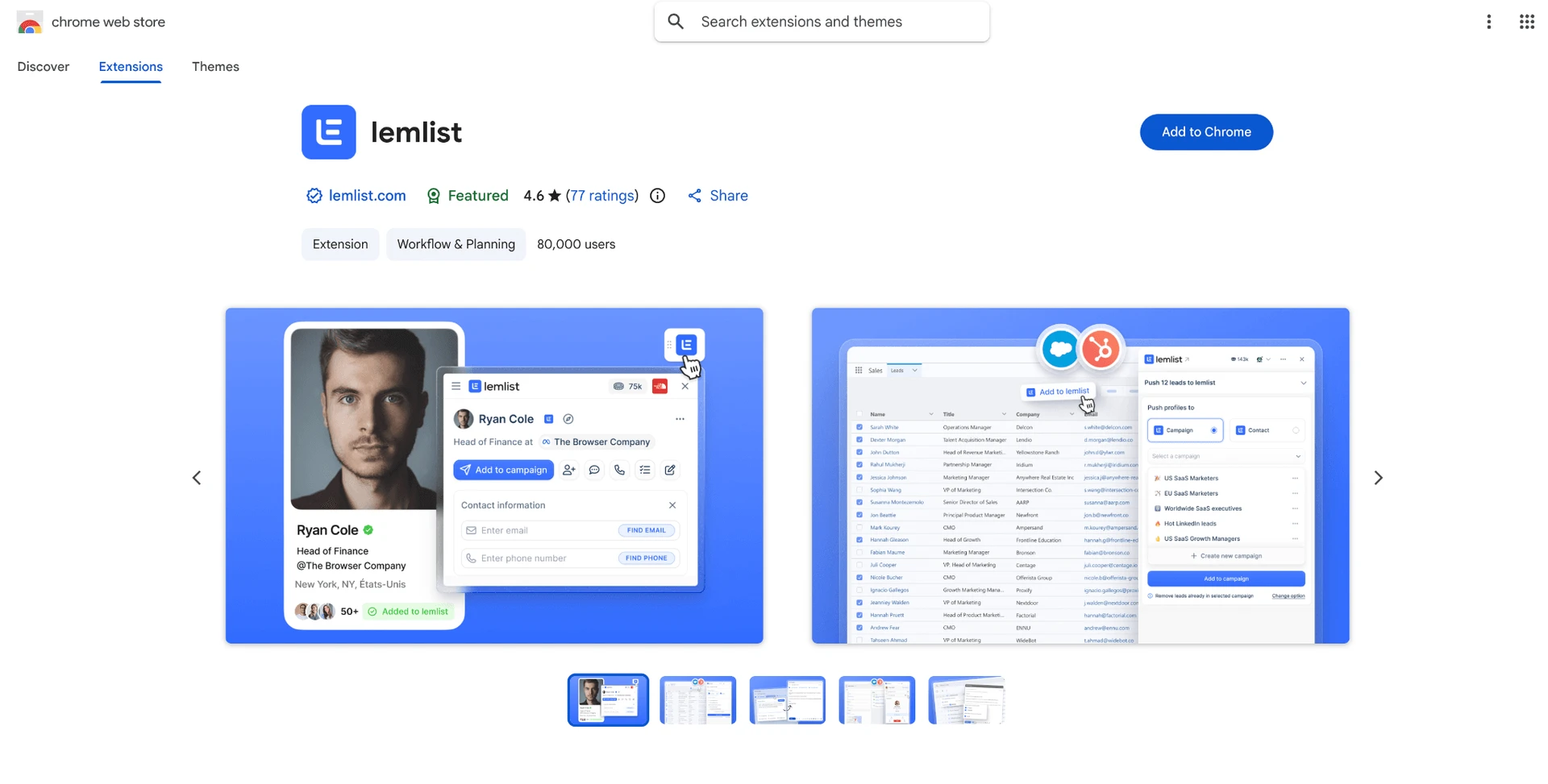
The extension reads li_at, your LinkedIn login in cookie form; whoever holds it can act as the account without the password. It also reads the rest of the LinkedIn cookie jar and keeps that copy synchronized whenever the session changes. That means the vendor receives an active session, not merely exported lead data.
This makes the extension a cloud-bridge: a browser add-on whose job includes copying the LinkedIn login to the vendor’s cloud, which can then operate from its own IP.
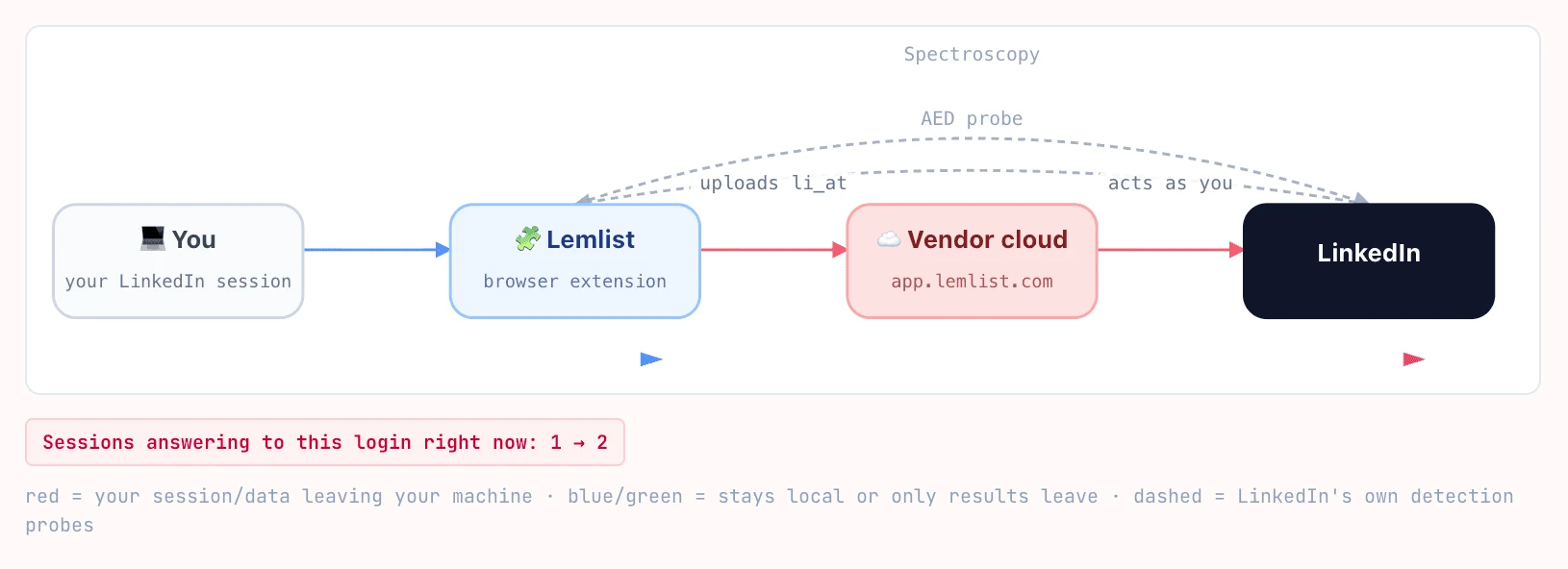
The user’s browser and the vendor-held copy can represent the same session from different network and device contexts. In practice, that adds signals that campaign pacing alone cannot remove.
| What was checked | Result |
|---|---|
| Session handling | Full LinkedIn cookie string, including li_at, sent to app.lemlist.com on install, on cookie changes, and on demand |
| Active Extension Detection | Yes — the extension ID is on LinkedIn's target list and uses a stable probeable resource |
| LinkedIn page footprint | Content scripts inject at document start; 38+ synthetic events and 21 programmatic clicks were found |
| Client-side pacing controls | No daily cap, working-hours scheduler, or randomized jitter was found in the shipped extension; scheduling appears server-side |
| User-controlled proxy or dedicated IP | None found for LinkedIn; documented proxy settings concern email deliverability |
| Telemetry blocking | None found |
| Live account/IP verification | Not run — exit-IP geography, IP reputation, and live fingerprint behavior were not measured |
Lemlist extension safety findings
AED, or Active Extension Detection, is the label visible in LinkedIn’s production code for scans that report as an AedEvent; it is not a public LinkedIn product name. LinkedIn silently probes thousands of specific extension IDs on every page visit. Being on that list means the extension’s installed state can be visible before it performs an outreach action.
The honest read: In the June 2026 test setup, the code-level result supports a high-risk architecture finding because session upload, an identifiable extension footprint, code injected into the page, and synthetic events all add detection surface.
No tool eliminates account-restriction risk. LinkedIn also judges behavior, and manual users can trigger warnings by opening large numbers of profiles directly by URL or processing actions at unrealistic speed. See the platform-level guides to LinkedIn restriction types and the weekly invitation limit for the controls an operator still has to respect.
Safety finding: The extension uploaded the active LinkedIn session and was already targetable by LinkedIn's extension scanner; no live IP test was run, so the network-route conclusion remains unverified.
What Reviews and Reddit Actually Show
Across 794 rated reviews, Lemlist averaged 4.45★, but that result combines sharply different cohorts. G2 was 4.47★ across 263 reviews, Capterra 4.57★ across 385, and Trustpilot 4.10★ across 146. Capterra needs context: 222 reviews came from a March–April 2018 launch-era window, so its average weighs the early product heavily.
Trustpilot shows a different shape: 106 reviews were 5★ and 26 were 1★, putting 90.4% at the extremes. A separate recent window contained 99 Trustpilot reviews, 90 at 5★; the all-platform trailing six months contained 39 rated reviews at 4.69★, trending up. Those are different denominators, and the Trustpilot wave partly explains the trend.
The date pattern is an observation, not an explanation. Only 409 reviews could be grouped by week. The week beginning November 17 contained 15 reviews, or 3.7% of that dated set; the densest day had 12 Trustpilot reviews, 11 rated 5★. In the same window, a 2★ reviewer wrote, “Customer success is inexistent. Been chasing them for a demo and onboarding call for a week and still nothing.” This is a volume-and-sentiment pattern, not an explanation. No negative-date cluster was detected.