 Updated: October 12, 2026
 65 min read
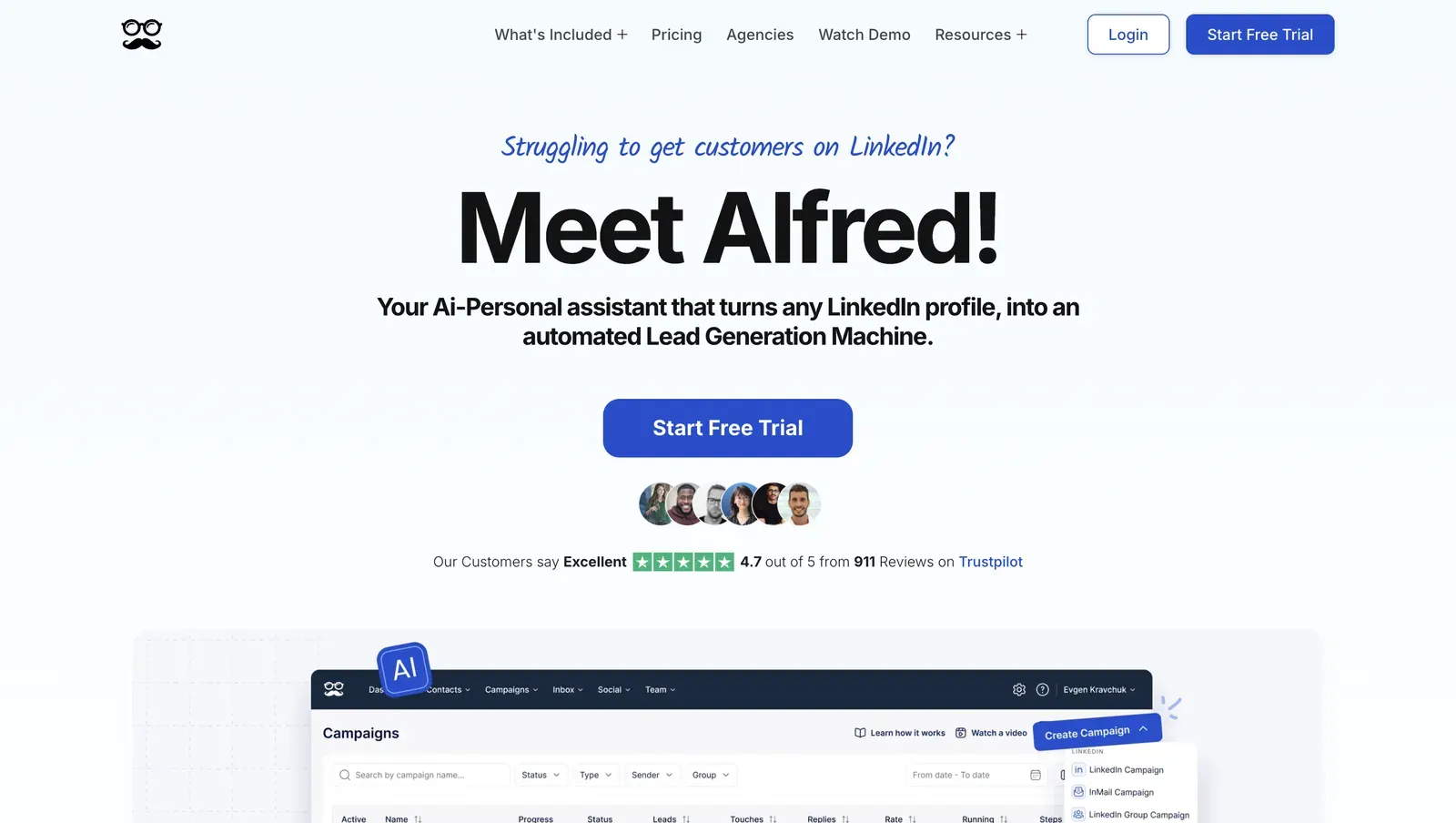
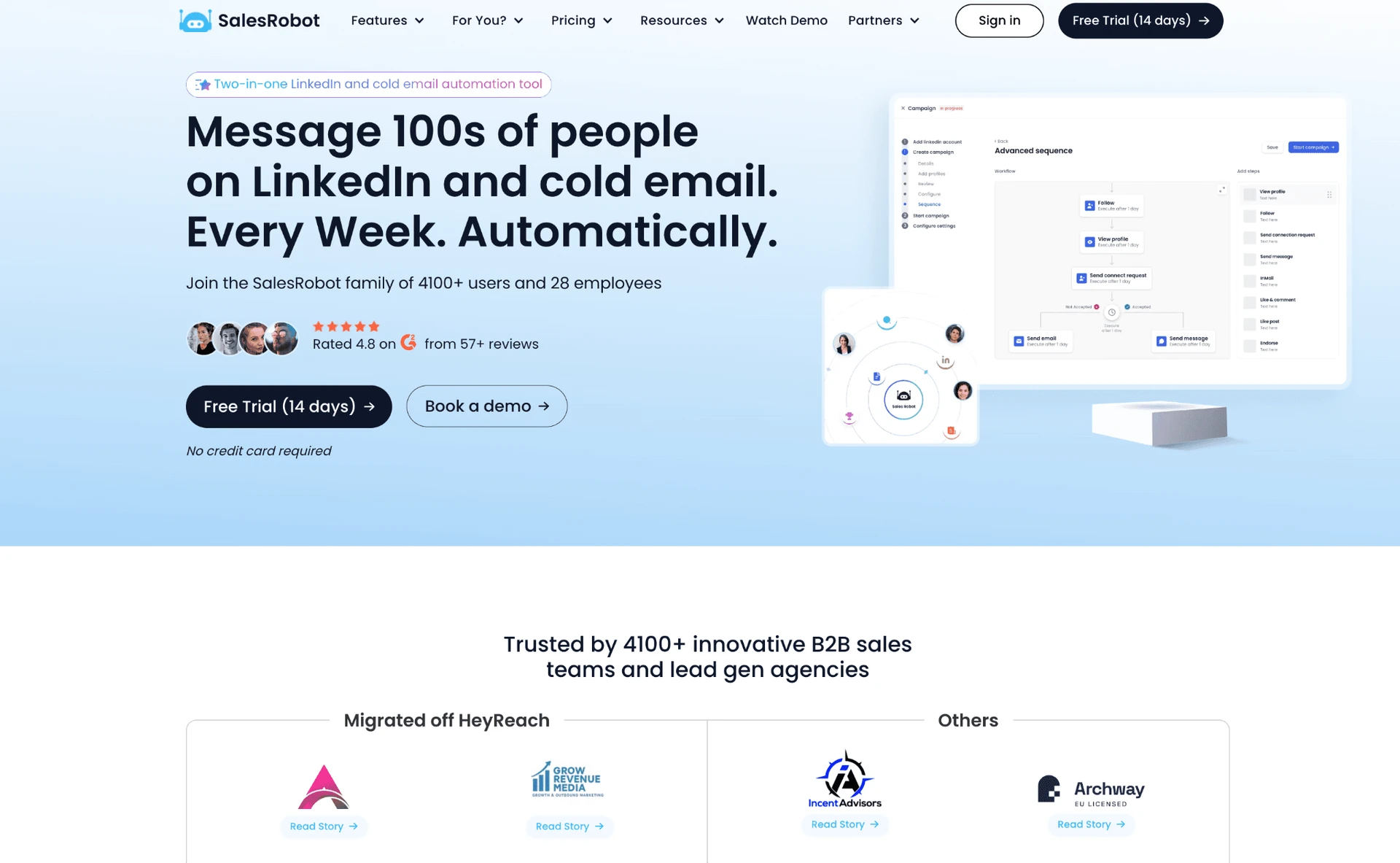
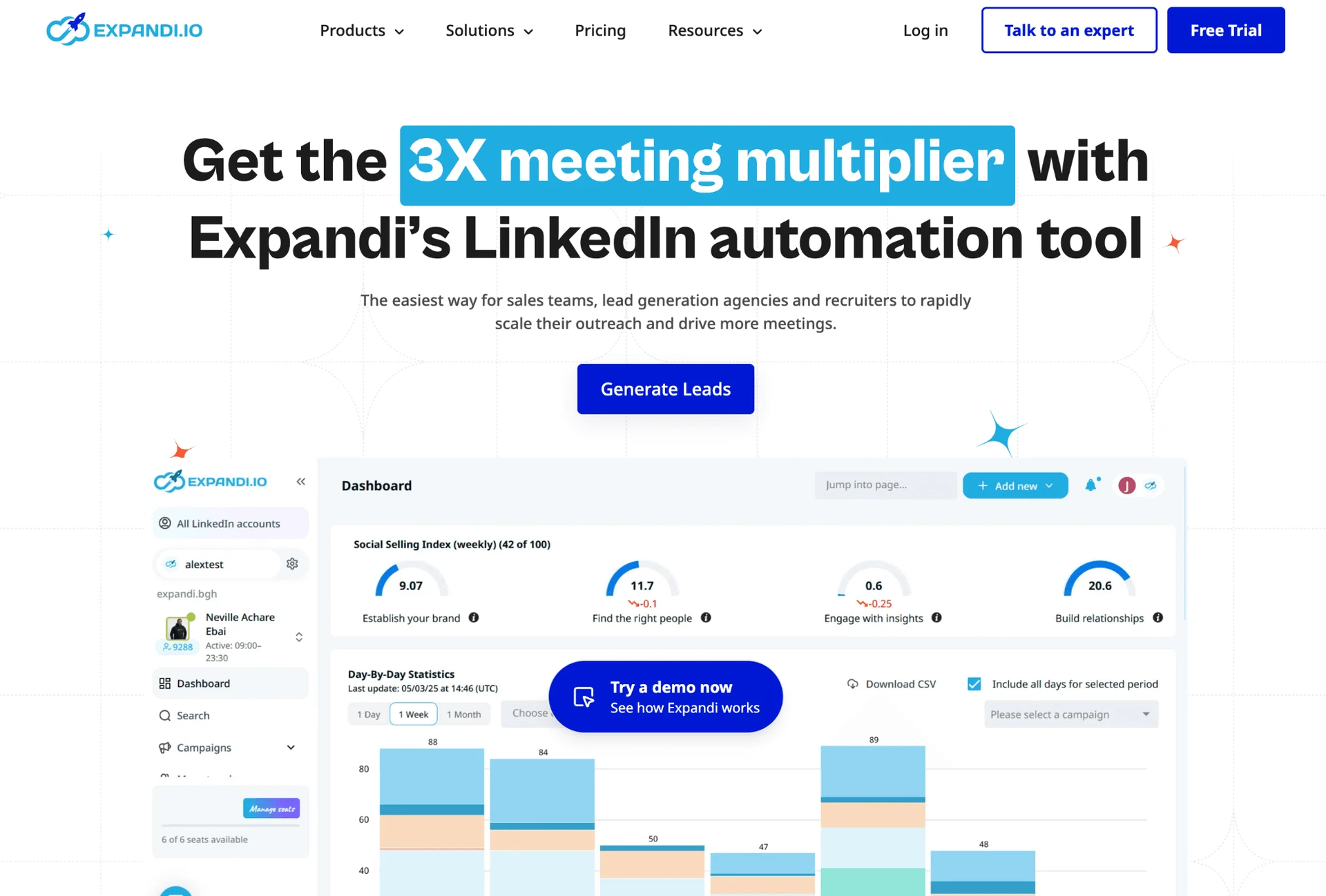
Linked Helper is the best Lemlist alternative for teams prioritizing lower cost at scale, broader LinkedIn targeting, and direct account control. Its desktop app runs on your machine or VPS, keeping the LinkedIn session outside vendor cloud infrastructure. Pricing starts at $15 monthly or $8.25/mo on a 12-month license, with tiered volume discounts starting at 10 seats. For example, 20 Standard licenses with a 20% discount cost $1,584/year versus Lemlist's $20,880 baseline. It also collects from 13 LinkedIn source types versus Lemlist's 3. Tools we compared against Lemlist: Linked Helper, Dux-Soup, Dripify, Waalaxy, HeyReach, Meet Alfred, SalesRobot, Expandi, and Skylead.
| Tool | Architecture | 20-seat agency cost (from, /year) | Cost vs Lemlist |
|---|---|---|---|
| Linked Helper | Desktop | $1,584 | 92% cheaper |
| Waalaxy | Chrome extension | $3,840 | 82% cheaper |
| Dux-Soup | Cloud | $4,452 | 79% cheaper |
| SalesRobot | Cloud | $7,920 | 62% cheaper |
| HeyReach | Cloud | $8,988 (naive minimum-tier calculation) | 57% cheaper |
| Meet Alfred | Cloud | $9,360 | 55% cheaper |
| Dripify | Cloud | $18,960 | 9% cheaper |
| Expandi | Cloud | $18,960 | 9% cheaper |
| Lemlist | Cloud | $20,880 | Baseline |
| Skylead | Cloud | $24,000 | 15% more expensive |
Architecture and documented 20-seat agency cost, side by side
Pricing data as of July 2026. For the 20-seat agency scenario, costs use the feature-appropriate brand/agency tier per tool: Linked Helper Standard, Dux-Soup Cloud Agency, Dripify Advanced, Waalaxy Pro, HeyReach Growth, Meet Alfred Team, SalesRobot Advanced, Expandi Business, Skylead All-in-one, and Lemlist Multichannel Expert. Figures assume annual billing where available. Lemlist's $20,880/year is the baseline.
This article is published by Linked Helper. Linked Helper is our product and our top recommendation. We use the same evaluation framework for every tool in this comparison — see "How We Evaluated These Alternatives" and "Methodology Deep-Dive" below for the full dataset and first-hand test methodology.
Key takeaways
- Linked Helper is our pick because its local model keeps both the assigned IP and your data under operator control. On the IP side: four of the five alternatives here with scored vendor-assigned IPs produced at least one 94–100 result from IPQualityScore (IPQS*) in our June 2026 tests. On the data side: campaign data, message history, and collected profiles stay on your machine rather than a vendor's cloud — relevant if your compliance policy restricts where prospect data can live. Local custody removes the opaque IP pool and third-party data custody from the setup, not behavioral risk.
- Linked Helper lets you choose custody: run fully local with data and IP under your control, or use cloud mode when team collaboration matters. Competitors force one model — cloud-only vendors keep your prospect data and assign IPs from their pool; desktop-only tools lock you out of shared workflows.
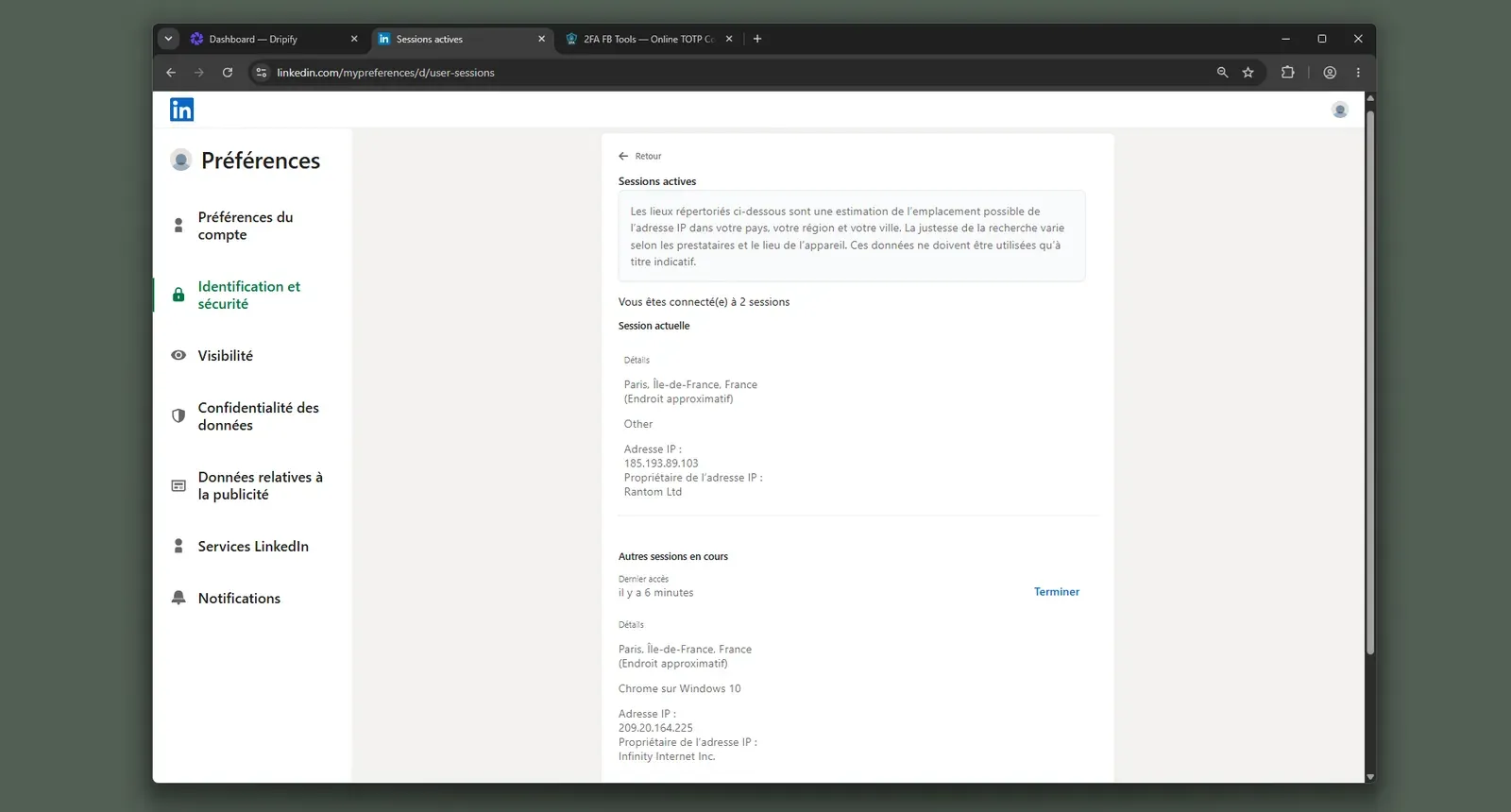
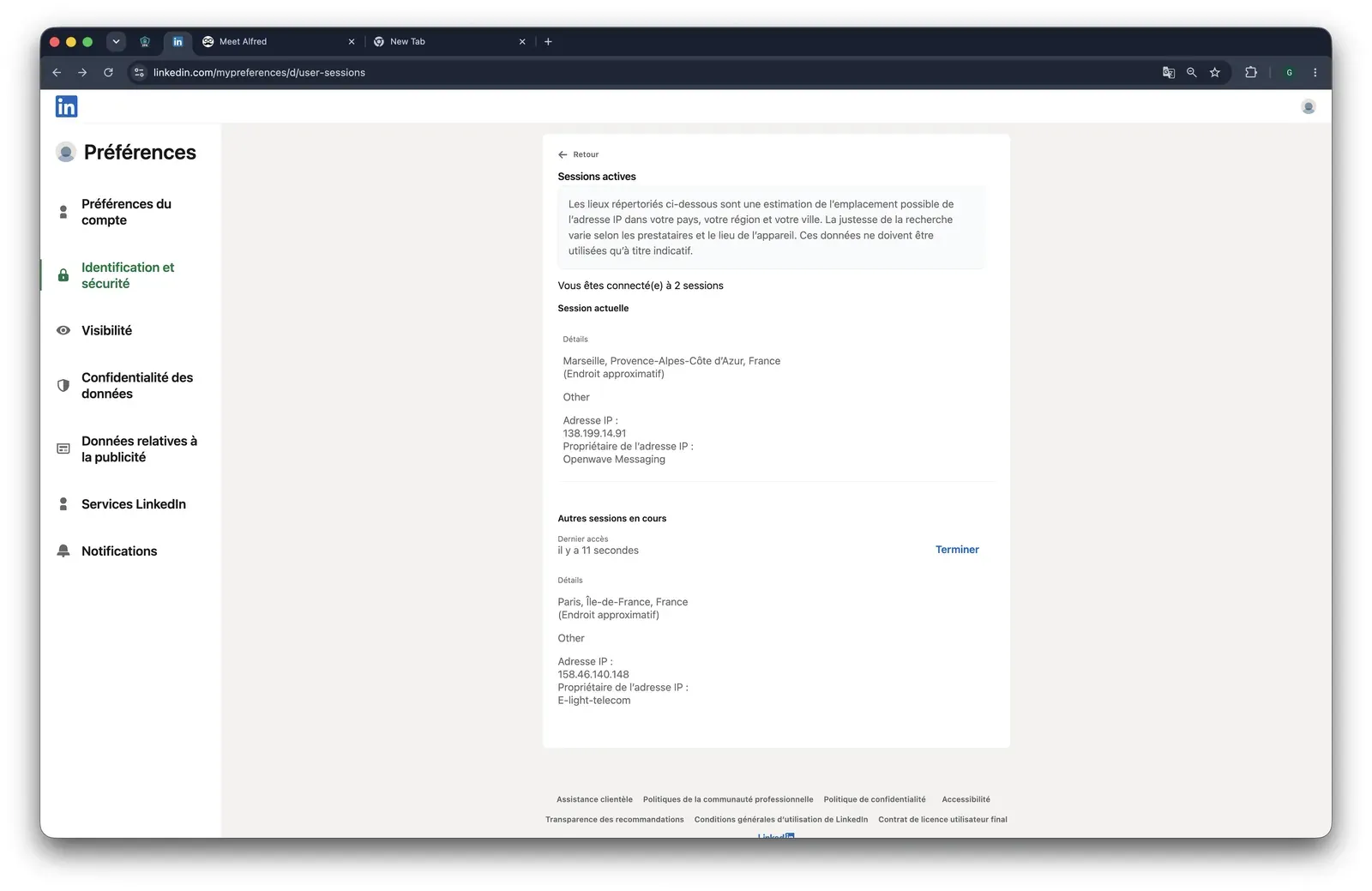
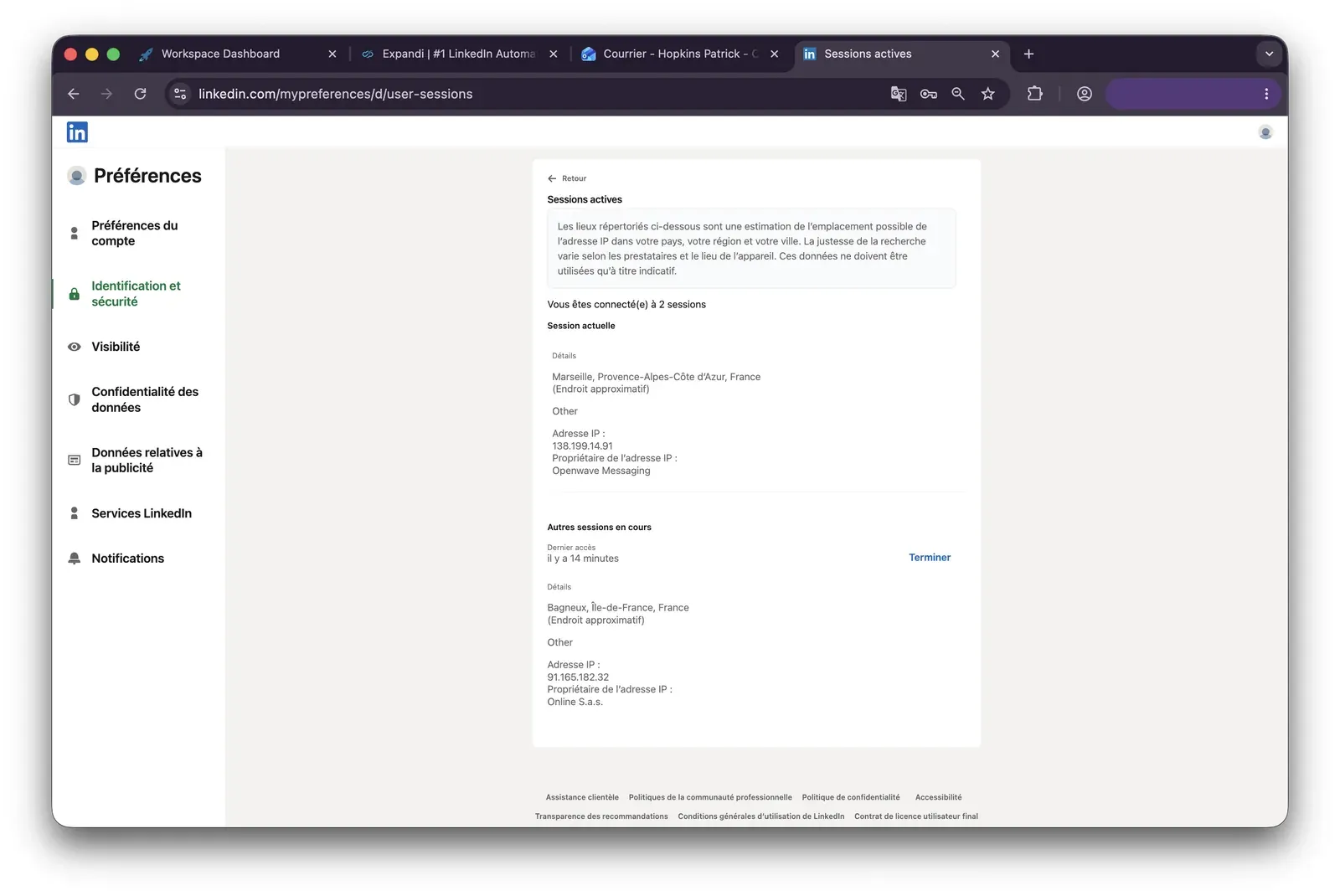
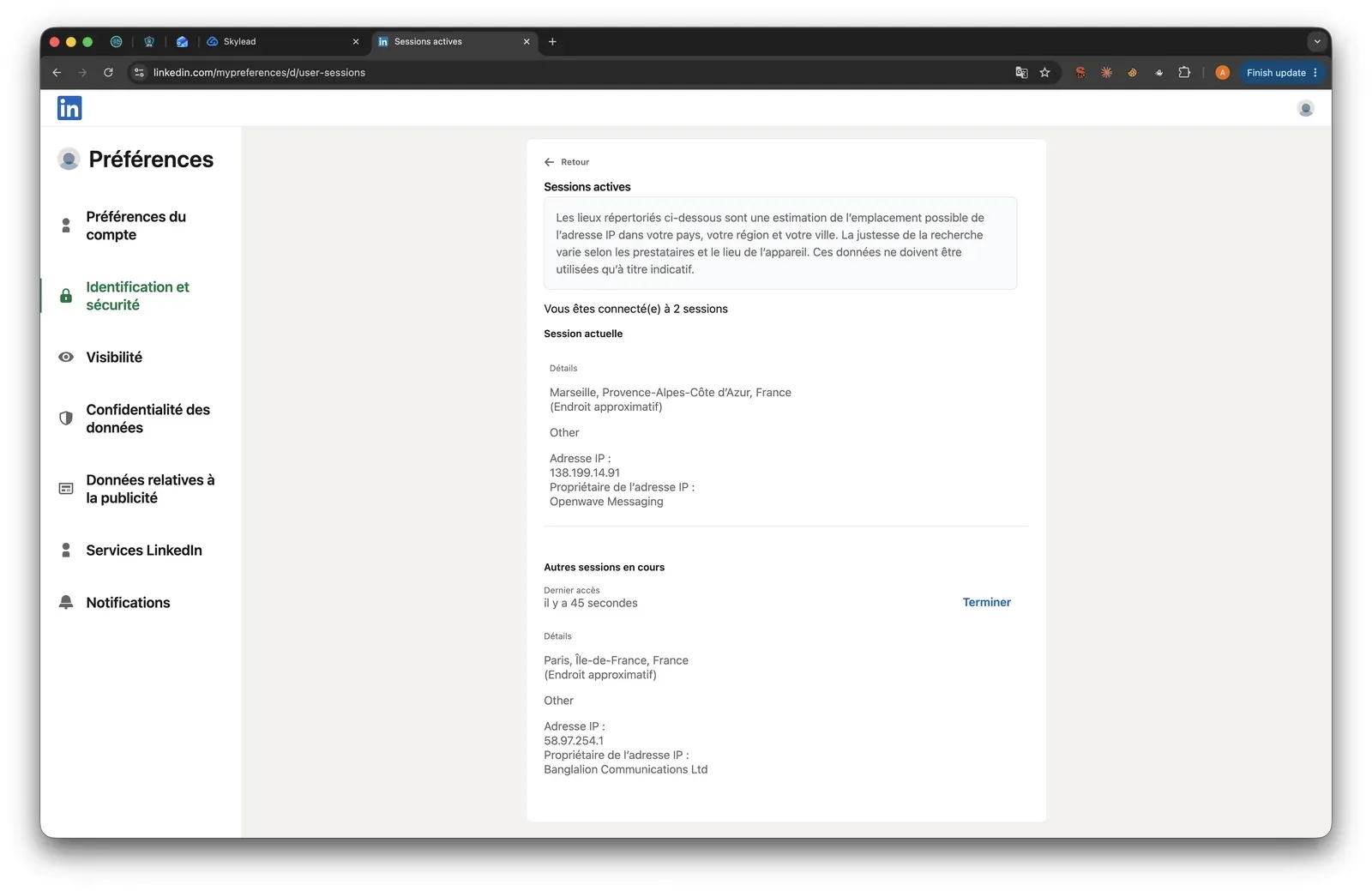
- Dripify and Skylead both routed our test accounts through HostRoyale: Dripify's addresses shared a /24, while Skylead assigned the exact same IP to both accounts. The logo differs; the servers don't, so one provider's reputation can add a signal across brands.
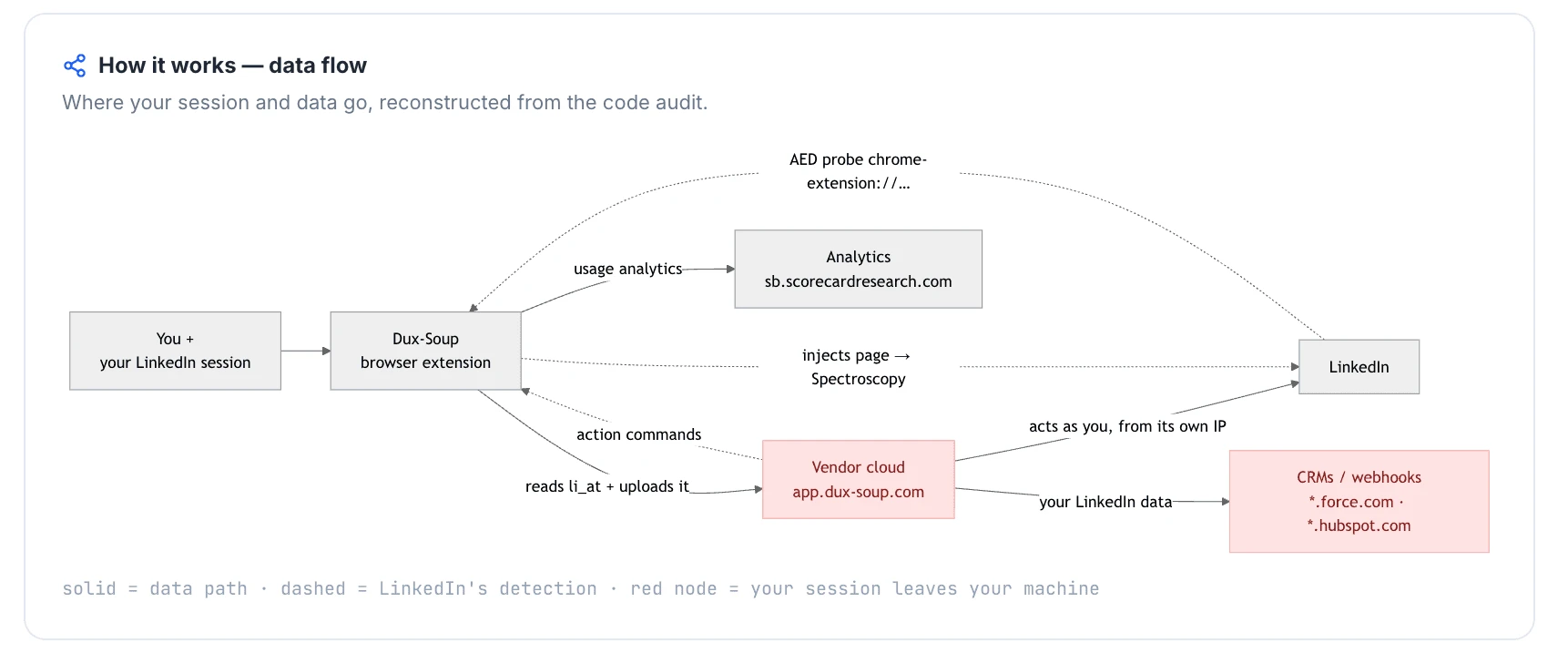
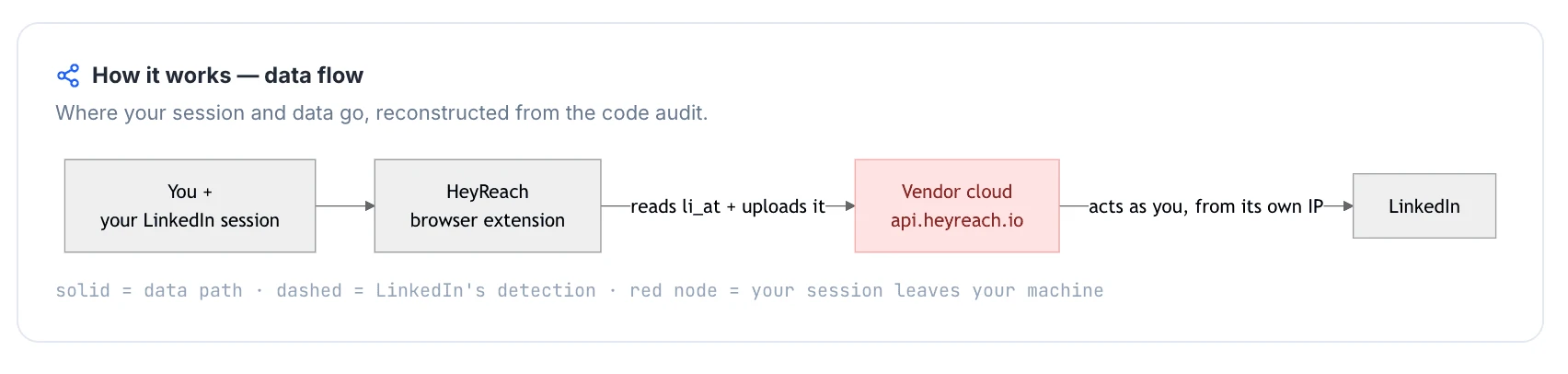
- Five extension-based cloud login flows we inspected—Lemlist, Dux-Soup Cloud, Waalaxy, HeyReach, and Expandi—read
li_at, the LinkedIn session cookie whose holder can act as the account without the password, and sent it to a vendor endpoint. That moves usable session access outside the original browser, adding a custody signal before outreach volume even enters the picture. - Two of six signups with observed trial terms contradicted a public pricing-page claim: Dux-Soup required a card and yielded no trial despite its no-card promise, while Expandi offered 7 days instead of the advertised 14 and required a card. Verify checkout before scheduling a pilot.
*IPQS is an independent fraud-prevention service with 10+ years on the market that rates IPs from 0–100; 75+ is high-risk on its scale. It is an independent signal, not LinkedIn's verdict.
What Is Lemlist?
Lemlist is a cloud sales-engagement platform founded in 2018 and headquartered in France. It combines cold-email campaign building with lead data, enrichment, deliverability tools, and multichannel steps.
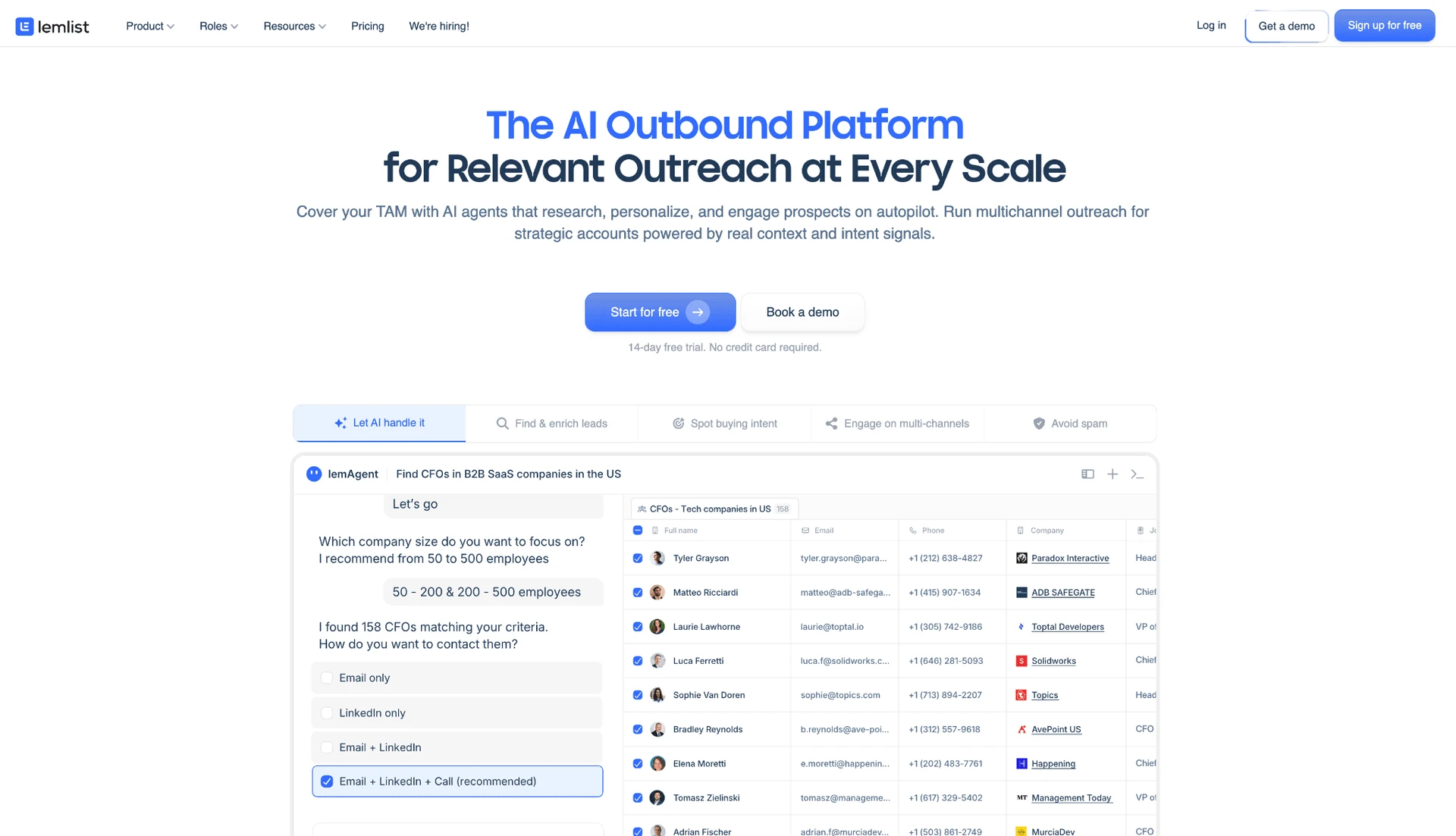
Here, data enrichment means appending contact data, typically a verified work email, to a LinkedIn profile. That can unlock profiles that require an email to invite and support multichannel follow-up, but data freshness matters alongside validity.
Its functions include:
- Image, video, and liquid-syntax personalization.
- Lemwarm email warm-up and deliverability monitoring.
- A lead database and contact enrichment.
- Connections to HubSpot, Pipedrive, and Salesforce, plus Zapier and API access.
- LinkedIn, WhatsApp, calling, and email steps on the Multichannel Expert plan.
Campaigns run through Lemlist's cloud interface. LinkedIn access uses a companion browser extension, while email and other sequence logic remain in the vendor's platform. The pricing and targeting trade-offs follow separately.
Lemlist at a Glance
Lemlist combines creative cold-email and native multichannel functions, but per-user economics and narrower LinkedIn collection coverage create the replacement case.
Strengths
- Image and video personalization for cold-email campaigns.
- Liquid syntax for varying message content.
- Lemwarm and related deliverability tools.
- Native email, LinkedIn, WhatsApp, and calling steps.
- Direct CRM connections for common sales systems.
Limitations
- Email Pro starts at $79 per user monthly, while Multichannel Expert starts at $109 on monthly billing. The comparison's 20-seat Multichannel Expert baseline is $20,880 per year.
- At 20 seats — a typical agency setup — custom user roles and permissions matter, and Lemlist gates them behind its Enterprise plan with unpublished pricing. The real cost of an agency-ready configuration may therefore exceed the $20,880 baseline.
- Enrichment and data use credits, so usage can add another variable to team cost.
- Lemlist has three documented LinkedIn collection sources versus Linked Helper's 13. That narrows targeting across regular LinkedIn, Sales Navigator, and Recruiter workflows.
- Ease, reliability, and onboarding friction recur in the feedback analysis; these are reported themes, not universal outcomes.
See the Linked Helper vs. Lemlist feature and pricing comparison for the plan-level breakdown.
Who uses Lemlist
Lemlist's audience centers on teams using creative cold-email personalization and native multichannel sequences. The trade-offs are per-user pricing and narrower LinkedIn source coverage.
Why Users Look For Lemlist Alternatives
Across 6,462 reviews and 375 Reddit threads, G2, Capterra, and Trustpilot contributed most switching signals. Ease leads with 66 negative mentions—65 reviews and one Reddit record—but safety, reliability, and price remain close behind. The top four themes span 66 to 51 mentions, so price is not the only reason teams reconsider Lemlist.
| Theme | Negative mentions |
|---|---|
| Ease of use / learning curve | 66 (65 reviews + 1 Reddit) |
| Account safety / restriction risk | 58 (53 reviews + 5 Reddit) |
| Reliability | 57 (54 reviews + 3 Reddit) |
| Price and value | 51 (46 reviews + 5 Reddit) |
| Feature and automation depth | 46 (39 reviews + 7 Reddit) |
Negative Lemlist switching themes by mention volume
As of July 2026 · G2, Capterra, Trustpilot, and Reddit feedback analysis. Themes overlap, so one record may contribute to more than one row.
How We Evaluated These Alternatives
We compared nine ranked alternatives with Lemlist as the anchor. The review sample contains 6,462 reviews: 1,580 from G2, 1,442 from Capterra, and 3,440 from Trustpilot, plus 375 Reddit threads.
- Vendor product and pricing pages were checked directly in July 2026, with the same cost and feature criteria applied to every tool.
- Eight tools had completed first-hand checks; we used each check only for claims it could observe and excluded planned checks that were not completed.
- At the architecture level, we classified where automation runs separately from how a cloud session is authorized — neither label alone became a safety verdict.
- Review and Reddit patterns informed complaint-risk signals and switching themes, with overlapping themes allowed rather than forced into a single bucket.
- Fixed weights applied to every tool, while public evidence, user reports, and direct observations remained distinct.
Evaluation Framework
The 100-point model gives greatest weight to team-scale value and LinkedIn targeting depth; the tables below document every weight and evidence source.
| Scoring dimension | Weight | Evidence considered |
|---|---|---|
| Pricing and value at scale | 25% | Verified 20-seat costs, public monthly and annual tiers, and credit limits |
| LinkedIn targeting and scrape-source breadth | 20% | Supported LinkedIn platforms, source coverage, Sales Navigator collection, and profile-data extraction |
| Architecture and automation method | 15% | Deployment architecture, execution method, proxy controls, throttling controls, and available first-hand audits |
| Workflow depth and LinkedIn-specific actions | 15% | Conditional workflows, event and group engagement, spintax, CRM depth, and product documentation |
| Multichannel workflow fit | 10% | Native channel coverage, sequence capabilities, and product documentation |
| CRM and data portability | 5% | Built-in CRM, messaging-history extraction, and export behavior |
| User complaint risk signals | 5% | G2, Capterra, Trustpilot, and Reddit review analysis |
| AI personalization parity | 5% | AI-personalization documentation and available feature probes |
LinkedIn automation scoring model
Each dimension was scored from 1 to 5, weighted, and normalized to a 100-point final score. The assessment combines public documentation, user-review analysis, live product testing, IP/session inspection, and browser-extension analysis. Pricing data and architecture labels reflect information reviewed as of July 2026.
Notice that architecture gets only 15% of the weight. That's deliberate: where automation runs matters less than marketing pages suggest — but it matters enough that the labels need precise definitions. Vendors blur "cloud," "desktop," and "extension" freely, so here is how we classified every tool in this comparison.
| Architecture label | What it means | Where automation runs | IP LinkedIn sees | Who holds the session |
|---|---|---|---|---|
| Desktop | A local app or user-controlled VPS runs the automation | User's machine or user-controlled VPS | User IP, VPS IP, or assigned dedicated proxy | User-controlled environment |
| Cloud | Campaigns run inside the vendor's web app and cloud infrastructure | Vendor cloud | Vendor-assigned IP, proxy, or dedicated IP | Vendor-managed cloud session |
| Browser extension | A browser extension operates inside the user's active LinkedIn browser session | User's browser | User IP | User's browser session; the extension reads or acts within that session |
LinkedIn automation architecture glossary
Architecture labels describe where automation runs. They do not by themselves determine the final product score; risk also depends on session transparency, proxy controls, throttling, workspace governance, and observed user complaints. Labels reflect public information reviewed as of July 2026.
Within the cloud category, there's a further split that affects who ultimately controls your session. It comes down to how the tool authenticates — and this is the part vendor documentation tends to gloss over.
| Session-access method | What it means | Applies to |
|---|---|---|
| Credential login | The user connects or logs into LinkedIn through the vendor's cloud app, creating a cloud-managed session | Cloud tools |
| Cookie bridge | A browser extension or handoff flow transfers an existing browser session to the vendor cloud | Cloud tools with extension-assisted setup |
Cloud session-access methods
As of July 2026 · credential login and cookie bridge are authorization/session-access methods, not separate product architectures. Both can result in automation running from the vendor cloud once the session is connected.
Active Extension Detection (AED) is the label in LinkedIn's production JavaScript for its hardcoded extension-ID probes. Appearing on the list means an installed extension can be visible to LinkedIn before the tool acts.
IP addresses are classified by origin: residential or mobile addresses come from home or phone connections, while datacenter addresses come from rented servers. A personal LinkedIn session operating from a datacenter address stands out from the residential or mobile access used by most genuine users.
9 Best Lemlist Alternatives Compared
| Tool | Entry price | 20-seat agency cost /yr | Architecture | Session-access method | Automation method | LinkedIn session custody | LinkedIn collection sources | Multi-channel | Avg rating (reviews) | On LinkedIn AED list? |
|---|---|---|---|---|---|---|---|---|---|---|
| Linked Helper | $15 | $1,584 | Desktop | N/A — local session | Mouse-click and keyboard-typing browser automation | Local — user-controlled environment | 13 | No | 4.85★ (825) | N/A — no extension |
| Waalaxy | $42 | $3,840 | Cloud | Cookie bridge | Chrome connector + cloud execution; direct Voyager calls | Vendor cloud | 3 | Yes — Business tier | 4.65★ (2,025) | Yes |
| Dux-Soup | $14.99 | $4,452 (Cloud Agency tier) | Hybrid by plan: Browser extension (Free/Pro/Turbo); Cloud (Cloud plan) | Cookie bridge (Cloud plan) | Direct Voyager API calls; local execution or remote-control queue by plan | Local (Free/Pro/Turbo); Vendor cloud (Cloud plan) | 2 | No | 4.48★ (139) | Yes |
| SalesRobot | $59 | $7,920 (Advanced tier) | Cloud | Not publicly substantiated | Not publicly substantiated | Not publicly substantiated | 2 | Yes — LinkedIn + email | 4.26★ (45) | N/A — no extension recorded; no teardown run |
| HeyReach | $79 | $8,988 | Cloud | Cookie bridge | Reverse-engineered LinkedIn API-call emulation | Vendor cloud | 3 | No | 4.12★ (60) | No — May–June 2026 snapshot |
| Meet Alfred | $59 | $9,360 | Cloud | Credential login | Cloud API-call emulation | Vendor cloud | 2 | Yes — LinkedIn + email + X | 4.65★ (927) | N/A — no extension |
| Dripify | $59 | $18,960 | Cloud | Credential login | Vendor-cloud sequences | Vendor cloud | 3 | Yes — LinkedIn + email | 4.63★ (1,172) | N/A — no official extension |
| Expandi | $99 | $18,960 | Cloud | Cookie bridge | Reverse-engineered LinkedIn API-call emulation | Vendor cloud | 3 | Yes | 4.13★ (331) | No — June 11, 2026 snapshot |
| Lemlist | $79 | $20,880 | Cloud | Cookie bridge | Cloud sequences + extension bridge | Vendor cloud | 3 | Yes | — | Yes |
| Skylead | $100 | $24,000 | Cloud | Credential login | Reverse-engineered LinkedIn API emulation | Vendor cloud | 3 | Yes — LinkedIn + email | 4.52★ (144) | N/A — no public extension |
Top Lemlist alternatives compared (July 2026)
As of July 2026 · vendor pricing and product pages, G2/Capterra/Trustpilot records, and first-hand architecture checks.
The table separates advertised entry price from the feature-appropriate 20-seat cost. It also keeps execution method and session custody distinct. Lemlist is the unranked cost baseline, so its review-average cell is not used in the alternatives ranking.
1. Linked Helper
Founded in 2016 and based in Wilmington, Delaware, Linked Helper is a desktop outreach app for Basic LinkedIn, Sales Navigator, and Recruiter. Its built-in browser runs on the user's computer or VPS, which keeps the session token off vendor servers and uses the user's IP or dedicated proxy.
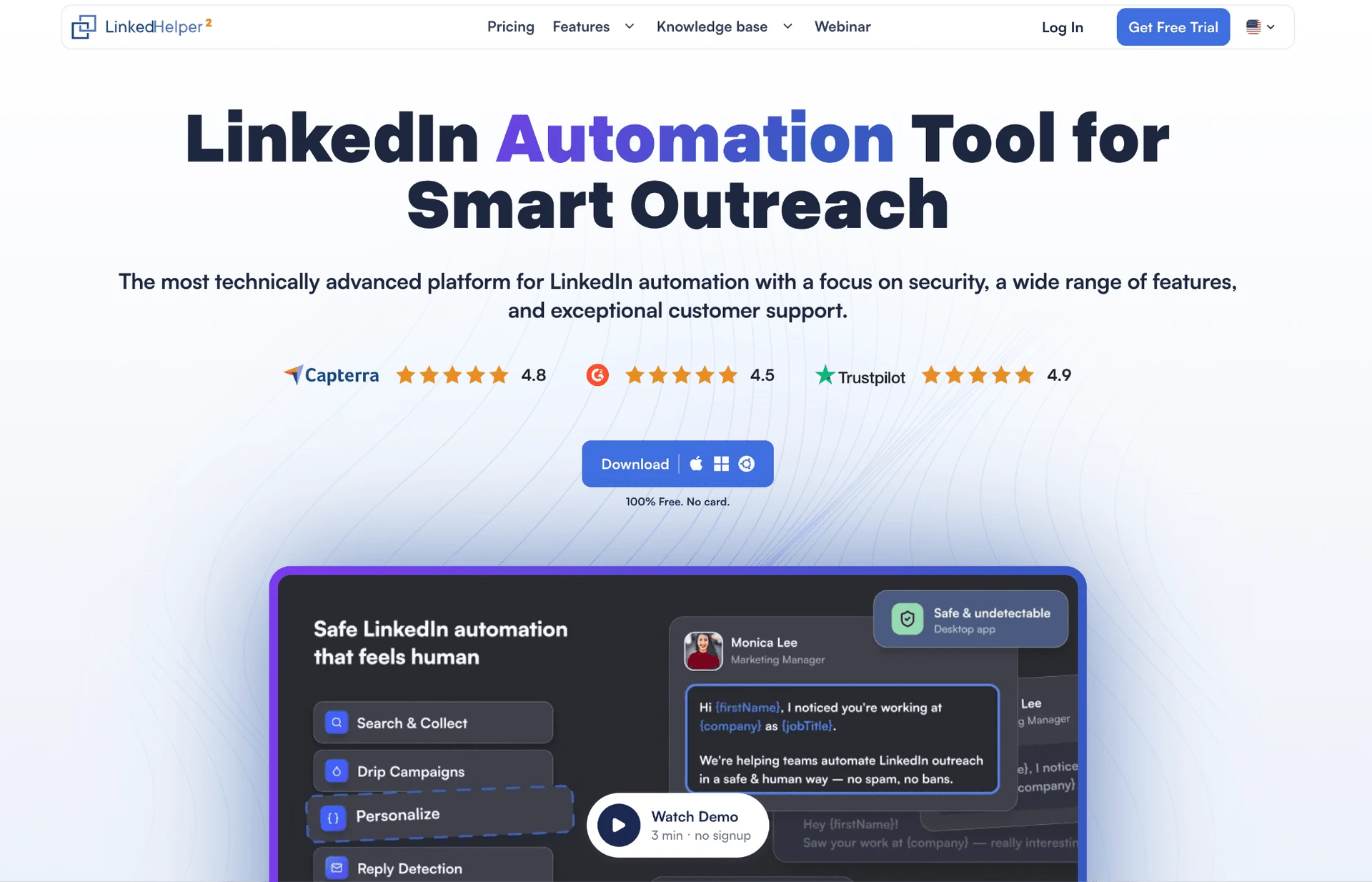
Local account control, broader LinkedIn collection, and lower team cost define Linked Helper's place in this comparison. LinkedIn-first teams consider it when those priorities outweigh native email sequencing. Plans start at $15/month, keeping a one-account pilot below Lemlist's $79 entry price.
A 12-month Standard license equals $8.25/month ($99/year per seat); 20 of those licenses list at $1,980/year before the 20-49-seat Organization tier's 20% bulk discount, landing at $1,584/year, so the price advantage survives team scale. One license runs one account; data/Email Finder and AI use credits, so capacity planning still includes seats and usage.
Quick facts about Linked Helper
- Founded: 2016
- HQ: United States (Wilmington, Delaware)
- Pricing: $15/mo ($8.25/mo equivalent on a 12-month Standard license), 14-day free trial
- G2: 4.56★ (142) · Capterra: 4.90★ (252) · Trustpilot: 4.91★ (431) — each sample is large enough to compare without a thin-sample caveat
- Last 6 months: 4.84★ across 23 reviews (4.85★ overall)
- Architecture: Desktop standalone — its own browser runs in a user-controlled environment, so session custody remains local
Vendor pricing and feature pages (fetched April–June 2026) + G2, Capterra, Trustpilot, and Reddit reviews (computed July 10, 2026)
Key Features
- LinkedIn collection breadth — thirteen collection sources versus Lemlist's three, including non-standard entry points Lemlist lacks entirely: group members, post likers and commenters, saved searches, and Sales Navigator lists. On the platform axis, both tools cover LinkedIn Basic and Sales Navigator; Lemlist's documented Sales Navigator support is limited to lead-list collection.
- AI ICP detection — automatically scores collected profiles against the Ideal Customer Profile before outreach, which keeps noisy search results from consuming the limited invite budget.
- No feature gating by tier — where Lemlist reserves custom user roles and permissions for its unpublished-price Enterprise plan, Linked Helper ships role separation and every campaign action on all licenses. The Standard/Pro split is about volume limits and integrations, so a 20-seat agency setup costs exactly what the price table shows — no surprise upgrade to unlock team governance.
- Complete messaging-history export — exports full conversations with per-message metadata, which turns a contact file into a usable reactivation or migration record.
- AI-assisted messaging — AI-personalized messages, AI replies, and a built-in AI editor generate and refine copy per prospect, while IF/THEN/ELSE conditions and spintax inside templates add rule-based variation on top. Together they cover both approaches to personalization at scale: model-generated and template-driven.
- Employees extractor — converts organization URLs into matching employees and decision-makers, which turns an account list into people to contact without opening each company manually.
- Built-in CRM and handoff — the profile CRM connects directly to 11 CRMs, with Zapier and Make through webhooks, which reduces extra routing between collection and follow-up.
The distribution is top-heavy, not unanimous: G2 contains 107 five-star and 29 four-star ratings, while the paired evidence also includes low-rating reports about price, app access, multi-account setup, and onboarding. The praise cards therefore support jobs rather than an unconditional claim.