 Updated: September 7, 2026
 24 min read
Key takeaways
- Professional is the first tier to combine unlimited email sends, unlimited Google/Microsoft mailboxes, five SMTP mailboxes per user, automated workflows, and A/Z testing, while customizable reports and dashboards still require Organization — so teams should map both execution and reporting needs before treating $79 per seat as the full-featured price.
- AI writing and AI Research draw from different meters: writing gets a monthly word allowance, while research shares credits with email reveals, phone reveals, and enrichment — so a large writing quota does not predict usable prospect volume.
- A Partner Seat switches among separately paid client workspaces and cannot manage their billing, users, or account settings — so agencies still need a per-client subscription and administration model rather than one unified agency account.
- Apollo's G2 profile showed 4.7★ across 7,884 reviews, while the latest six-month labeled sample averaged 2.92★ across 113 rated reviews — so reputation should be read by platform and recency rather than as one headline score.
This review is published by Linked Helper and written by Ryan Frawley, who works there. I've made every effort to represent Apollo.io accurately using verified data — our own first-hand testing, Apollo.io's own documentation, and independently sourced reviews.
Apollo.io is a cloud sales-intelligence and sales-engagement platform. It combines contact data, email sequences, calls, and CRM handoff in one system. Founded in 2015, it is headquartered in Covina, California. Plans start at $59 per seat monthly or $49 per seat monthly on an annual term.
Our safety verdict is conditional. The Chrome extension kept the observed LinkedIn session inside the user's browser. However, our June 2026 teardown also found page injection, direct LinkedIn API calls, synthetic events, and an extension ID visible to LinkedIn. Apollo's cloud/IP behavior was not tested, so this is not a complete infrastructure verdict.
Verdict
Apollo.io can function as one operating stack for sales teams. It brings together its database, enrichment, email sequencing, dialer, workflows, and CRM connections. The case for it is consolidation. Search, contact data, outreach, and reporting live in the same cloud product, reducing handoffs between point tools.
The condition is data fitness and channel fit. Apollo's 230M+ contact claim describes breadth. The review evidence shows a material counter-pattern around stale or inaccurate records. LinkedIn is also a manual task channel now, not an automated one. The buying decision therefore depends on validating data quality and the exact workflow before committing. Per-seat pricing, expiring credits, annual non-cancellation terms, and a detectable local extension all affect that decision.
Pros
- One connected sales stack: search, enrichment, email sequences, calls, workflows, and reporting share the same platform and contact record.
- Large prospecting surface: Apollo claims 230M+ professionals across 30M+ businesses, giving teams a wide starting pool to sample before purchase.
- Local LinkedIn session handling: the tested extension did not extract or upload the observed session cookie to Apollo's servers.
- Workflow branching: the Workflow Engine supports multiple pathways and conditional logic rather than relying on sequences alone.
- Native email execution: email campaigns run in Apollo's cloud without requiring an open browser or active extension tab.
- Documented team controls: default roles, custom permission profiles on upper plans, SSO, and team-level email visibility are documented for deployment.
Cons
- Data quality is disputed: 691 deduplicated complaint tags concerned data quality, alongside praise for coverage.
- LinkedIn actions are manual: connection requests, profile views, post interactions, and messages are task reminders, not automated steps.
- The extension remains observable: page injection, direct Voyager calls, synthetic events, and a listing on LinkedIn's extension-detection list add detection signals.
- Basic retains entry-level limits: one mailbox and 250 daily email sends remain until Professional.
- Credits expire: included and recurring add-on credits do not roll into the next billing cycle after payment.
- Annual terms are rigid: payments are nonrefundable, paid seats cannot be reduced mid-term, and non-renewal requires advance written notice.
- Recent sentiment weakened: the trailing six-month cross-platform labeled sample averaged 2.92★ across 113 rated reviews.
How Much Does Apollo.io Cost in 2026?
The practical threshold is Professional: Basic costs less, but it keeps Free's 250-email daily ceiling and one-mailbox limit. Professional removes both, raises automated workflows from five to 50 per team, and adds A/Z testing. Teams needing those mechanics therefore start at $79 per seat monthly on an annual term, not the advertised $49 Basic figure. At 20 seats, that is $18,960 per year before extra credits or taxes.
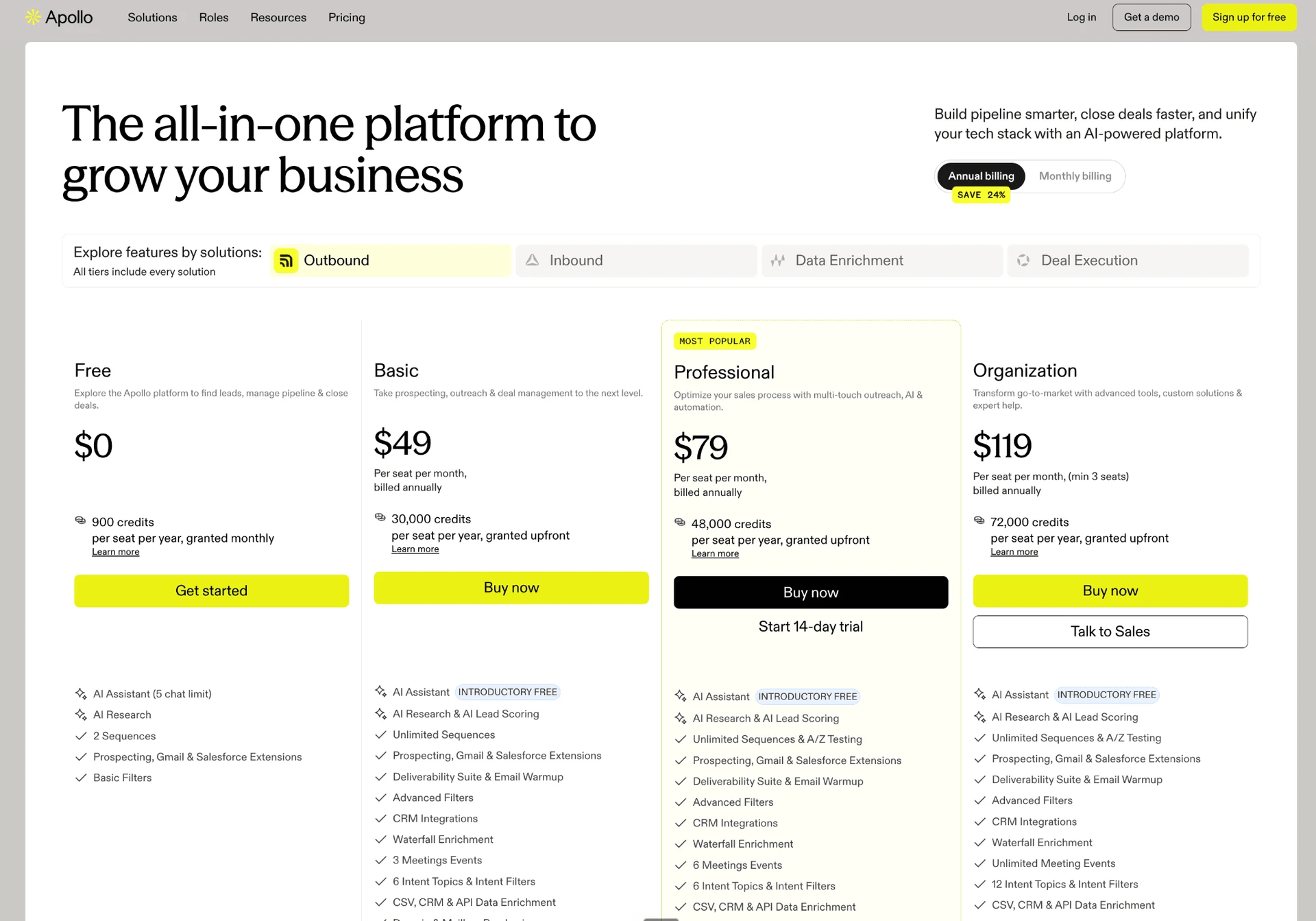
Apollo publishes four named plans. The pricing page defaults to annual billing, so the headline number is not the no-commitment monthly price.
| Plan | Price | What's included | What's NOT included |
|---|---|---|---|
| Free | $0 | 900 credits per seat per year, 2 sequences per team, 1 mailbox | Paid-plan capacity; team access reduces to 1 seat after 100 active days |
| Basic | $59/seat monthly or $49/seat/mo billed annually | 30,000 annual credits, unlimited sequences, priority email and chat support | More than 250 email sends/day, more than 1 mailbox, A/Z testing; more than 5 automated workflows per team |
| Professional | $99/seat monthly or $79/seat/mo billed annually | Unlimited email sends, unlimited Google/Microsoft mailboxes + 5 SMTP mailboxes, A/Z testing, workflows, analytics | Organization-only custom permissions, dashboards, and BYO LLM key |
| Organization | $149/seat monthly equivalent or $119/seat/mo billed annually; 3-seat minimum | 72,000 annual credits, custom permissions, customizable reports, BYO LLM key | A true monthly-payment option; the plan is annual-only |
Apollo.io pricing tiers (July 2026)
The annual-savings banner needs plan-level context: Apollo displays “Save 24%.” The confirmed plan pairs imply about 17% on Basic and about 20% on Professional and Organization. The banner is a rounded summary for the upper tiers, not the calculated Basic discount.
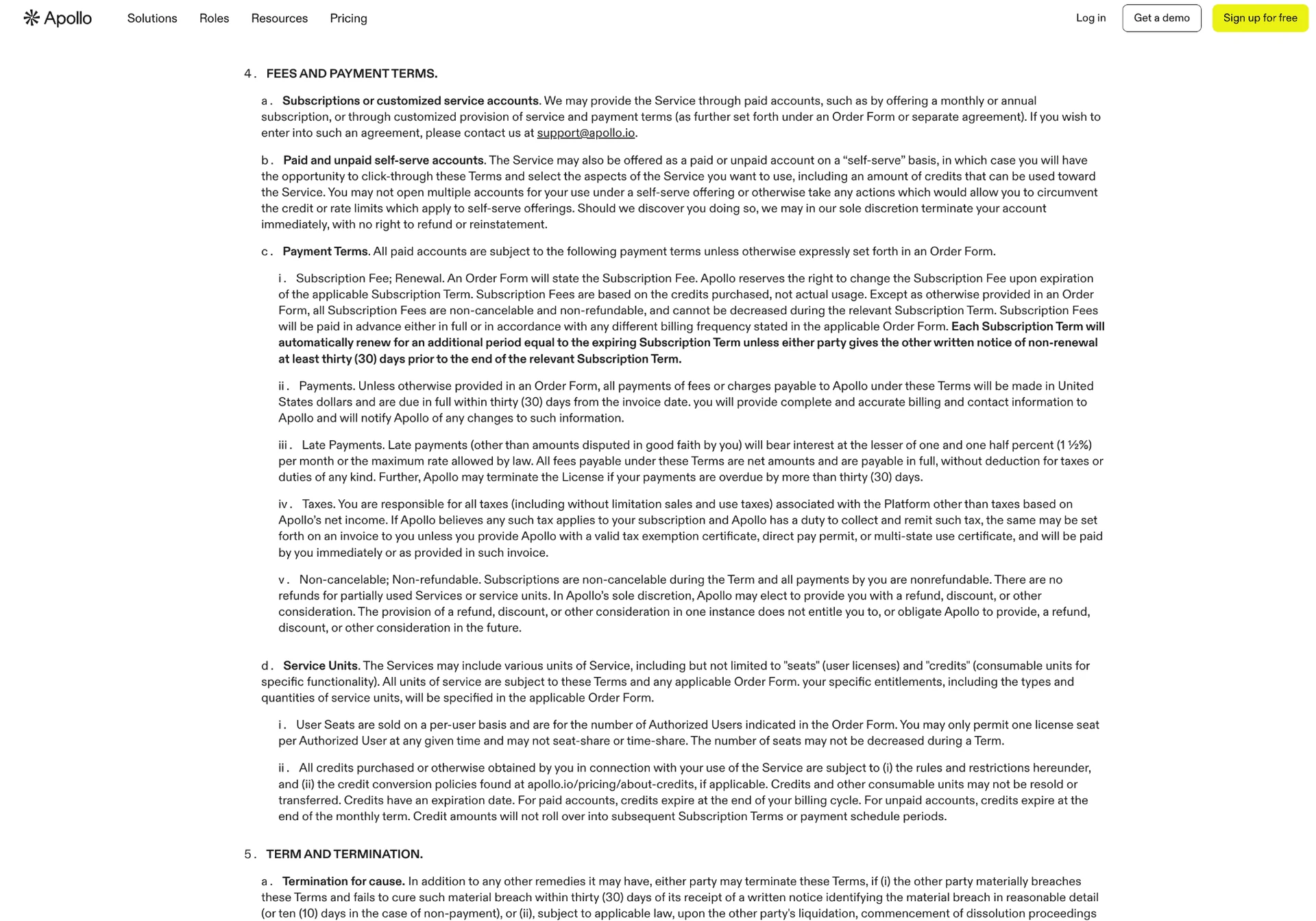
Credits and cancellation change the real cost: plan and add-on credits expire at the end of the billing cycle. Apollo's terms make subscriptions non-cancelable during the term and payments nonrefundable. Annual terms auto-renew unless either party gives at least 30 days' written notice. Self-service cancellation is available only to selected teams, while others must contact support.
The 14-day Basic or Professional trial is usable but limited. Apollo's pricing FAQ currently lists 50 credits plus 5 mobile credits. Record selection also stays capped at 25. A buyer can inspect the workflow but cannot assume the trial mirrors paid-volume usage.
The pricing trap: Basic looks like the working entry tier, but it retains the 250-email daily cap and one-mailbox limit; Professional at $79 per seat monthly on an annual term is the first tier that removes both.
Apollo.io's Automation & Campaign Engine
Apollo separates two automation layers. Sequences handle outbound touchpoints, while the Workflow Engine handles record movement and conditional process logic. Like most sales-engagement products, the sequence layer combines email, calls, and tasks over a planned period. The confirmed LinkedIn task set contains connection requests, profile views, post interactions, and messages. Users complete each task manually.
The sequence model is linear, with reply handling layered on top: a sequence schedules email, calls, LinkedIn reminders, and other tasks. By default, an email reply finishes the contact's sequence. An operator can change the ruleset by removing “Replied” and disabling the default “mark contact as finished” trigger. That makes reply status the confirmed sequence condition. The evidence does not establish a broader, exhaustive list of sequence-level branch conditions.
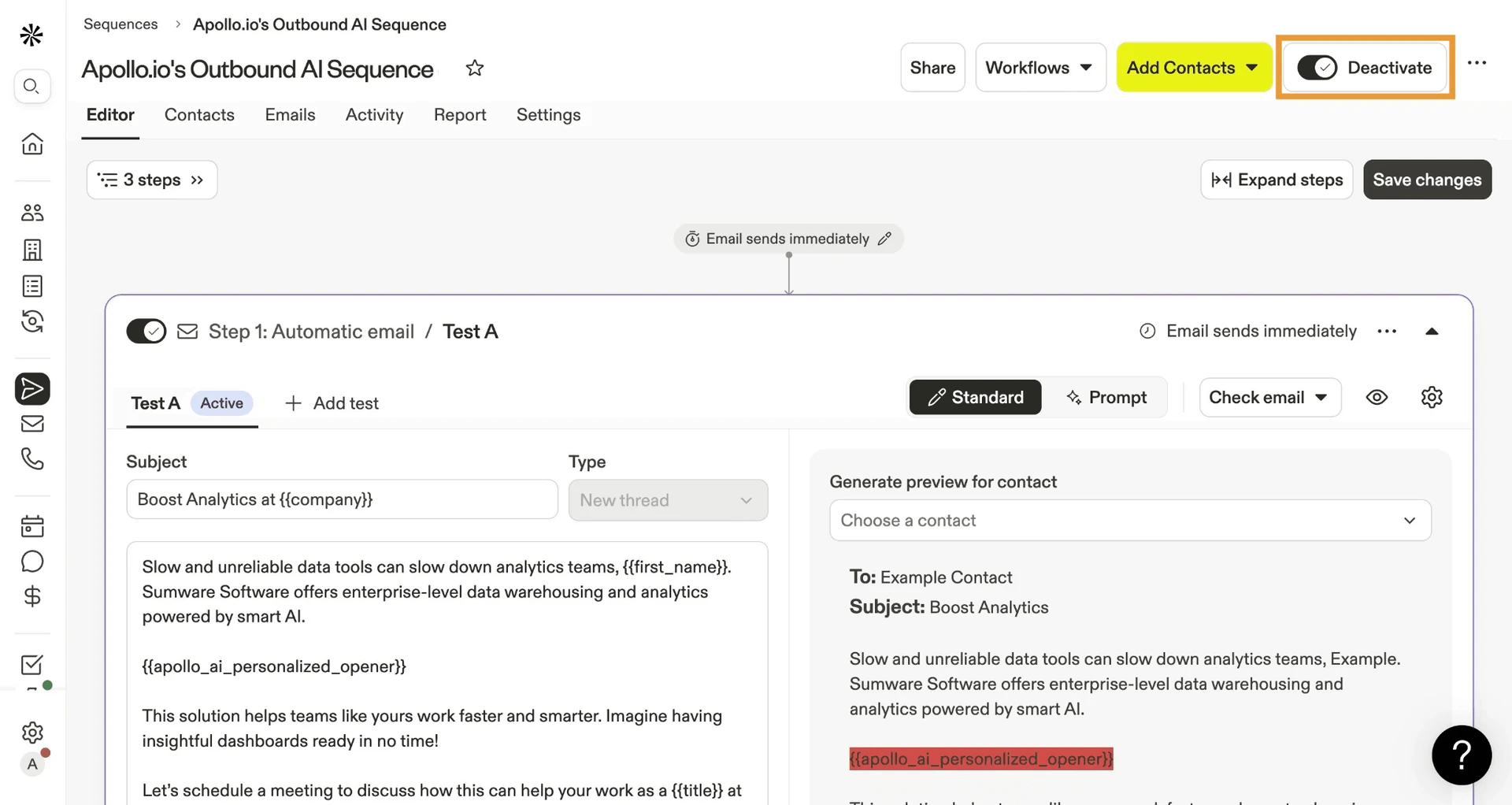
Branching lives in Workflows: Apollo documents multi-branch and conditional logic that creates multiple pathways in one workflow. That engine is separate from Sequences. “Branching” should not imply that every outreach step has arbitrary if/then routes. This distinction matters when mapping a process: the workflow routes records, while the sequence runs the touch cadence.
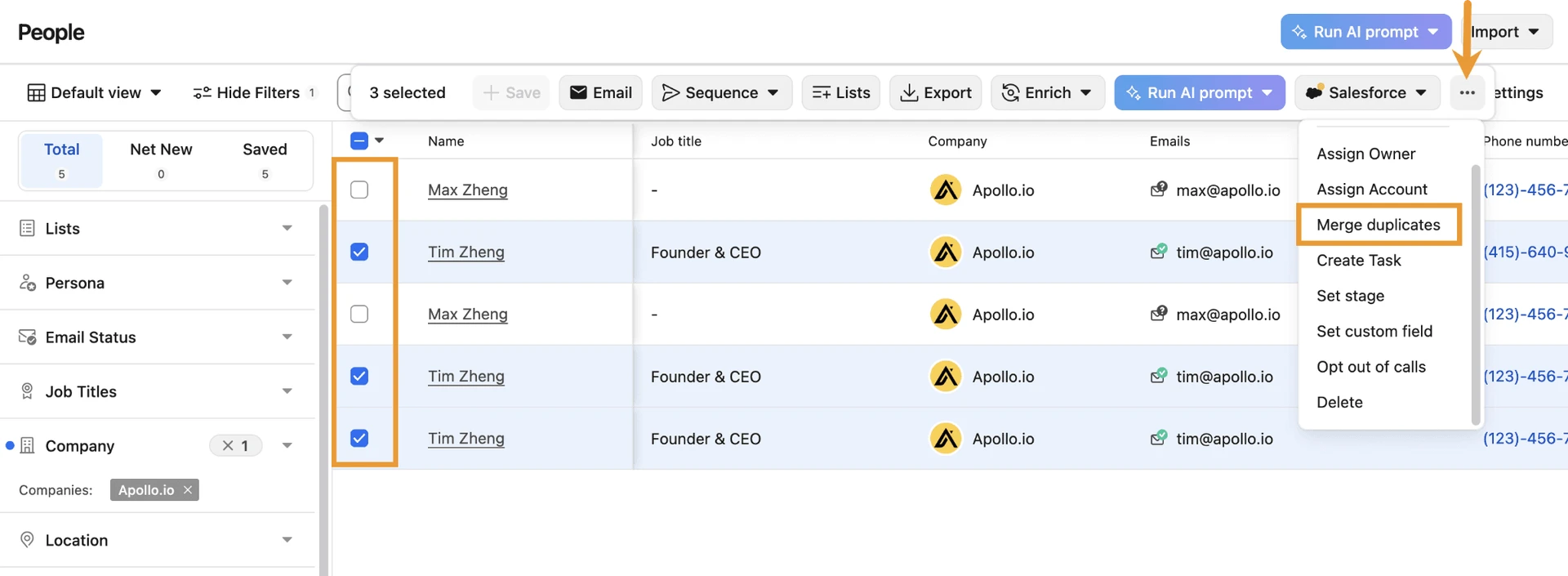
Duplicate controls act before another send: Apollo lets teams configure duplicate-detection rules and merge records in Apollo or a connected CRM. Territories can also restrict which assigned records a teammate sees. These controls reduce double-contacting inside one team database, but the evidence does not extend that protection across independently paid client workspaces.
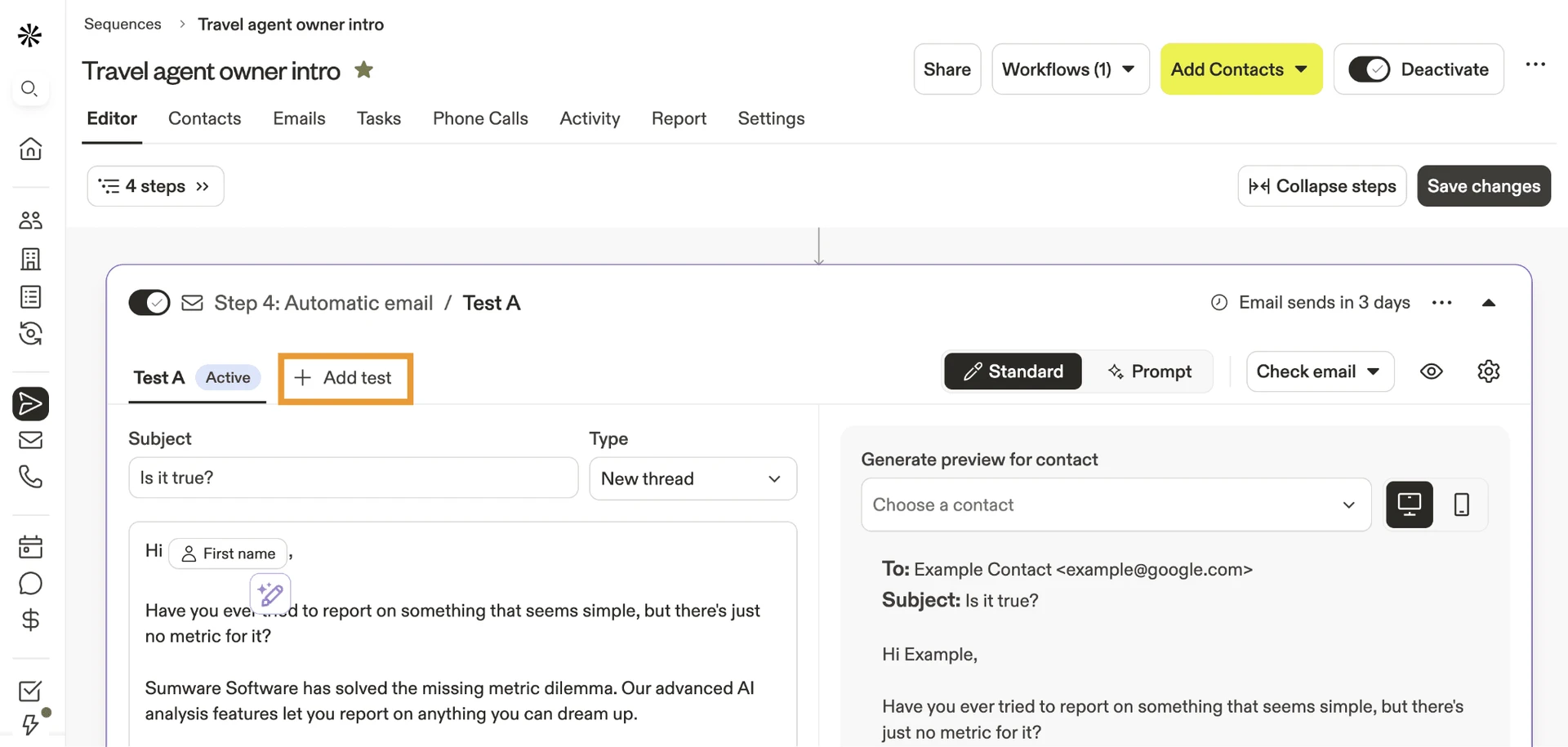
Testing and templates have plan boundaries: pre-built sequence templates can include emails, calls, and tasks, while AI can help create custom sequences. A/Z testing is limited to email steps and appears on Professional and Organization, not Free or Basic. Variants are distributed evenly, so the mechanism measures email-step performance rather than testing an entire multichannel flow.
LinkedIn is the current hard boundary: Apollo's own documentation says, “LinkedIn tasks need to be manually completed, like by manually visiting a contact profile to send a connection request. Apollo doesn't automatically complete LinkedIn tasks for you.” An archived version shows batch task execution existed earlier, but it was gone by the first-half-2026 capture. The exact removal date is not confirmed, so the reliable present-tense conclusion is simply that current LinkedIn steps are manual.
The confirmed-absent LinkedIn capabilities follow from that boundary:
- no built-in email append during an automated invite
- no automated invite withdrawal with a retained failed list
- no collect-in-Sales-Navigator-then-execute-on-regular-LinkedIn flow
- no scheduled post-engager collection with an age filter
- no automated skill endorsement
Automation boundary: Apollo automates cloud email and workflow processing, but its current LinkedIn sequence steps are manual reminders rather than executed LinkedIn actions.
AI & Agentic Capabilities
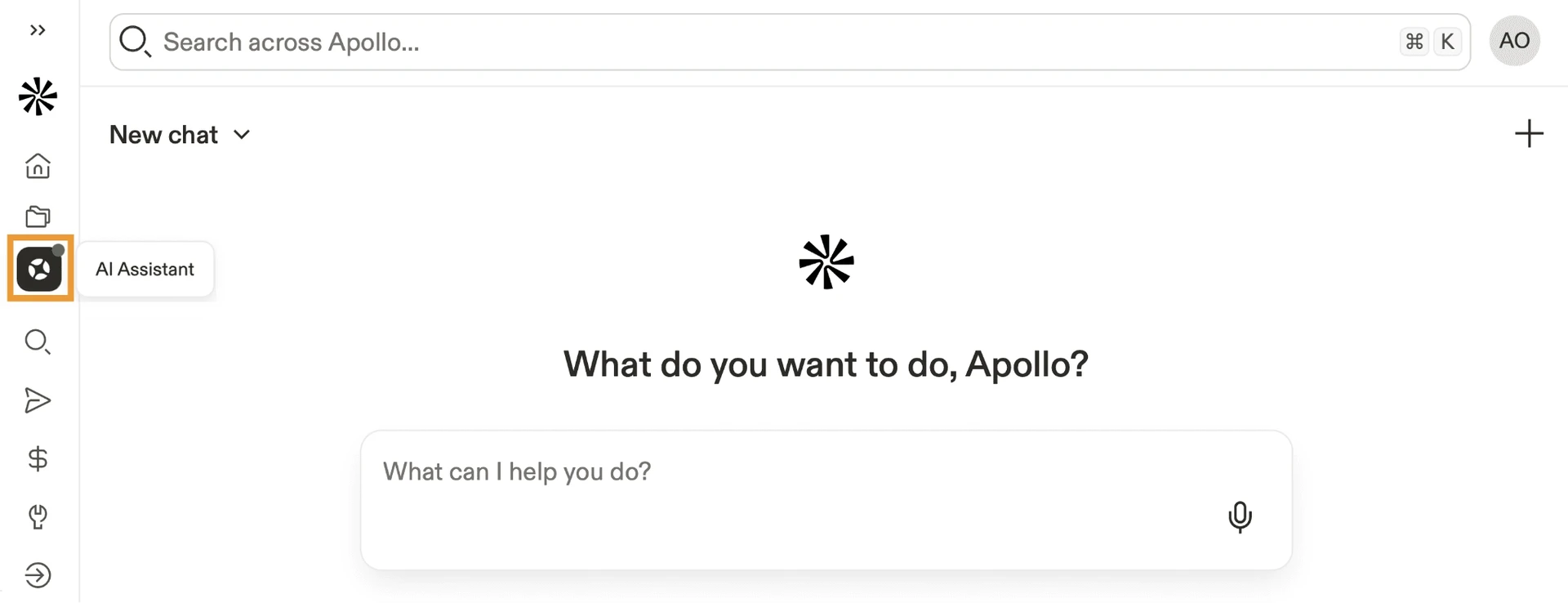
As of 2026, Apollo has three distinct AI surfaces. The AI Assistant can build and enrich lists and generate personalized sequences. AI-generated auto-score models use outcomes from a connected CRM and Apollo account history to rank prospects. Apollo also lists LLM integrations through its MCP server, which lets external AI agents connect to the platform.
The quotas use two meters: AI Research consumes one general Apollo credit per run. AI writing provides 5,000 monthly words on Free and 250,000 on Basic. Professional provides 800,000, while Organization provides 1,000,000. Because the meters are different, a large writing allowance does not imply unlimited research or contact reveals.
Access is tiered in a less obvious way: the LLM-integration row is checked across all plans. Using a team's own LLM API key is an Organization-only feature. External-agent connectivity and BYO-model billing are therefore not the same entitlement.
The reviewed sources confirm AI scoring, writing, list enrichment, and agent connectivity. They do not establish that Apollo reads every prospect's full profile text as an Ideal Customer Profile (ICP) gate before outreach. They also do not establish an explicit manual-review gate for every generated message. Those details remain unverified, not absent.
AI evidence boundary: Apollo ships AI scoring and sequence generation, but full-profile ICP gating and a hold-every-message review workflow were not established in the reviewed sources.
Personalization & Message Uniqueness
Apollo combines standard personalization variables with AI-generated sequences and email-step A/Z testing. The AI Assistant can draft a sequence conversationally, while campaign variables insert known contact or account data. In practice, that covers template-level tailoring and generated copy without requiring a separate writing tool.
Message variation is narrower than workflow branching: Professional and Organization can distribute email variants evenly through A/Z testing. This can compare email copy, but it does not vary calls, manual LinkedIn tasks, or the whole workflow. The branching described earlier belongs to the separate Workflow Engine.
The evidence does not enumerate Apollo's complete variable inventory. It does not confirm nested IF-THEN-ELSE logic inside message templates. It also does not show a dedicated review gate for every generated message. We therefore would not treat AI drafting as proof that each recipient gets structurally distinct copy. Teams should test rendered messages on their own data, especially when fields are missing.
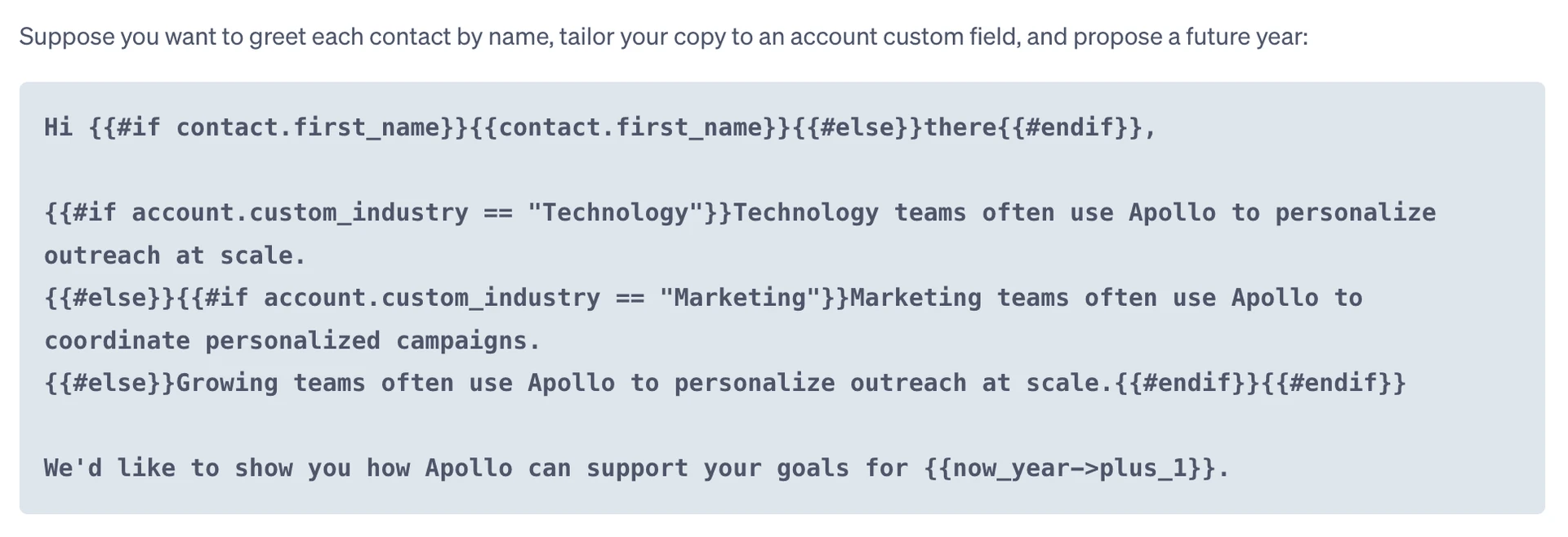
This copy-variation question is separate from the extension's detection surface discussed in Safety. Changing text may reduce repetition, but it does not remove page injection or synthetic browser events.
Validate the rendered copy: Test missing-field cases and A/Z variants on a small list first; AI drafting alone does not prove that every recipient receives unique, correctly populated text.
Lead Targeting, List-Building & ICP
Apollo's central targeting asset is its claimed database of 230M+ professionals across 30M+ businesses. You can search it with 65+ filters. People and Company Search cover fields such as title, location, and industry. The Chrome extension saves prospects from LinkedIn and Sales Navigator into Apollo lists. Teams can therefore build lists from Apollo's database or a live professional-network page.
Scoring goes beyond saved filters: Apollo's AI auto-score models use connected-CRM success data and Apollo account history. They identify patterns associated with conversion. Custom weighted scoring models are also available. That creates a ranking layer over search results, but the evidence does not confirm full-profile-text ICP validation before every outreach step.
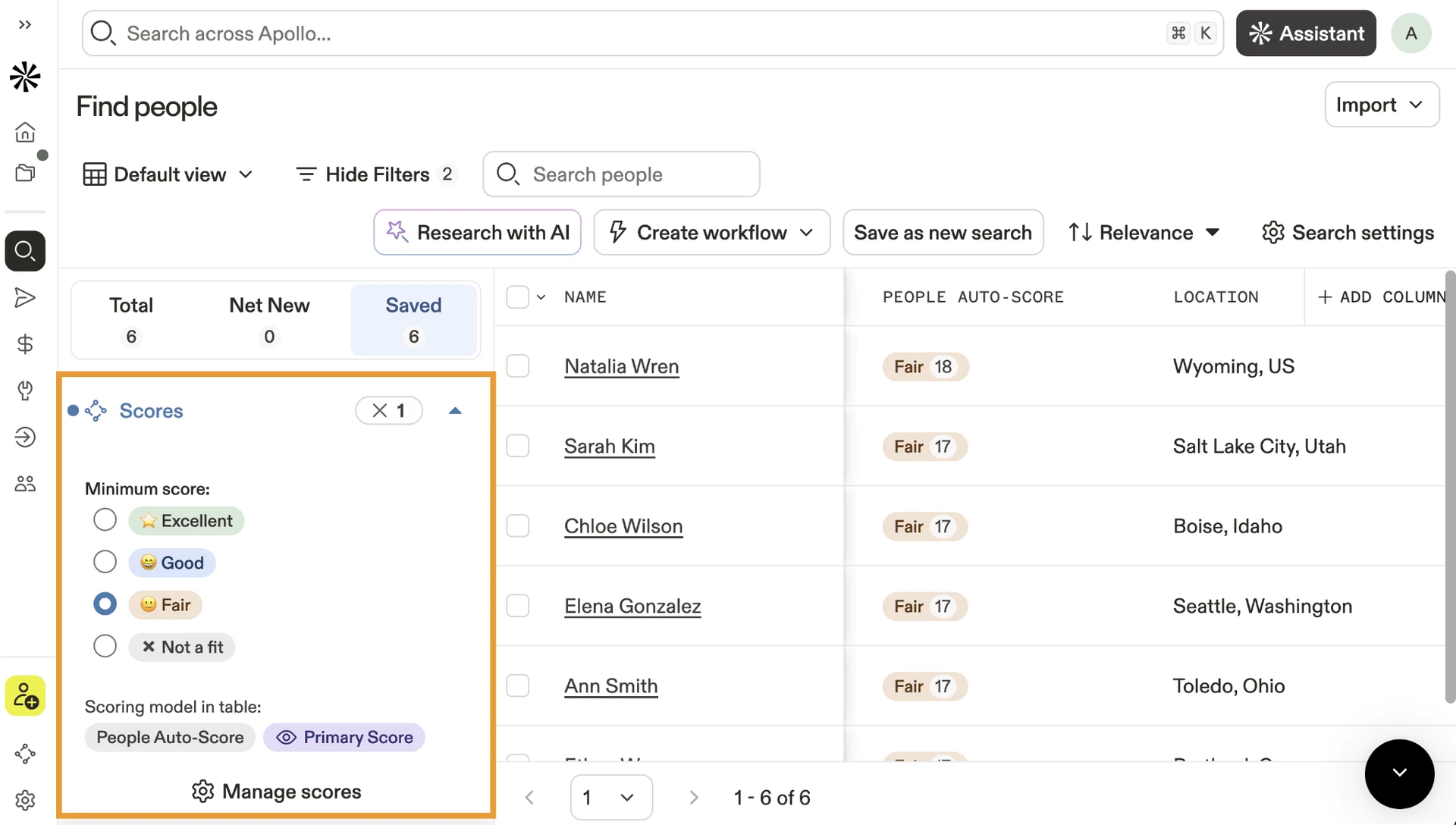
Finding a record is not the same as having usable data: an email reveal costs one credit. A phone reveal costs eight. Waterfall Enrichment uses multiple providers to find and verify email and phone data and is available from Basic upward. Exported profiles can still lack an address. Why contacts in a CSV may not have emails explains why. The related email-resolution workflow separates a profile from a resolved work address.
The evidence is genuinely split: some reviewers praised the contact coverage and verified-email workflow. Across the deduplicated cross-platform analysis, however, 691 records carried a data-quality pain tag. One independent reviewer who moved to Snov.io reported an Apollo email bounce rate above 20%. Another current reviewer described company and contact information as outdated or incorrect. Those reports do not invalidate the database-size claim. They mean current, usable records—not the headline count—should be the acceptance test.
The confirmed LinkedIn sourcing boundary is also narrow. LinkedIn and Sales Navigator prospect capture are present. Scheduled post-engager collection and skill-endorsement workflows are absent.
Run a data-quality sample: Before buying for database breadth, test a representative segment for current role, work-email usability, and bounce rate; the evidence supports both wide coverage and recurring accuracy complaints.
Integrations & Ecosystem
The evidence does not support a complete native-integration count, so we will not turn a partial list into one. Three native CRM integrations are directly confirmed in Apollo's pricing grid: Salesforce, HubSpot, and Pipedrive. Zoho appears separately in a Help Center breadcrumb. Adobe Marketo appears in Apollo's pricing-page FAQ but not in its plan-comparison CRM row, so neither is included in the three-name pricing-grid count.
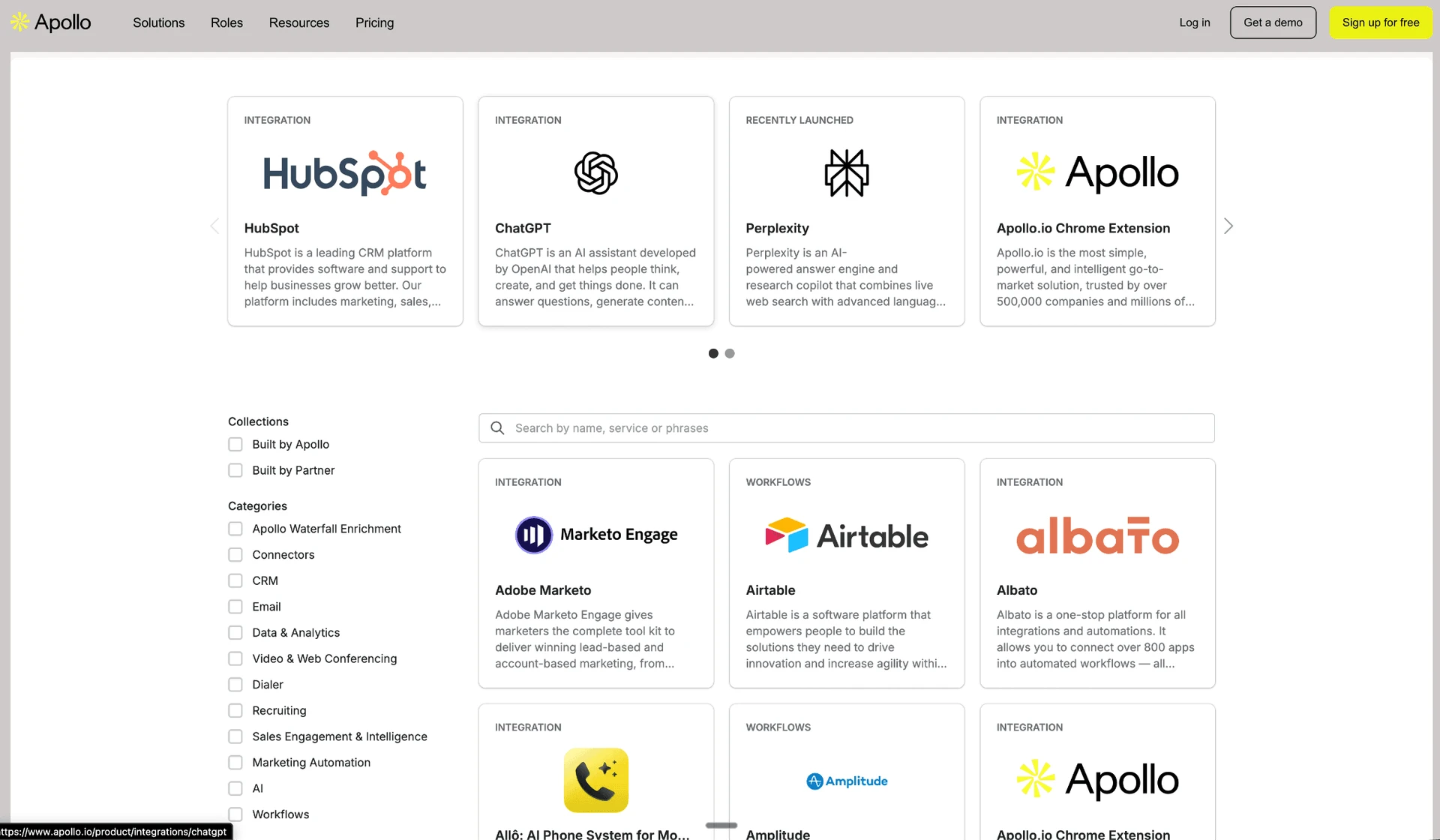
Like most tools in this space, Apollo also supports CSV import/export, a public REST API, and automation handoffs. Zapier uses an Apollo API key and provides named contact, account, deal, and task triggers or actions. Workflows can send webhooks when a ready-made Zapier action is unavailable. The same handoff pattern appears in sending a processed person to an external CRM.
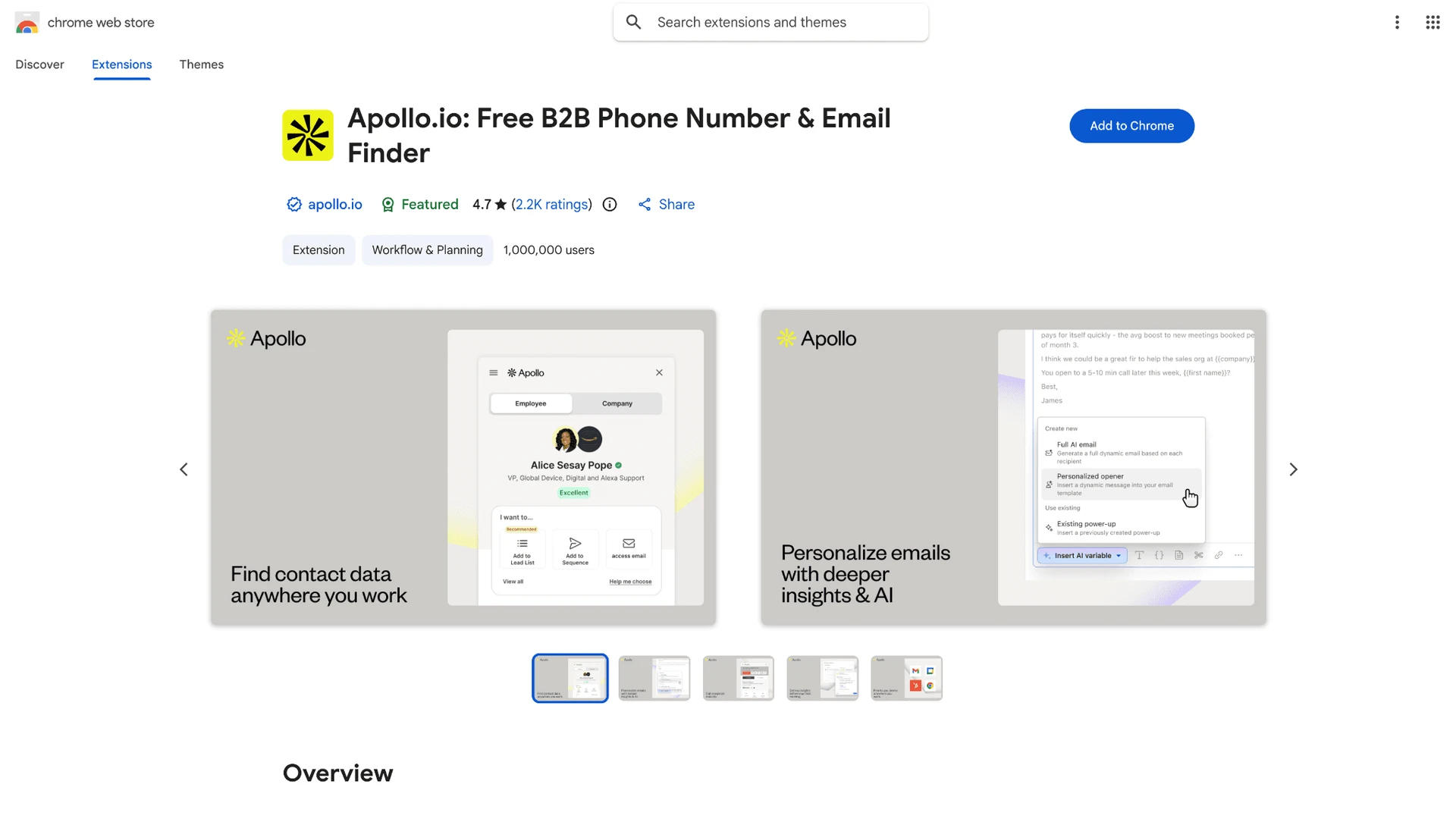
The Chrome extension is another integration surface: it works across LinkedIn, Sales Navigator, Gmail, HubSpot, and Salesforce. Teams use it for prospecting, list or sequence insertion, activity logging, and CRM push. What a paid LinkedIn subscription changes separates platform-level access from extension functionality.
The main boundary is source precision. API availability does not prove inbound campaign-webhook semantics, and CRM presence does not establish identifier matching or fill-empty merge behavior. Those mechanics were not verified.
Integration count: Salesforce, HubSpot, and Pipedrive are directly confirmed; no defensible total native-integration count was established, and Zoho has only narrower breadcrumb evidence.
Team, Agency & White-label Tools
Apollo provides four default permission profiles: Admin, Non-admin, Billing and Seat Manager, and Call Assistant. Organization and Custom plans add editable permission profiles across settings, billing, prospecting, enrichment, engagement, and automation. These profiles can control whether a user sees teammates' emails. SAML/SCIM SSO and Teams add another layer for larger deployments.
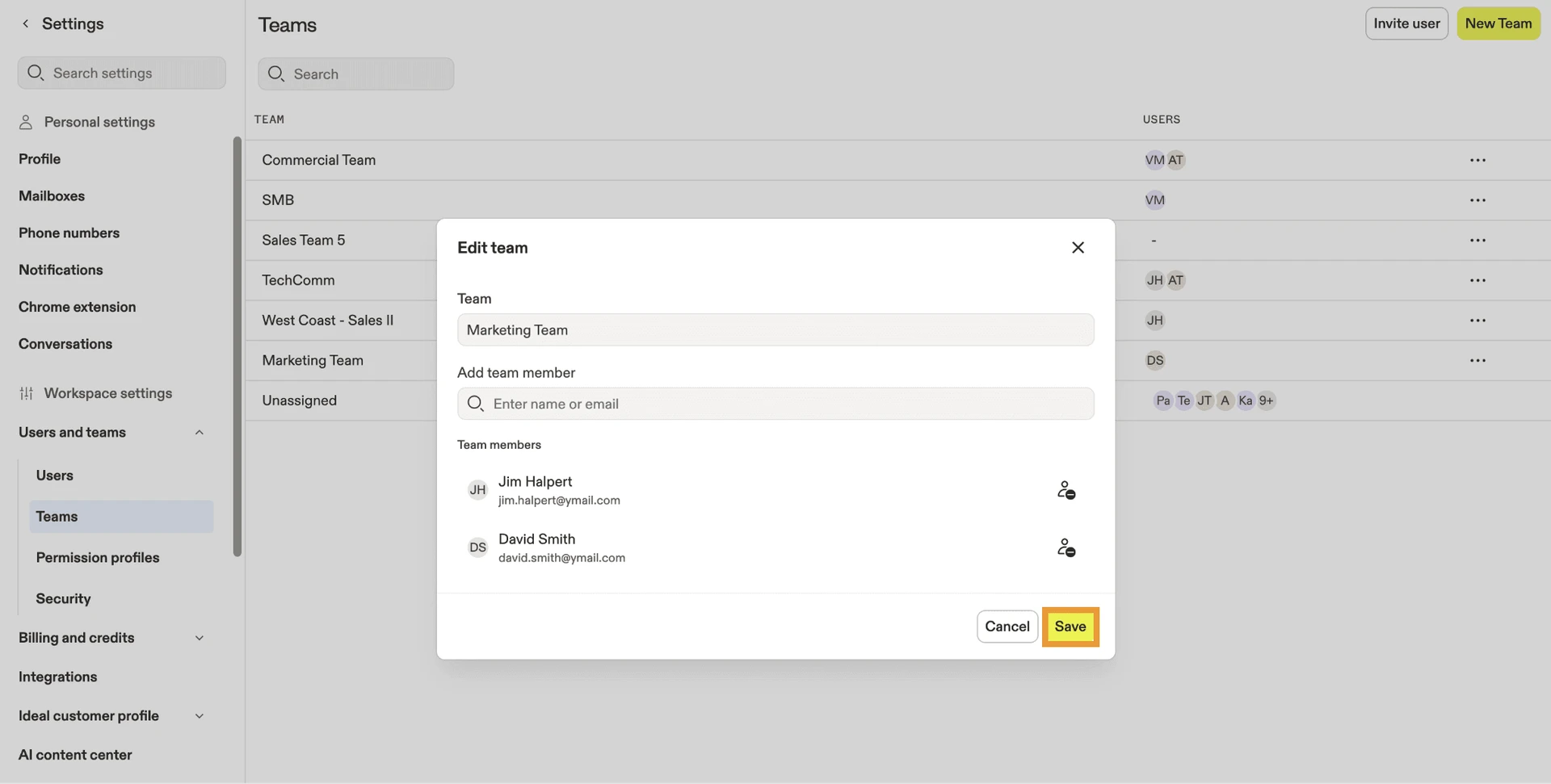
Agency access is delegated, not nested: approved Solutions Partners at the required program level can use a free Partner Seat. It switches among separately paid client accounts. The partner can onboard and operate inside a client's workspace but cannot access that client's billing, user management, or account settings. Apollo therefore does not fold those clients into a single self-serve agency subscription.
The standard economics remain per seat. On Organization and Custom plans, a Billing and Seat Manager seat is free, but that role is administrative and cannot run prospecting or campaigns. Paid seat counts cannot be reduced during an active term. A 20-person Professional deployment therefore stays $18,960 per annual term even if staff changes mid-term.
The reviewed sources did not document white-labeling, a branded client portal, or a cross-account audit log. That is a bounded documentation finding, not proof those capabilities are absent.
Team-cost boundary: Apollo bills operating users per seat, and the paid seat count cannot be reduced during the active term; Partner access does not combine client subscriptions.
Analytics & Reporting
Apollo's pricing grid marks baseline Analytics & Reports as available on all four plans. Organization separately lists customizable reports and dashboards, so buyers should distinguish access to standard reporting from control over report design.
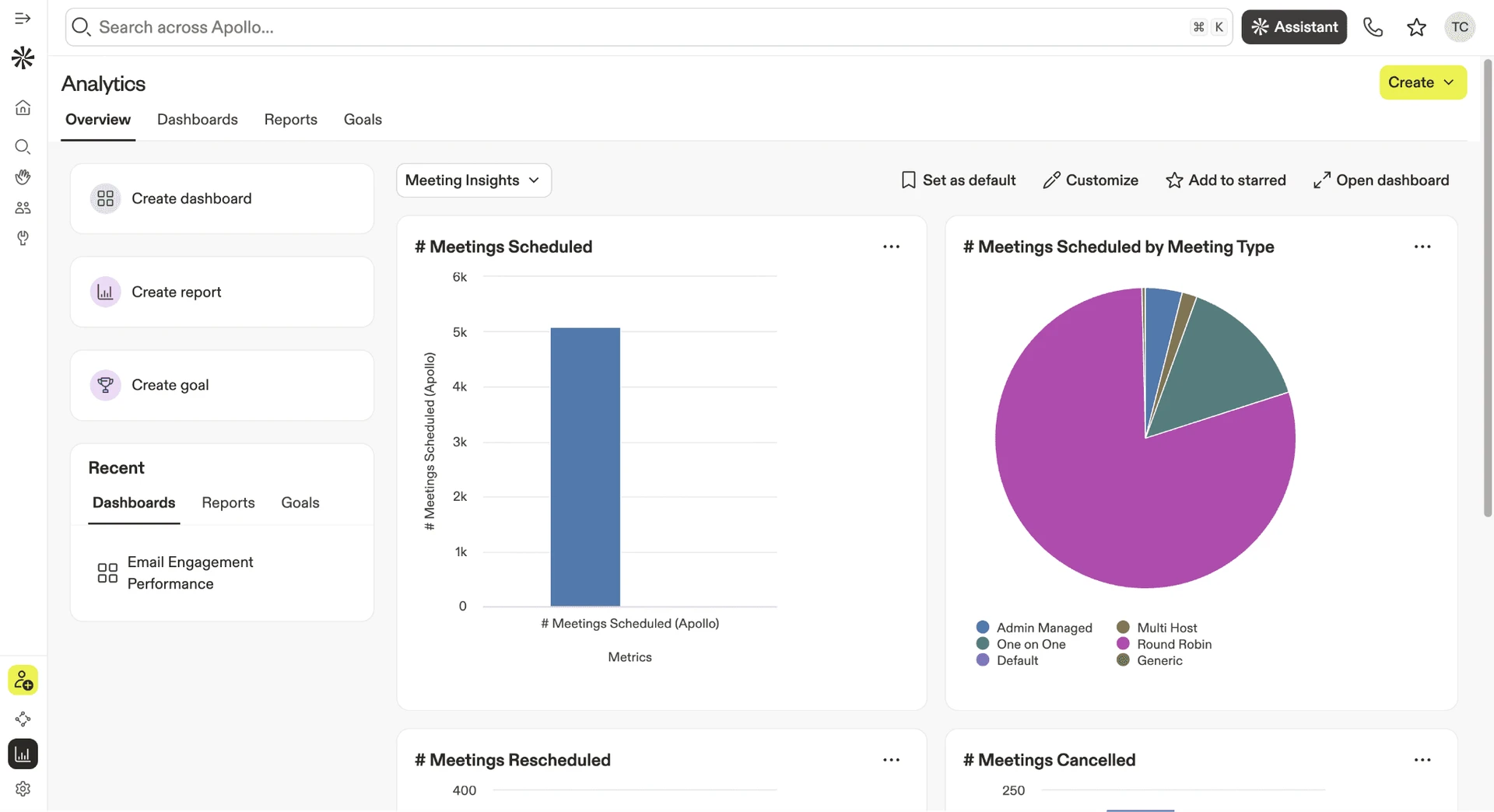
That evidence supports a limited conclusion: teams can inspect performance without buying Organization, while custom dashboarding is an upper-tier feature. The reviewed material does not name an analytics refresh interval or document metric lag. We therefore cannot judge whether reports are real-time or delayed.
Analytics also should not be confused with A/Z testing. Reporting can show campaign performance, but controlled email-variant testing begins on Professional.
Reporting boundary: Baseline reports are listed on every plan; customizable reports and dashboards are Organization-only, and no refresh-lag evidence was available.
Is Apollo.io Safe?
Apollo uses a hybrid architecture. Its email, dialer, data, CRM, and analytics core runs in a US-hosted cloud. The Chrome extension makes observed LinkedIn requests from the user's local browser. That separation means the LinkedIn session finding does not answer how Apollo's wider cloud/IP layer behaves.
What I verified first-hand: li_at is your LinkedIn login in cookie form. Whoever holds it can act as the account without the password. In the extension version I inspected in June 2026, Apollo requested no browser-cookie permission. It also did not place the li_at value in an observed vendor POST body. The session therefore stayed in the browser for the tested LinkedIn request path.
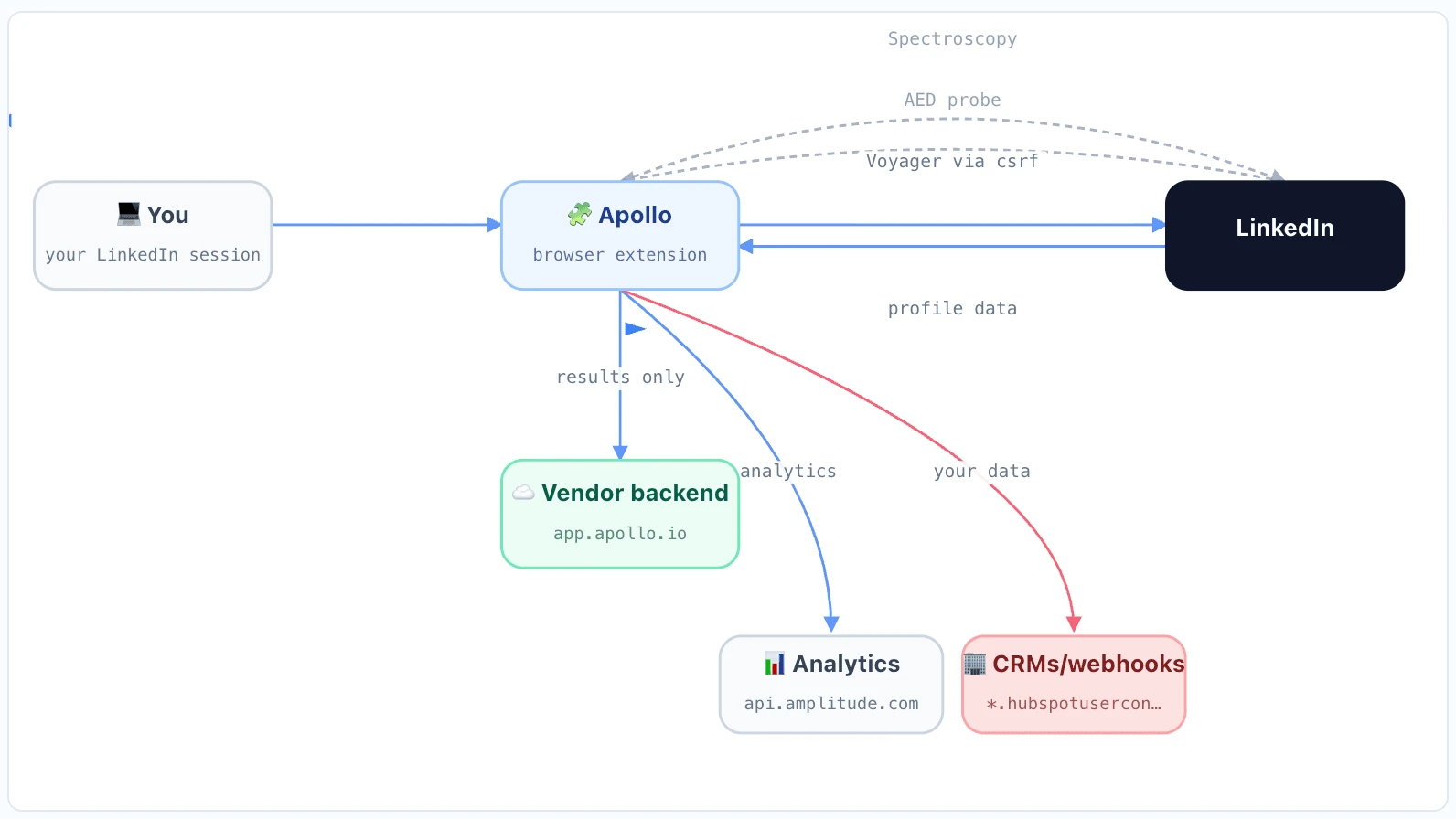
Active Extension Detection (AED) is a page-code probe for a specific browser-extension ID. The June 2026 snapshot listed Apollo's extension ID, alhgpfoeiimagjlnfekdhkjlkiomcapa, and the probe found it.
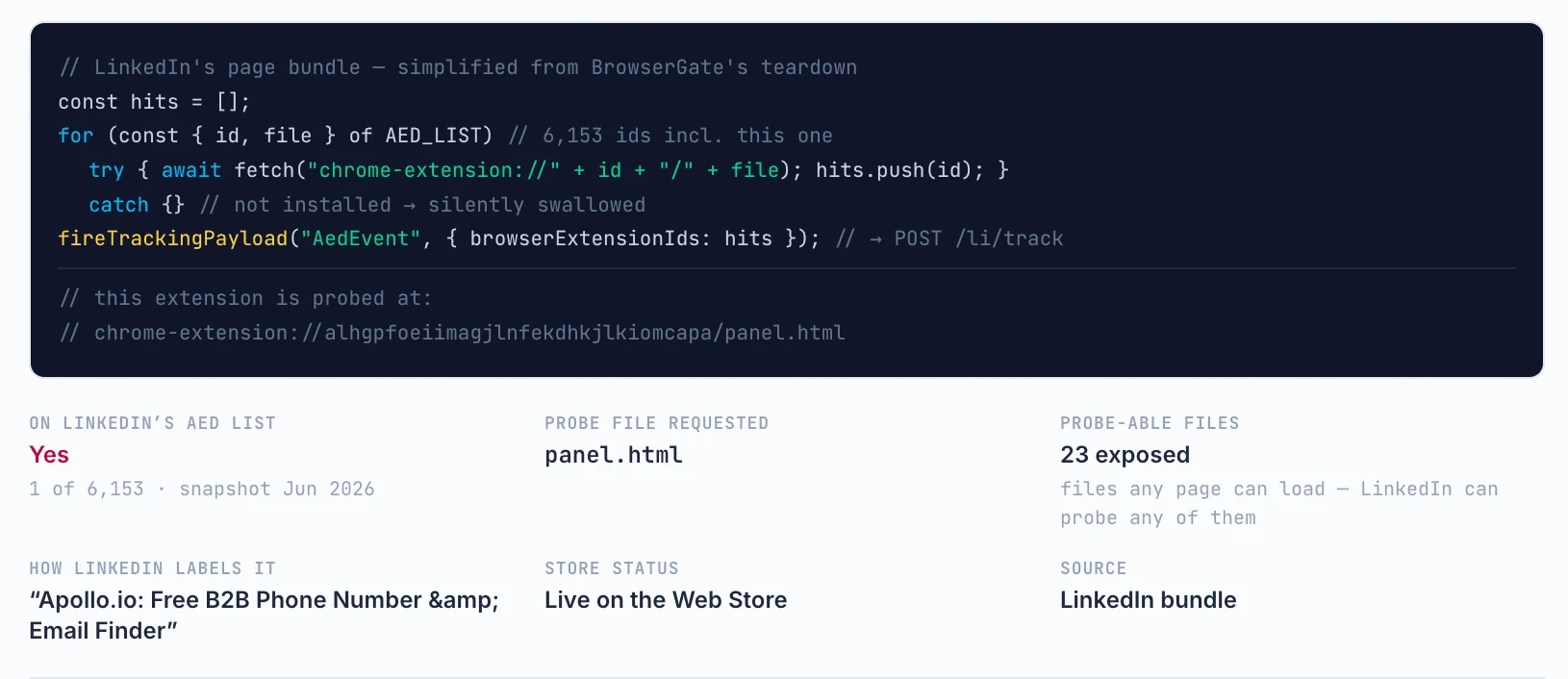
LinkedIn can therefore observe that the extension is installed before any campaign action occurs. This is one risk signal, not evidence that the account will be restricted.
| What was checked | Result |
|---|---|
| Architecture | Hybrid cloud core + local-scrape Chrome extension |
| LinkedIn session cookie | Stayed local in the tested request path; no browser-cookie permission found |
| Direct LinkedIn Voyager/API calls | Yes |
| LinkedIn-page injection | Yes, from page start |
| AED status | Listed in the June 2026 snapshot |
| Synthetic browser events | Yes: 80 signals, including 28 programmatic clicks |
| LinkedIn telemetry blocking | None found |
| Extension-enforced daily action cap | None found |
| Cloud exit IP, fingerprint, proxy, and account isolation | Not tested |
Apollo.io Chrome extension safety findings
The honest read is mixed: local session handling removes the specific risk of copying the LinkedIn login to a vendor server. It does not make the extension invisible. Page injection, direct Voyager calls, an AED listing, and synthetic events whose browser trust flag is false give LinkedIn observable signals.
Apollo's current documentation says, “Apollo doesn't automatically complete LinkedIn tasks for you.” That claim matches the current manual task workflow. The shipped code still exposed request and event surfaces. Marketed manual operation and technical detectability can therefore coexist. That does not prove Apollo currently automates those actions.
Apollo warns that quickly executing too many manual LinkedIn actions can cause a temporary restriction. Ignored, pending, or spam-marked invitations also add risk. LinkedIn restrictions and how to avoid them makes the broader point. Manual speed and navigation patterns can look automated too.
For customer data, Apollo publishes a DPA describing US hosting. Its security page makes ISO 27001 and SOC 2 claims attributed to A-LIGN. It also makes an encryption claim. Those controls address cloud data governance, not LinkedIn account detection.
No tool eliminates LinkedIn restriction risk. This teardown was static, not a long-running campaign test, and the cloud IP, fingerprint, proxy, and cross-account behavior remain untested.
Conditional safety verdict: The tested LinkedIn session stayed local, but the extension remained observable through injection, direct API calls, an AED listing, and synthetic events; the cloud/IP layer was not tested.
What Reviews and Reddit Actually Show
The rating pattern is bimodal, not a single score: Apollo's G2 profile showed 4.7★ across 7,884 reviews. The G2 reviews we analyzed averaged 4.47★ across 1,000 reviews. The Capterra reviews we analyzed averaged 4.52★ across 385 reviews. The Trustpilot reviews we analyzed averaged 3.24★ across 1,076 reviews. The latest six-month cross-platform labeled sample averaged 2.92★ across 113 rated reviews. Recent sentiment in the analyzed sample was therefore materially weaker than the large G2 profile aggregate.