
 Updated: September 20, 2026
 30 min read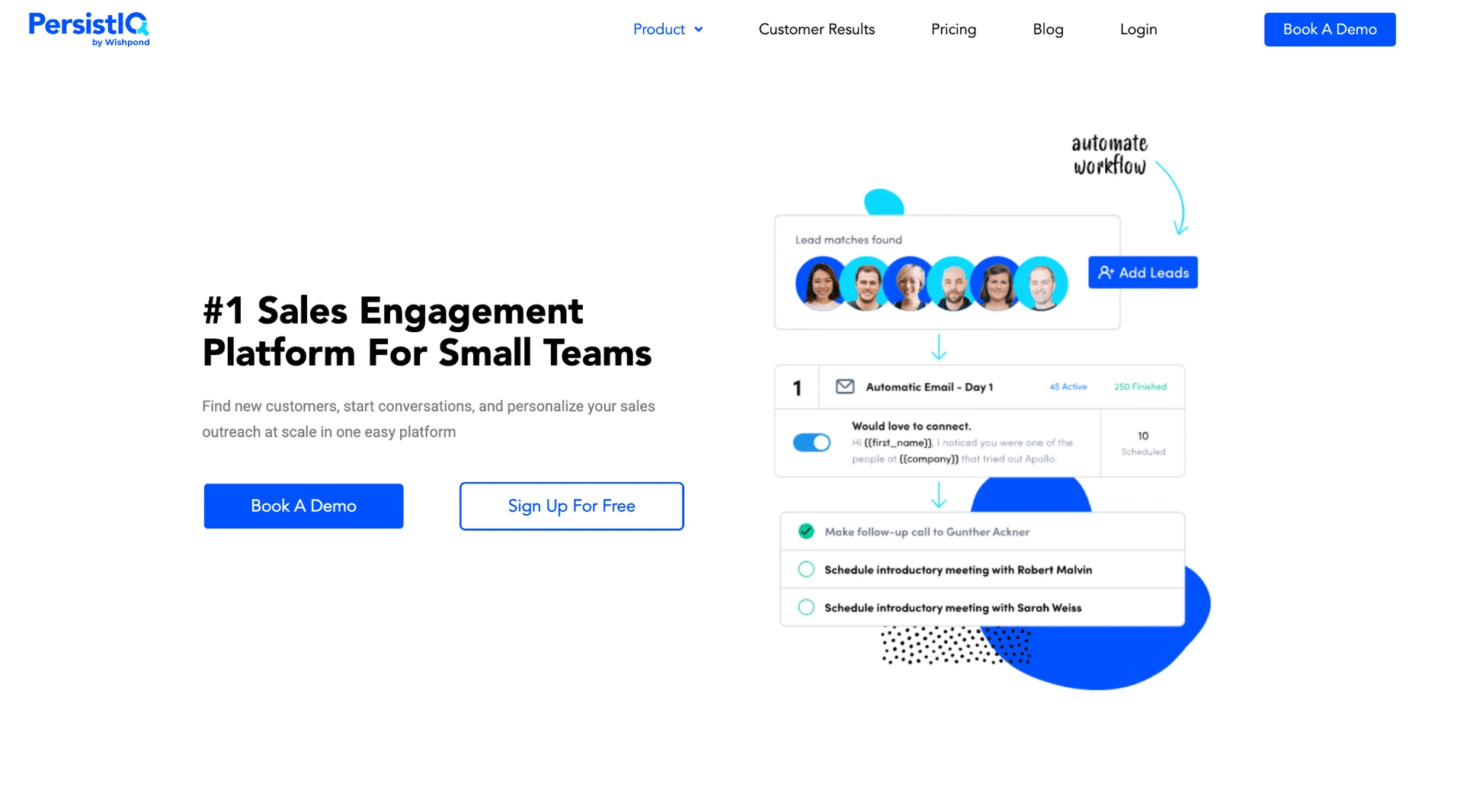
Key takeaways
- Unlimited campaign steps means unlimited email, call, task, and wait steps, while the lower mailbox-provider cap and fixed 15-second email pace still apply — so a longer sequence does not create more daily sending capacity.
- Browser capture imports LinkedIn and Sales Navigator prospects, Luka meters email finding separately, and the Help Center recommends Hunter for verification — so a captured profile is not automatically a verified address or an included email-credit allowance.
- Normal replies can stop active campaigns, but reassigning a campaign sender may prevent detection of replies to older emails from the original sender — so teams should test offboarding instead of assuming an ownership change preserves conversation state.
This review is published by Linked Helper and written by Milosh Potikj, who works there. I've made every effort to represent PersistIQ accurately using verified data — our bounded first-hand research, PersistIQ's own documentation, and independently sourced reviews.
PersistIQ is an email-first sales-engagement platform for SDRs, founders, and internal outbound teams. The established core schedules email, call, task, and wait steps. It sends through the user’s mailbox provider and stops email sequences after a reply. Current core pricing is demo-led. The last public monthly entry was $75 per user in a March 2026 snapshot, while Luka email credits are sold separately. Our July 2026 static checks of v1.7.8 and v2.1.2 found local LinkedIn prospect capture. We rated that inspected path Medium risk. The checks did not establish how PersistIQ performs the LinkedIn invitations and messages advertised on its marketing page. Our verdict is therefore conditional.
PersistIQ at a glance
- Verified core: cloud-scheduled email, call, task, and wait steps
- Current core price: demo quote required; $75/user/month is historical
- Prospecting surface: two concurrently live Chrome extensions
- LinkedIn action status: marketed, but the execution path was not established in either inspected package
PersistIQ public pages, Help Center, archived first-party pricing, and July 2026 static package checks; checked July–August 2026
Verdict
PersistIQ’s documented internal-team workflow covers cloud-scheduled email sequences, calls, and tasks, browser prospect capture, reply stopping, and named CRM handoffs. The email campaign model is documented more clearly than the product’s newer LinkedIn claims.
The condition is commercial and operational verification. A buyer should obtain a current written quote and confirm whether Luka credits are bundled. The buyer should also identify the trial’s activated entitlements and card requirements, then test the required CRM path. If LinkedIn invitations or messages are essential, request a live demonstration. It should cover the action executor, browser-off behavior, numeric caps, warning handling, and session/IP path.
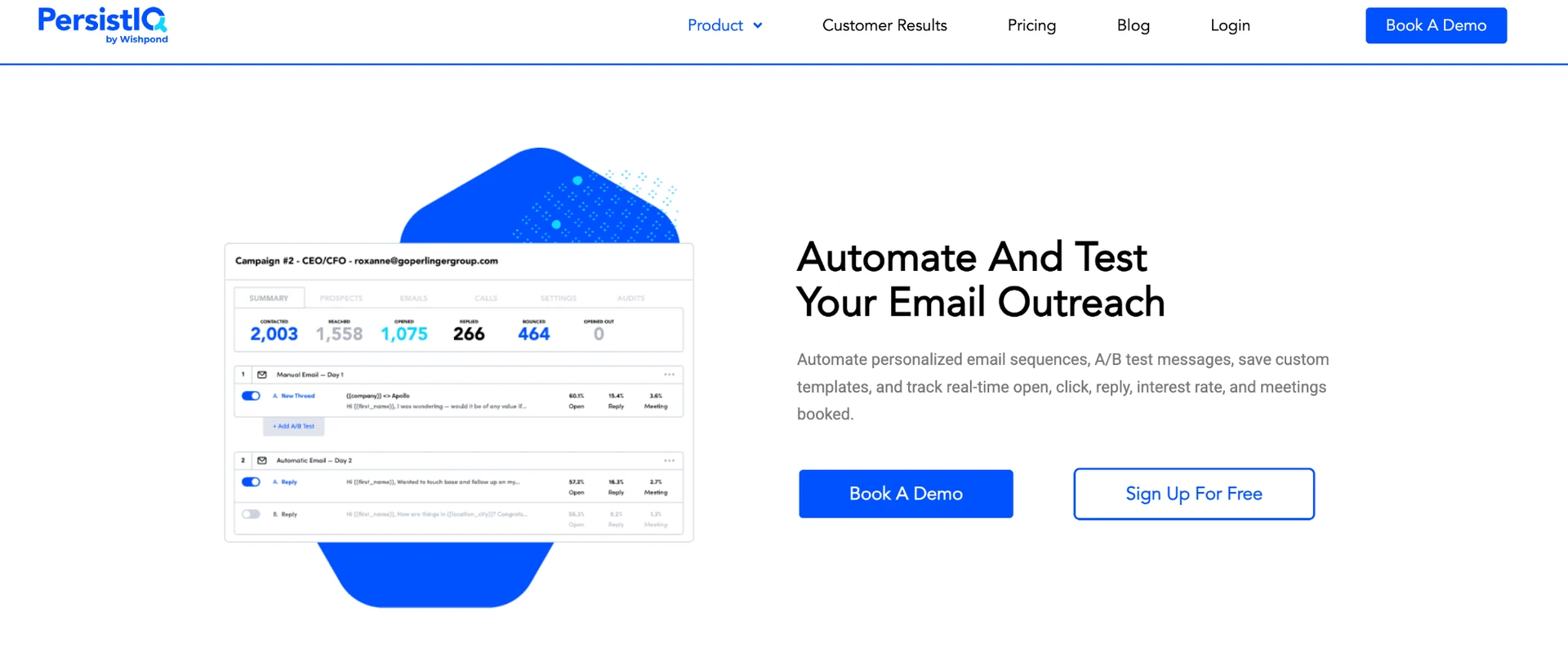
The marketing page makes the action claims, but our inspections of both public extension packages did not find the corresponding write operations. That does not prove a separate or server-side implementation is absent. It means that implementation was not established by the evidence reviewed.
Established: email/call/task orchestration, reply stop, prospect capture, and named integration surfaces. Verify in writing or live: the current quote, Luka bundling, trial entitlements, integration operability, and advertised LinkedIn action layer.
Pros
- Unlimited campaign steps are defined. The documented sequence step list is email, call, task, and wait; “unlimited” describes step count, not sending volume.
- Replies stop future email activity. A normal email reply marks a prospect Finished and can halt that prospect in other active campaigns.
- Email sends through the connected mailbox. PersistIQ uses the user’s Gmail, Office 365, or Exchange account under the provider-limit model, so the lower provider cap remains visible.
- Sending controls are concrete. Daily limits and provider precedence, plus a Sending Window and fixed pacing, are documented for email.
- A/B rules are explicit. Variants must be created before enrollment, and a test requires at least 200 prospects.
- Prospect intake covers several routes. Documented inputs include CSV, XLS, XLSX, copy/paste, and manual entry, plus LinkedIn or Sales Navigator capture.
- Team roles and reporting have defined basics. Admin/Member roles, prospect ownership changes, campaign sender reassignment, and reporting are documented for one internal organization.
Cons
- Current core pricing is hidden. The live route ends at Book a Demo, so dated Essentials and Premium rates are not current offers.
- The commercial contract is fragmented. Core seats and Luka email credits have separate public evidence; managed-service reviews describe another population.
- LinkedIn writes remain unresolved. Two live extensions supported prospect reads, but neither inspected package exposed invitation or message writing.
- The trial contract is incomplete publicly. Fourteen days is advertised, but activation-stage card timing, plan equivalence, gates, and credits are not disclosed.
- Agency tenancy is not established. Public team documentation shows one Admin/Member organization, not proven client workspaces, a portal, or white-label controls.
- Sender handoff has a reply-detection boundary. Reassigning a campaign may prevent replies to the original sender’s older emails from being detected.
| Limitation | Operational effect | Evidence class |
|---|---|---|
| Demo-led core pricing | A buyer cannot calculate current seat cost from the public site | Current public observation |
| Unlocated LinkedIn writer | Execution, caps, and browser-off behavior require a live demonstration | First-hand boundary; not proof of absence |
| Single-organization public model | Client isolation and white label remain unestablished | Public-evidence gap |
| Sender reassignment boundary | Older replies may be missed after handoff | Documented Help Center behavior |
| Mixed review populations | Managed-service and recipient complaints cannot be converted into a SaaS failure rate | Population-specific observation |
PersistIQ limitations and operational effects
PersistIQ Pricing: Demo-Led Core, Dated Plans, and Luka Credits
The public site did not list a current core price during our check. The pricing route goes to Book a Demo.
The figures below are dated first-party snapshots. They can frame quote questions but cannot serve as a current offer.
Pricing trap: Core seats and credits have separate public billing evidence. Do not assume a current PersistIQ quote includes Luka, and do not treat archived Essentials or Premium rates as today’s price.
| Snapshot date | Plan | Price | Known boundary |
|---|---|---|---|
| March 8, 2026 | Essentials | $75/user/month | Archived monthly rate; current sellability and entitlements require a quote |
| March 8, 2026 | Premium | $120/user/month | Archived monthly rate; current sellability and entitlements require a quote |
| December 12, 2025 | Essentials | $59/user/month billed yearly | Dated annual rate; about 21.3% below the later monthly figure, not a repricing trend |
| December 12, 2025 | Premium | $99/user/month billed yearly | Dated annual rate; about 17.5% below the later monthly figure |
| December 12, 2025 | Teams | $59/user/month billed yearly | Dated; started at three users |
PersistIQ core pricing snapshots (dated, not current offers)
Sources: PersistIQ’s archived monthly pricing snapshot and annual pricing snapshot. The annual percentages compare archived annual and monthly figures for the same named tier. The snapshots differ too much in cadence and date to establish a repricing trend.
Luka is a separate recurring subscription activated from the billing page, according to PersistIQ’s activation guide. Its live price grid establishes the email-finding meter but not whether a sales-negotiated core package includes any allowance.
| Plan | Monthly credits | Monthly price | Annual equivalent | Not established |
|---|---|---|---|---|
| Free | 10 | Free plan | — | Whether it changes core trial or seat entitlements |
| Bulk | 2,000 | $35 | $25/month | Core-seat bundling and credit rollover/expiry |
| Plus | 5,000 | $50 | $40/month | Core-seat bundling and credit rollover/expiry |
Luka email-credit plans (July 2026)
Source: PersistIQ’s live Luka pricing page, checked July 2026.
The trial needs its own confirmation. PersistIQ advertises a 14-day trial, and the first signup screen showed no card field during research. That does not establish whether activation later requires a card or which plan is mirrored. Campaign, CRM, API, export, and Luka credit entitlements also remain unestablished.
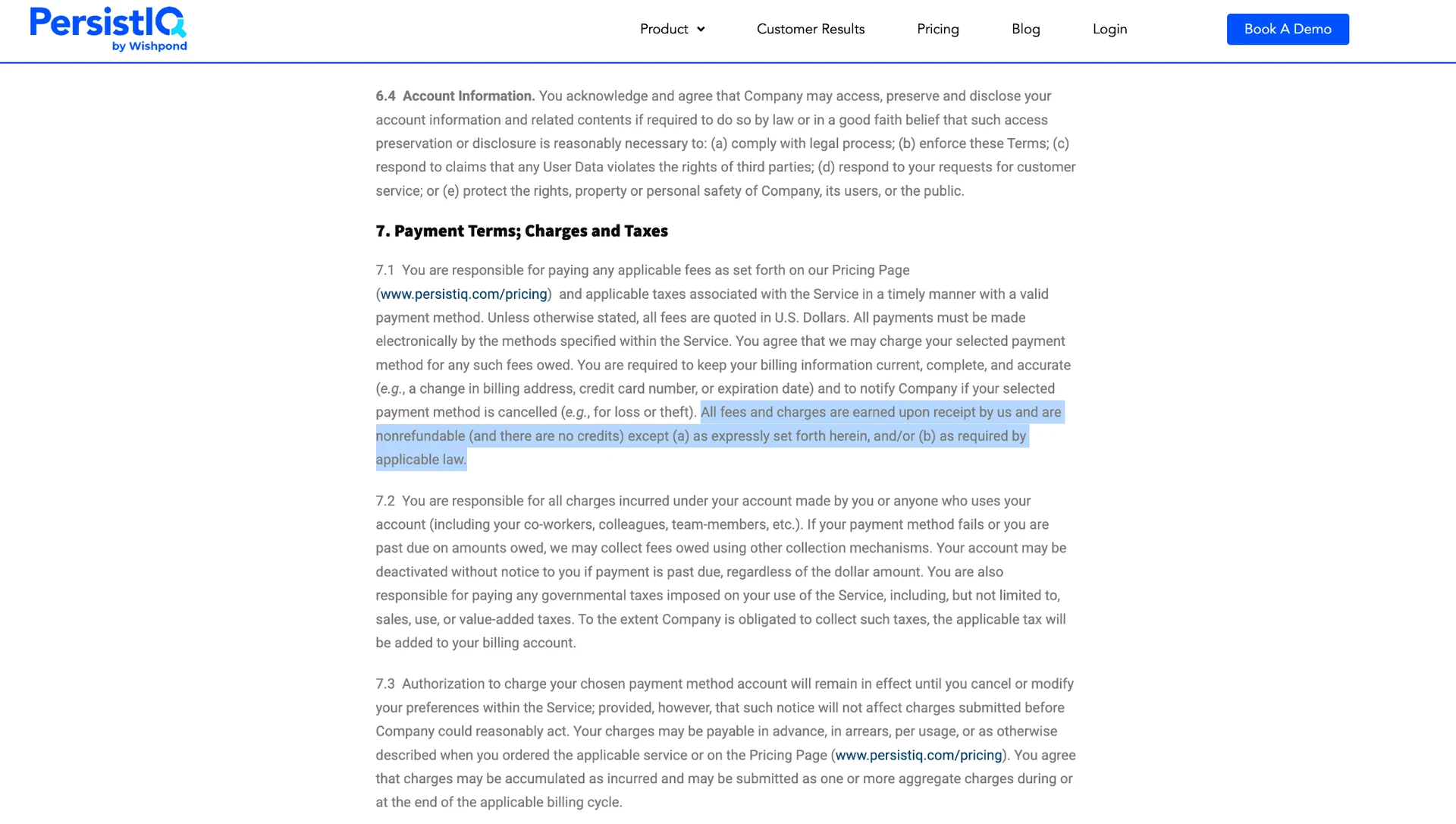
The public Terms say fees generally are nonrefundable, annual fees are prepaid, taxes may apply, and cancellation must precede renewal (Terms).
A written quote should therefore name:
- the core tier and activated-seat rule;
- the Luka allowance;
- the annual commitment and taxes;
- temporary-seat treatment and support level;
- trial gates and cancellation timing;
- the post-cancel export window.
Public evidence did not establish setup fees, bulk discounts, a free manager seat, or extra-account/inbox pricing. Those gaps are questions, not proof that such charges or concessions exist.
Cloud Email Orchestration and Browser Extension Architecture
PersistIQ has two verified operating lanes. First, Auto-send schedules email while the user is signed out. Messages still go through the user’s Gmail, Office 365, or Exchange provider under the documented sending-limit model. Browser-off email scheduling is established, but it says nothing about where advertised LinkedIn actions run.
Cloud email scheduling lane
flowchart LR

A[Campaign setup] --> B[Cloud schedule]

B --> C[Mailbox provider]

C --> D[Prospect inbox]

D --> E[Reply stop]
The second lane is local prospect capture. We inspected two Store packages available at the same time: v1.7.8 and v2.1.2. Both read LinkedIn and Sales Navigator data inside the active browser. They return parsed prospect and company records plus campaign context. They use the user’s browser network. This is a local-scrape pattern. The extension reads inside the browser and uploads results rather than moving the raw login into the observed PersistIQ-bound flow.
Both packages read JSESSIONID. This LinkedIn cookie carries the CSRF token used to authorize browser requests. Paired with a session login, that token helps requests act as the signed-in user. Our static checks did not find the raw value exported in PersistIQ-bound requests. This narrows the finding to the inspected capture route. It does not establish session handling for an unobserved action executor.
Local browser prospect-capture lane
flowchart LR

A[LinkedIn search] --> B[Local read]

B --> C[Parsed profile]

C --> D[PersistIQ import]

D --> E[Email campaign]
For channel-design background, see how LinkedIn prospecting and cold email fit into one operating plan.
Architecture boundary: Offline Auto-send is documented for email. Neither inspected extension established browser-off LinkedIn invitations or messages, so the action route, session path, and exit IP remain unresolved rather than proven absent.
Campaign Engine, Reply Stop, Triggers, and A/B Testing
PersistIQ documents four campaign actions: email, call, task, and wait steps. The getting-started guide says campaigns can contain unlimited steps and waits. “Unlimited” therefore means the number of those four step types. Separate mailbox, provider, and daily limits still govern how many emails can send.
Within the email lane, PersistIQ’s public Help Center documents cloud Auto-send, open/click reporting, and reply, Out of Office, bounce, and opt-out trigger states. The exact manual-send and variable-default setup was not established from a publishable source here, so those mechanics do not support our verdict.
flowchart LR

A[Enroll prospect] --> B[Email or task]

B --> C[Wait]

C --> D{Reply?}

D -- Yes --> E[Finish prospect]

D -- No --> F[Next step]
The reply rule is concrete. A normal email reply marks the prospect Finished and can stop progress in other active campaigns. That reduces cross-campaign follow-up after a real response. Replies still arrive in the connected personal mailbox; a native unified team inbox was not established in the reviewed public documentation.
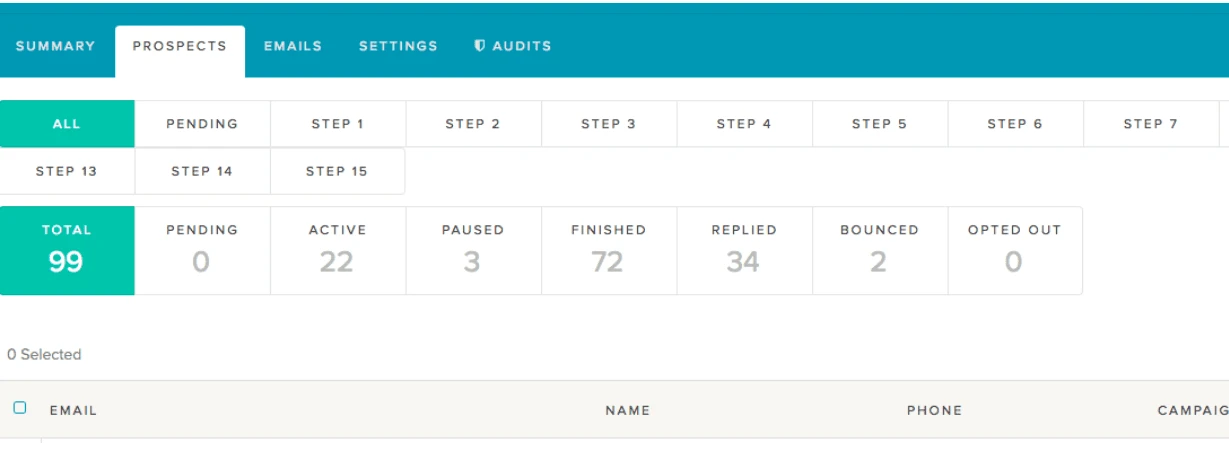
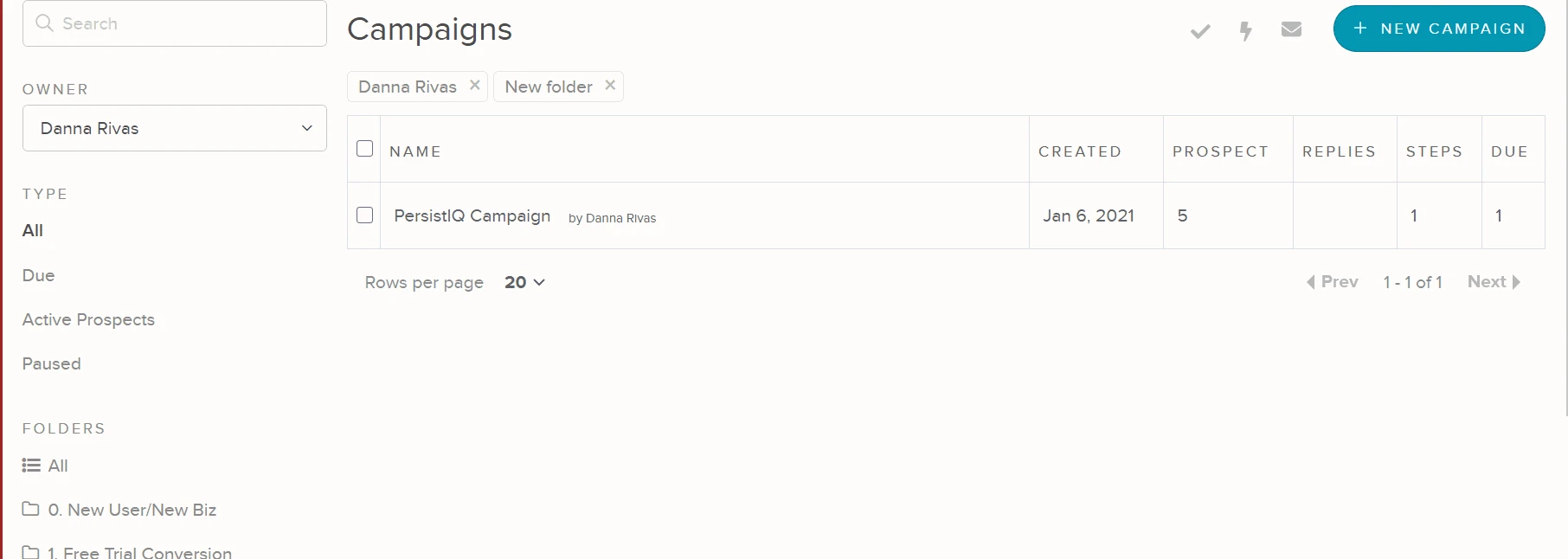
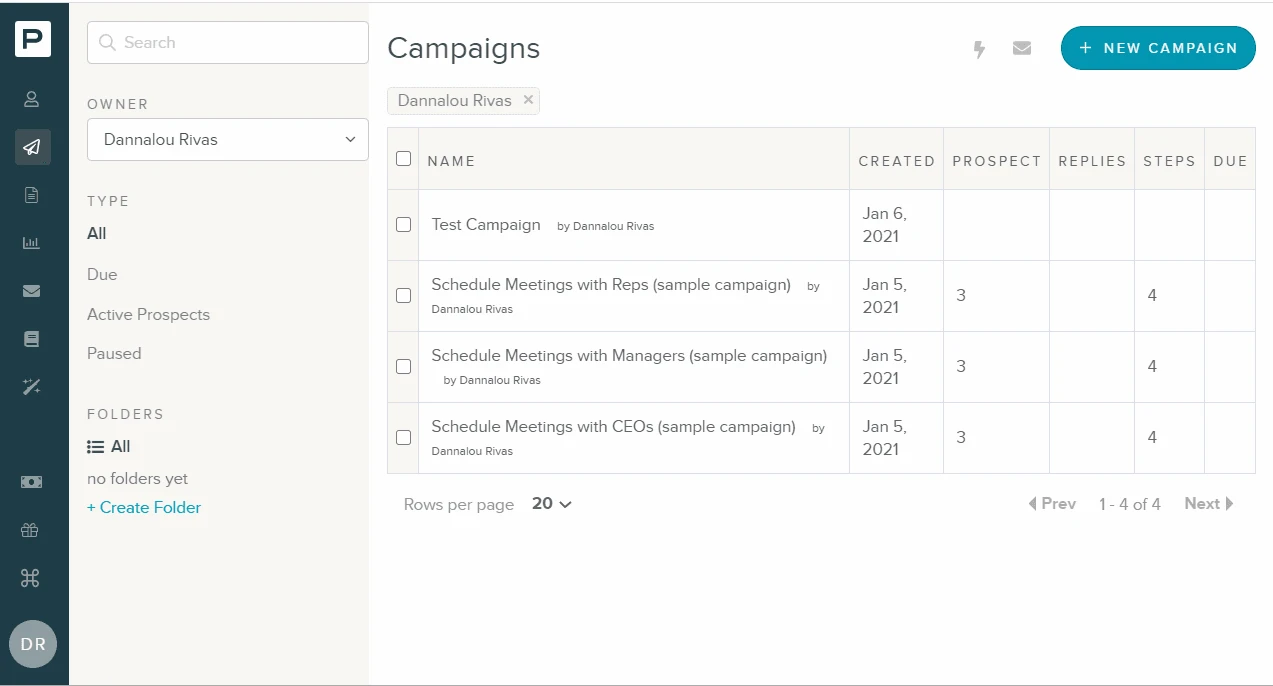
PersistIQ also documents triggers for defined events and status changes. The evidence did not establish a general visual branch builder, nested campaign conditions, or message-history/regex deduplication. Those are unresolved or unestablished capabilities, not proof that no private or later implementation exists.
| Control | Exact boundary |
|---|---|
| Step model | Email, call, task, and wait; unlimited step count, not unlimited sends |
| Reply stop | Normal email reply finishes the prospect and can stop other active campaigns |
| Triggers | Defined event/status automation; general nested branching not established |
| A/B testing | Email variants created before enrollment; at least 200 prospects required |
| Response surface | Replies go to the connected personal mailbox; unified team inbox not established |
PersistIQ campaign controls (July 2026)
Like most tools in this category, PersistIQ supports email A/B variants. Its A/B guide sets two important boundaries: variants must exist before prospects enter, and a test needs at least 200 prospects. That makes the feature unsuitable for a small list where each version cannot reach the documented floor.
Campaign limitation: The established engine is reply-aware for email, but its public trigger documentation does not establish nested visual branching, and those email states cannot be transferred to the advertised LinkedIn action layer.
Sending Limits, Deliverability, and Suppression Governance
PersistIQ documents capacity rather than an inbox-placement outcome. The last-known Essentials and Premium product limits were 300 and 600 emails per day per user, respectively. The lower mailbox-provider cap wins. A historical Teams “unlimited” label removed the PersistIQ product cap only; it did not make provider capacity unlimited. This distinction prevents an “unlimited” plan name from erasing a separate ceiling.
The Daily Prospect Start setting controls how many new prospects begin each day. Follow-ups share the total mailbox send pool, and overflow remains queued. This lets a team manage new enrollment separately from the shared follow-up send pool.
flowchart LR

A[New starts] --> B[Follow-up queue]

B --> C[Mailbox cap]

C --> D[Sending Window]

D --> E[Overflow waits]
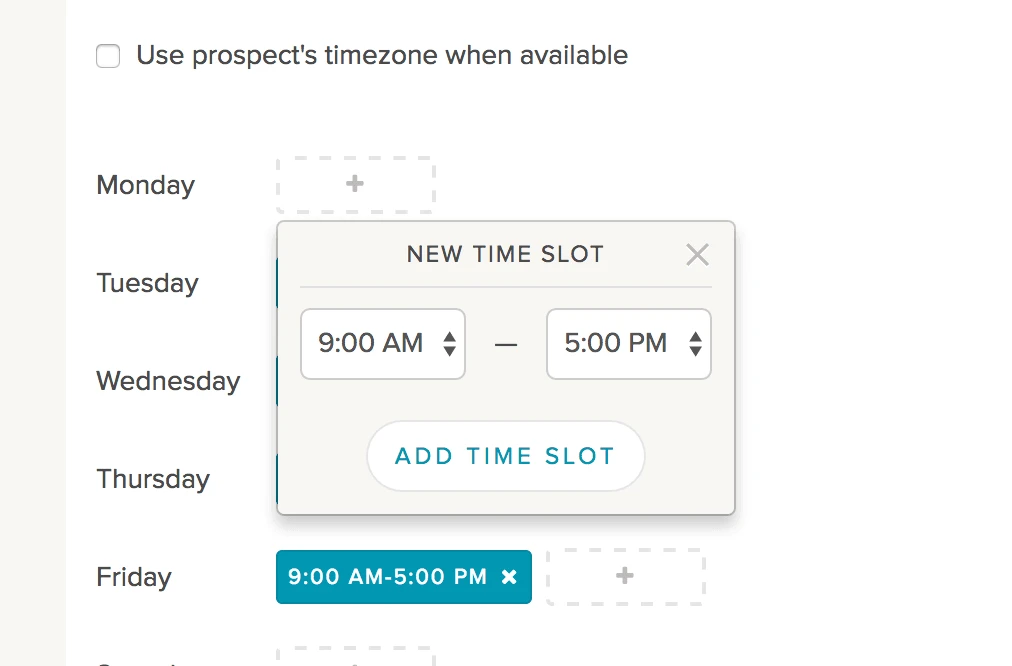
The Sending Window defines operating days and hours. The documented pace is one email every 15 seconds. Safety Checks apply duplicate, prior-reply, and Do Not Contact hygiene. PersistIQ separately states that it has no spam-detection capability, so these controls enforce known rules rather than measure reputation risk.
| Documented control | Unmeasured outcome |
|---|---|
| Last-known 300/600 daily product caps; lower provider cap applies | Inbox placement or sender reputation |
| Daily Prospect Start and queued overflow | A universal campaign throughput rate |
| Sending Window and one email per 15 seconds | Random or adaptive reputation throttling |
| Duplicate, prior-reply, and DNC checks | Spam-detection capability is not available |
| External address-verification recommendation | Seed-inbox deliverability result |
PersistIQ email controls and unmeasured outcomes (July 2026)
The Help Center recommends Hunter rather than claiming native address verification. That means email finding, verification, sending capacity, and deliverability should be evaluated as separate mechanisms. We did not run a seed-inbox test, so no inbox-placement rate is established.
Deliverability is not a send limit: A documented daily cap, fixed pace, or SPF/DKIM setup does not establish inbox placement. PersistIQ publishes operating controls, while the resulting deliverability rate was not tested here.
Prospecting, Chrome Capture, and Luka Email Credits
PersistIQ accepts prospects through CSV, XLS, XLSX, copy/paste, and manual entry. The two Store listings support LinkedIn and Sales Navigator capture. Parsed profiles can then be sent into PersistIQ, a connected CRM, or a campaign. That workflow establishes prospect sourcing and import—not an invitation, message, or other LinkedIn write.
The organization-level prospect layer documents duplicate handling and global DNC. A prospect-list export is generated and emailed to the login address, but row, plan, and trial gates were not disclosed publicly. Full message-history export with per-message metadata was not established; the evidence supports a prospect/status export boundary instead.
Luka adds email finding under a separate recurring credit meter (live plans):
- Free has 10 monthly credits;
- Bulk has 2,000;
- Plus has 5,000.
Public evidence did not establish credit rollover, expiry, or inclusion with a core seat. PersistIQ’s Help Center separately recommends Hunter for verification, so finding an address should not be described as natively verifying it.
| Core PersistIQ | Luka | Unverified boundary |
|---|---|---|
| Spreadsheet/manual inputs and browser capture | Monthly email-finding credits | Core-seat bundling and rollover/expiry |
| LinkedIn/Sales Navigator prospect import | Email Generator | Native verification equivalence |
| Prospect/status list export | Separate billing-page subscription | Trial and plan export gates |
| Organization duplicate checks and DNC | — | Group, event, post-engager, Recruiter, or full message-history workflows were not established |
| Public feature inventory gaps | — | Native AI fit scoring, held-for-review AI messages, AI post comments, post boosting, employee extraction, named-skill endorsement, and scheduled post collection were not established |
PersistIQ prospecting and Luka boundary (July 2026)
For practical context, see the separate mechanics behind LinkedIn email finding and Sales Navigator lead export.
Separate three checks: Ask the seller to demonstrate profile capture, email finding, and email verification separately. The current evidence establishes the first two within stated boundaries, but not native verification equivalence or Luka bundling.
CRM Integrations, API Claims, and Reporting
PersistIQ’s public integration evidence does not support one defensible native-integration count. The Help Center inventory documents Salesforce and Copper sync, identifies Pipedrive with thinner public detail, and treats HubSpot differently. We therefore do not repeat a “3 integrations” figure because its supporting source did not describe PersistIQ.
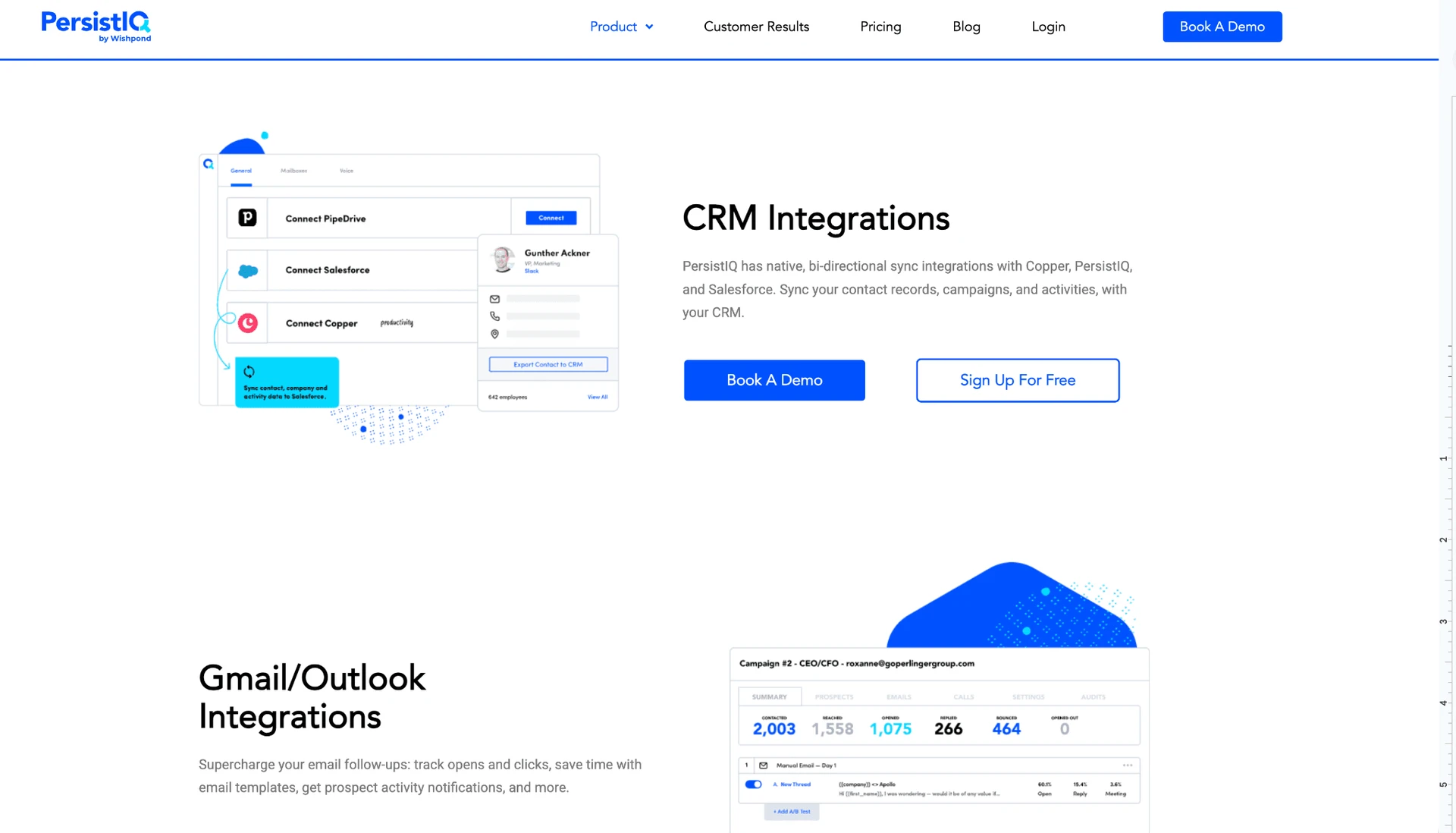
HubSpot is documented through BCC logging and Zapier rather than proven equivalent to native bidirectional sync (HubSpot guide). The Zapier connector documents two actions—Create Lead and Add Lead to Campaign. These mechanisms mean a named logo does not guarantee the same sync direction, field behavior, or failure handling as another connector.
| Surface | Documented mechanism | Operability/documentation boundary |
|---|---|---|
| Salesforce and Copper | Documented sync | Authenticated field and failure behavior not tested here |
| Pipedrive | Named integration | Public depth is thinner |
| HubSpot | BCC logging and Zapier | Native bidirectional equivalence not established |
| Zapier | Create Lead; Add Lead to Campaign | Zapier is not proof of native webhooks |
| API/webhooks | An API key is referenced; no publishable webhook setup page was supplied | Current public endpoints, authentication, rates, events, signing, and retries not established |
| Reporting | Activity, opens/clicks, campaigns/templates, prospect history, team overview, tasks, replies, sentiment, meetings, and best-time-to-send | Full report export and immutable audit log not established |
PersistIQ integration depth and reporting surfaces
PersistIQ’s reporting documentation covers the inventory in the table, which gives internal teams several operational views. It does not establish a client-facing dashboard, full report export, or immutable audit log. Likewise, a Help article references an API key but does not establish usable current REST/OpenAPI documentation. That is a documentation gap, never proof that no customer API exists.
For mechanism-level background, see how native CRM sync, BCC logging, and webhook handoffs differ.
Integration boundary: PersistIQ has several named integration surfaces, but their depth differs. Ask for an authenticated demonstration of the exact CRM direction, fields, deduplication, retries, and plan gate your workflow needs.
Teams, Agency Fit, and Sender Handoff
PersistIQ documents one organization with Admin and Member roles, shared campaigns and templates, send-on-behalf controls, and team reporting (roles). This establishes an internal-team structure. It does not establish client workspaces, a tenant switcher, a client portal, white-label controls, granular client roles, or multi-LinkedIn-account orchestration. Those capabilities were not found in the reviewed public evidence and should remain procurement questions.
| Requirement | Internal-team status | Agency boundary |
|---|---|---|
| Roles | Admin and Member | Granular client roles not established |
| Shared work | Campaigns, templates, send-on-behalf, reporting | Client-isolated workspaces and portal not established |
| Seat changes | Seats can be added or removed | Proration and annual-commitment reduction undisclosed |
| Ownership | Prospects and campaigns can be reassigned | Old-sender replies may stop being detected |
| Commercial use | Internal business use documented | Resale, sublicensing, time-sharing, and service-bureau use restricted without permission |
PersistIQ team and agency requirements (July 2026)
The sharpest operational issue is sender handoff. PersistIQ documents that changing a campaign’s sender can prevent replies to older emails from the original owner from being detected. The sequence is simple:
flowchart LR

A[Original sender] --> B[Emails sent]

B --> C[Campaign reassigned]

C --> D[Prospect replies]

D --> E[Old reply may be missed]
That matters during staff changes or client handoff because campaign ownership can move while conversation-state detection does not fully follow. Manual prospect reassignment exists, but it should not be treated as proof of continuity for every older thread.
PersistIQ’s Terms also restrict resale, sublicensing, time-sharing/service-bureau use, and non-internal business use without permission. An agency should therefore obtain written authorization and a tenant/support contract. An individual review or the existence of team roles does not establish agency rights.
Handoff risk: Reassigning a campaign sender can cause replies to emails sent by the original owner to go undetected. Test this exact offboarding path before using reassignment as a continuity plan.
Is PersistIQ Safe?
Safety splits by channel. PersistIQ documents concrete controls for email, but the safety contract for its marketed LinkedIn invitations and messages remains unresolved. No tool eliminates ban risk. Manual actions such as opening many profile URLs or moving at unrealistic speed can also trigger warnings.
What I verified first-hand. In July 2026, I inspected the two live Store packages: v1.7.8 and v2.1.2. Both were local prospect-read engines. Neither exported raw JSESSIONID in the observed vendor-bound flow. I rated the inspected capture paths Medium. Local session handling still leaves extension visibility, code injection into the page, and internal-read signals.
Active Extension Detection (AED) is the label in LinkedIn’s production JavaScript for code that probes known extension IDs. It reports an AedEvent; AED is not an official feature name. A probeable resource makes “installed” visible before an outreach action runs. See this plain-language extension-detection guide for the mechanism.
| What was checked | v1.7.8 result | v2.1.2 result |
|---|---|---|
| Architecture | Local prospect reads | Local prospect reads |
| Raw cookie export in inspected path | None found | None found |
| Direct internal reads | Yes | Yes |
| Programmatic injection | Yes | Yes |
| AED visibility | Listed; probeable resource | Listed; probeable resource |
| Telemetry blocking | None found | No LinkedIn blocking found |
| Invitation/message writer | None found; another path not disproved | None found; response fields were not write operations |
| Risk rating | Medium for capture | Medium for capture |
First-hand static checks of PersistIQ extensions (July 2026)
The marketing page lists “LinkedIn messages,” “connection requests,” and “touchpoints,” while neither package exposed matching writes. Another executor may exist. We did not run the applicable cloud-IP test or observe cloud-IP execution. The cloud-IP question remains applicable to the advertised LinkedIn action path but untested. Authentication, session custody, caps, jitter, warning handling, and browser-off behavior also remain unestablished.
| Control area | Email evidence | LinkedIn action status |
|---|---|---|
| Volume | Last-known 300/600 daily caps; lower provider cap wins | Numeric invite/message caps not published in reviewed sources |
| Pacing | One email per 15 seconds within Sending Window | Jitter, ramp-up, and adaptive throttling not established |
| Stops | Reply stop; DNC and duplicate/prior-reply checks documented | Restriction-warning handling and auto-pause not established |
| Adaptive protection | — | Proxy-quality gate, repeated-error circuit breaker, and invite-hygiene thresholds not established |
| Runtime | Cloud Auto-send documented for email | The cloud-IP question remains applicable to the advertised LinkedIn action path but untested |
| Compliance | US data transfer; DPA available by request | Current public SOC 2/ISO, encryption specification, full subprocessor register, and status page not found in reviewed sources |
PersistIQ email controls versus unresolved LinkedIn action controls
Sources: PersistIQ’s email limits, Sending Window, reply stop, Safety Checks, Auto-send, privacy notice, and GDPR overview. Compliance items not found remain evidence gaps. They are not proof of absence.
A buyer should request a live action run, numeric caps, browser-off behavior, warning handling, and the session/IP path. This message-automation mechanics guide explains why each layer matters.
Safety verdict: Medium applies only to the inspected capture packages. The marketed action executor remains unestablished, and the applicable cloud-IP test was not run. A broader verdict would overstate the evidence.
What Reviews and Social Evidence Actually Show
The platform ratings cover different eras and populations, so we do not blend them. G2 averaged 4.50★ across 321 G2 reviews in the stored snapshot through August 3, 2026; 222 were from 2015–2020. Capterra averaged 2.63★ across 27 Capterra reviews in the stored snapshot through August 3, 2026. Trustpilot averaged 2.79★ across 66 Trustpilot reviews in the stored snapshot through August 3, 2026. Each aggregate retains its own platform, count, and snapshot.
Cross-platform deduplication through August 3, 2026 removed one Trustpilot/Capterra cross-post from 414 raw records. That left 413 unique experiences: G2 321, Trustpilot 65, and Capterra 27. This is an analysis denominator, not a live rating. In the deduplicated 65-review Trustpilot view through August 3, 2026, 23 contained spam, unwanted-email, unsubscribe, GDPR, CAN-SPAM, or harassment language. Of those 23, 22 were 1★. That is a recipient/managed-outreach signal, not a SaaS reliability rate or LinkedIn safety finding.
| Population/era | Denominator | What it can show | What it cannot show |
|---|---|---|---|
| Older G2 | 321; 222 from 2015–2020 | Historical SaaS sentiment | Current managed or LinkedIn outcomes |
| Later Trustpilot | 65 deduplicated | Recipient/managed themes | A SaaS failure rate |
| Capterra | 27 | Platform-specific complaints | Another platform’s denominator |
| Cross-platform dedup | 413 from 414 raw | Population patterns | A live universal rating |
PersistIQ review populations and eras
The anomaly scan flagged weekly clusters of five to eight reviews in 2017–2020 and seven same-day negative pairs in 2018–2024. It assigns no cause. The trailing six-month window ending August 3, 2026 had nine ratings. That was below the ten-rating floor, so we print neither a mean nor a trend. These patterns do not establish manipulation or fraud.